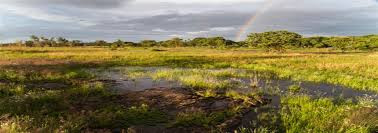
THE allocation of residential stands to 23 lawmakers on the Monavale Vlei should alarm every Zimbabwean who cares about the country’s environmental future.
Monavale Vlei is not just another piece of open land waiting to be parcelled out.
It is a protected wetland of international importance under the Ramsar Convention on Wetlands. This recognition carries a binding commitment to conserve ecosystems that underpin water security, climate resilience and biodiversity.
Turning such a site into housing stands is not development. It is ecological vandalism dressed up as entitlement.
The Monavale Wetland, also known as Monavale Vlei, is a critical component of the Manyame catchment basin, the primary water source for Harare and its surrounding suburbs.
Its ecological value is immense. The wetland supports a variety of birds, mammals, amphibians and reptiles, including the near-threatened Cape clawless otter (Aonyx capensis), along with many other wetland-dependent species that sustain the area’s biodiversity.
Equally important are the wetland’s hydrological functions. Monavale Vlei stores water, recharges groundwater and naturally filters pollutants — services that are essential for an already water-stressed city.
Destroying such a system for residential stands is not only environmentally reckless; it is also short-sighted governance.
- Monavale residents oppose building of cluster houses in vlei
- We urgently need to save our wetlands
- Feature: Human activity threatens Zimbabwe’s wetlands
- Cartoon: December 19, 2022 edition
Keep Reading
What makes the situation even more troubling is that the beneficiaries are lawmakers. Those entrusted with crafting and safeguarding Zimbabwe’s laws now appear content to look the other way.
When lawmakers — the very architects of legislation — appear to benefit from the weakening or outright bypassing of environmental safeguards, the message is unmistakable: the rules do not apply to them.
It suggests, in the starkest terms, that some animals are, indeed, more equal than others.
Yet Zimbabwe’s legal framework on wetlands is clear. The country adopted the National Wetland Policy of Zimbabwe in 2022, which emphasises the “wise use” of wetlands — balancing human activities with conservation needs, particularly in communities that depend heavily on wetland resources.
The policy promotes ecosystem-based management, recognising wetlands as interconnected systems that must be protected together with their surrounding environments. It also emphasises community participation and co-operation between government authorities, local stakeholders and conservation partners.
The law is equally explicit. The Environmental Management Act (Zimbabwe) provides the bedrock of Zimbabwe’s environmental protection framework. It recognises wetlands as critical ecosystems requiring conservation and sustainable use.
Any development likely to affect wetlands must undergo an Environmental Impact Assessment.
The law also prohibits putting wetlands to other land uses without approval from environmental authorities, who must assess the ecological and hydrological consequences.
Given such clear policy and legal safeguards, a troubling question arises: how did this proposal progress to the stage of pegging?
The answer points to a deeper institutional failure. Planning authorities, environmental regulators and political offices appear to operate in silos — until public outrage forces them into fire-fighting mode.
This is negligence writ large.
Public anger and the intervention by the Environmental Management Agency to halt developments on the vlei are welcome. However, outrage alone is not enough.
We require the full and irreversible cancellation of all allocations within Monavale Vlei, accompanied by a transparent investigation into who approved what, when and on what basis.
For a country entrusted with global leadership on wetland protection to be accused of destroying one of its own Ramsar sites is more than embarrassing — it risks becoming a stain on the administration of President Emmerson Mnangagwa, which seeks to project a reformist image to the international community.
Zimbabwe must send an unambiguous signal that its Ramsar-designated sites are not up for grabs. These include Victoria Falls National Park, Lake Chivero, Lake Manyame, Cleveland Dam, Driefontein Grasslands, Chinhoyi Caves and Mana Pools National Park.
The country’s credibility is at stake.
Zimbabwe holds the rotating presidency of the Ramsar Convention following the Ramsar COP15 held in Victoria Falls last year.
The country cannot stand on international platforms championing wetland conservation while quietly parcelling out a Ramsar site at home. Such contradictions erode trust — not only among global partners but also among citizens who increasingly bear the cost of environmental mismanagement.
Monavale Vlei must be protected at all costs.