The humiliation of the 2005 Frankfurt Motor Show remains etched in the memory of the global automotive industry. China’s debut at the world’s most prestigious auto exhibition ended in an unmitigated setback.
The German ADAC, Europe’s largest automobile club, purchased a Chinese vehicle and conducted an independent crash test with damning results: in 20 years of testing, this car delivered possibly the worst performance on record.
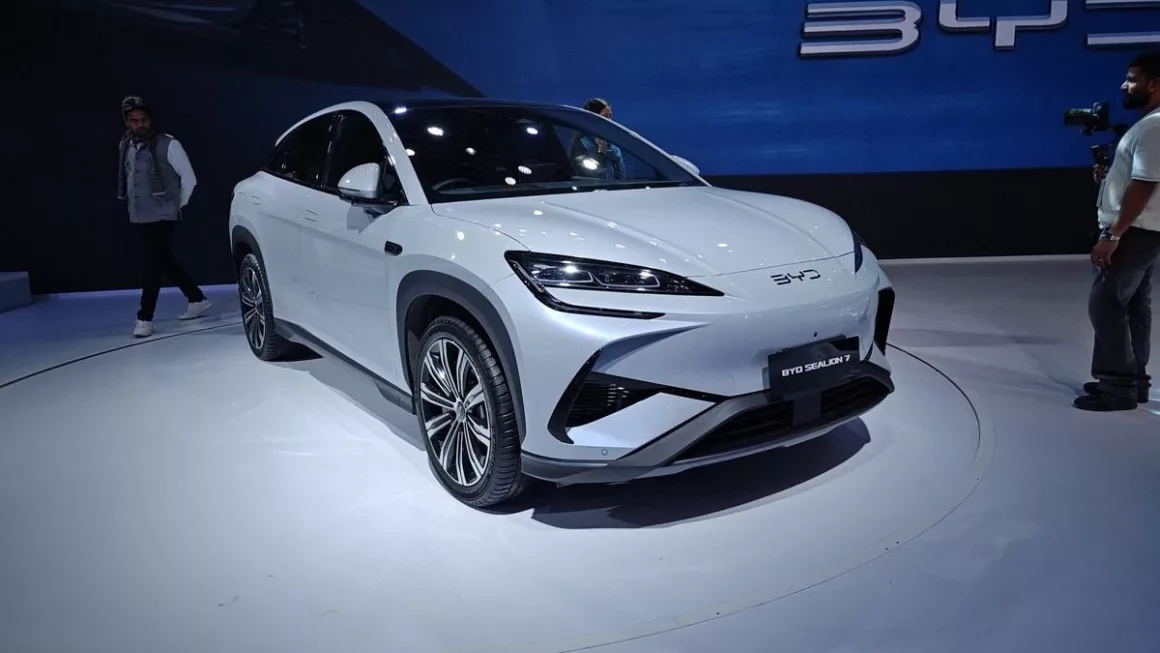
Two decades later, in September 2025, the European automotive establishment has undergone a profound reversal. At the renamed Munich Motor Show, 116 Chinese automakers—BYD, GAC, Changan, Chery, XPeng, Leapmotor and others—formed the largest national contingent, standing as the backbone of the entire event.
European manufacturers no longer mock Chinese vehicles; they are racing to adopt Chinese-style strategies, pouring billions into battery technology, software-defined vehicles and AI-powered cockpits—fields where Chinese firms now lead.
Meanwhile, the United States has turned to protectionism, banning Chinese cars to shield its aging industries, a path that will only erode its global competitiveness.
For Africa, and Zimbabwe in particular, this transformation is more than an inspiring story of industrial resilience. It is a practical, urgent policy roadmap.
The question is no longer whether Africa can learn from China’s journey, but whether African leaders will act decisively before this window of opportunity closes.
The roots of humiliation: What China learned in 2005
- Open letter to President Mnangagwa
- Feature: ‘It’s worse right now than under Mugabe’: Sikhala pays the price of opposition in solitary cell
- Masvingo turns down fire tender deal
- Human-wildlife conflict drive African wild dogs to extinction
Keep Reading
The collapse of the “cheap but good enough” model defined China’s early European venture.
Jiangling Landwind, the first Chinese brand to enter Europe, sold 1 000 units in its first month at just €15 000, disrupting the market. Then came the crash test: at 64 km/h, the A-pillar collapsed, the cabin disintegrated, and survival was deemed impossible. Within months, Landwind withdrew from Europe.
Geely, now a global giant, resorted to Peking Opera performances to attract attention at the same show—a painful display of industrial inferiority masked by cultural symbolism.
This failure was not merely technical; it was strategic. China attempted to export products before building genuine industrial capacity, safety expertise, sophisticated supply chains and global certification systems.
The brutal lesson: copycat manufacturing and low-cost competition cannot succeed in sophisticated markets.
The stigma of “low-quality Chinese goods” persisted for years. Yet this humiliation sparked a strategic reset. China chose not to retreat into protectionism, but to overhaul standards, rebuild testing systems, invest heavily in R&D, promote fierce domestic competition and pursue technological self-reliance.
Nearly 20 years of quiet, determined execution turned shame into global leadership.
The ascent of 2025: From “Made in China” to “engineered in China”
The 2025 Munich Motor Show was not just a Chinese presence—it was Chinese leadership. Chinese firms showcased full ecosystems: advanced batteries, automotive AI, flying cars, humanoid robots and software-defined vehicles.
European competitors appeared defensive and reactive.
European automakers rushed to announce partnerships, battery joint ventures and technology licensing deals with Chinese firms.
Even with tariffs, EU regulators discussed price controls to manage Chinese market entry—a shift from confrontation to accommodation, a recognition of competitive reality.
Chinese new-energy vehicles have secured meaningful market share in Europe. BYD’s global sales and overseas growth have set records, outperforming major international rivals.
The lesson for Africa is unambiguous: price alone fails, but technological superiority supported by integrated ecosystems compels even skeptical markets to adapt.
The American path: A warning for Africa
While Europe competes despite tariffs, the U.S. has closed its market to Chinese EVs with extreme tariffs and effective bans.
This is not industrial renewal—it is a concession of defeat. America’s protectionism delays innovation and cedes leadership.
Africa cannot afford this folly. African markets are too small, import-dependent and fragmented to thrive in isolation.
Unlike the US, Africa cannot withdraw into autarky; protectionism would only prolong import dependency, raise consumer prices and block growth.
China’s rise was driven by openness and global competition, not walls. Africa must follow this example.
Four pillars for Africa’s industrial takeoff
- Accept failure as the cost of progress
No industrial power avoids setbacks. China did not deny its 2005 failure or blame external forces. It revised safety rules, upgraded testing and forced domestic firms to meet global standards.
For Africa, early assembly efforts will not be perfect. Deficiencies must become learning opportunities, not sources of denial. Governments should mandate independent safety testing to drive continuous improvement.
- Build core competence through technology transfer
China transformed itself by absorbing and upgrading foreign technology: Geely’s acquisition of Volvo, SAIC’s takeover of MG Rover assets, BYD’s partnership with Daimler. China did not stop at licensing; it reverse-engineered, innovated and surpassed its mentors.
For Africa and Zimbabwe, CKD/SKD assembly is not enough. Genuine technology transfer requires: mandatory skills training and engineer exchanges; joint product development for African roads and climates; and phased local content requirements to build deep supply chains.
Without strategic negotiations, Africa risks remaining an assembly hub, not an industrial power.
- Use localisation to counter external tariffs
EU tariffs accelerated Chinese localisation in Europe: BYD built plants in Hungary and Turkey; Chery assembled in Spain; CATL launched gigafactories. The lesson: when exports face barriers, produce inside the tariff wall. Africa must use Sadc, Comesa and the AfCFTA as leverage to attract Chinese automakers—offering incentives in exchange for deep localisation, job creation and skills transfer.
- Leapfrog through the EV revolution
China conceded no victory in internal combustion engines and bet heavily on electric vehicles.
Massive subsidies, charging infrastructure and policy support built global leadership in batteries and smart vehicles. Africa need not copy China’s scale, but it can replicate its strategic insight: jump onto the next technological wave instead of chasing legacy industries.
Electric two-wheelers, three-wheelers and light commercial vehicles—rather than luxury passenger cars—are Africa’s priority. These serve mass mobility needs at lower costs. Partnerships like Tanzania’s JTP Auto and Chinese OEMs prove affordable, adapted EVs can cut operating costs and transform transportation.
The economic case for Chinese vehicle assembly in Zimbabwe
Local assembly addresses three critical crises for Zimbabwe: unaffordable vehicles, foreign currency drain and limited industrial jobs.
Lower prices, safer roads
Local CKD/SKD assembly slashes tariffs and shipping costs, making safe, modern vehicles far more accessible. This renews Zimbabwe’s aging vehicle fleet, improves road safety and reduces nationwide transport costs.
Retain foreign exchange
Vehicle imports drain Zimbabwe’s scarce foreign currency. Local assembly reduces outflows by importing parts instead of finished cars. Over time, local production of tyres, batteries, wiring and interiors can further cut import bills. Regional exports under Sadc can even turn Zimbabwe into a net earner of hard currency.
Jobs, skills and regional leadership
Planned EV manufacturing investments in Zimbabwe can create thousands of formal jobs and skilled technical positions, with sustained skills transfer from Chinese engineers. President Emmerson Mnangagwa’s vision of Zimbabwe as a distribution springboard for the Sadc region is within reach: a local EV hub can serve 16 nations, strengthen regional value chains and advance the AfCFTA.
Ghana, Kenya, Tanzania, Morocco and others have already secured Chinese EV assembly deals. Late action risks Zimbabwe being left behind as neighbours capture supply chains and regional leadership.
As Western tariff walls rise, Chinese automotive investment will increasingly flow to open, stable markets like Africa. Nations with smart policies, investment incentives and regional trade access will be the biggest winners.
China’s automotive journey—from Frankfurt ridicule to Munich acclaim—was built on strategic patience, learning from failure and relentless execution.
For Africa and Zimbabwe, the lesson is not to copy China’s state-led model, but to embrace its core logic: turn failure into opportunity, criticism into improvement and external pressure into local action.
The best time to build local assembly capacity was five years ago. The second-best time is now.
China’s auto industry is in its strongest phase of global expansion. Carmakers seek new markets, battery producers seek new destinations, and technology providers seek partners. For Zimbabwe, this is a golden moment—when terms for technology transfer and investment are highly favourable.
Leaders who hesitate will watch rivals secure factories, jobs and supply chains. Leaders who act—designing investment-friendly policies, negotiating firmly, demanding genuine technology transfer and investing in local skills—will transform their economies and escape decades of import dependency.
In Africa, there is no room for illusion or isolation. The only way to stand tall is to stand on our own industrial feet. That journey begins with learning, cooperating and building—starting today.
*Saxon Zvina is the principal consultant at Skyworld Consultancy Services, focusing on industrial policy, foreign direct investment and economic transformation in Africa. He can be reached at [email protected] and on X @saxonzvina2.