The international system established after World War II has boosted global economic growth and technological advancement over decades. Nevertheless, it has gradually formed structural imbalances that put developing countries at a persistent disadvantage.
Core global governance mechanisms including the United Nations Security Council, the International Monetary Fund and the World Bank still operate under the geopolitical framework of 1945, failing to keep pace with the realities of the 21st century.
Today, the Global South accounts for the majority of the world’s population and a steadily growing share of global economic output. Yet these countries remain underrepresented in major international institutions. Developing nations widely agree that decision-making power is overly concentrated in a small number of developed economies. This imbalance leads to unequal access to financing, advanced technologies, trade opportunities and the right to shape global rules.
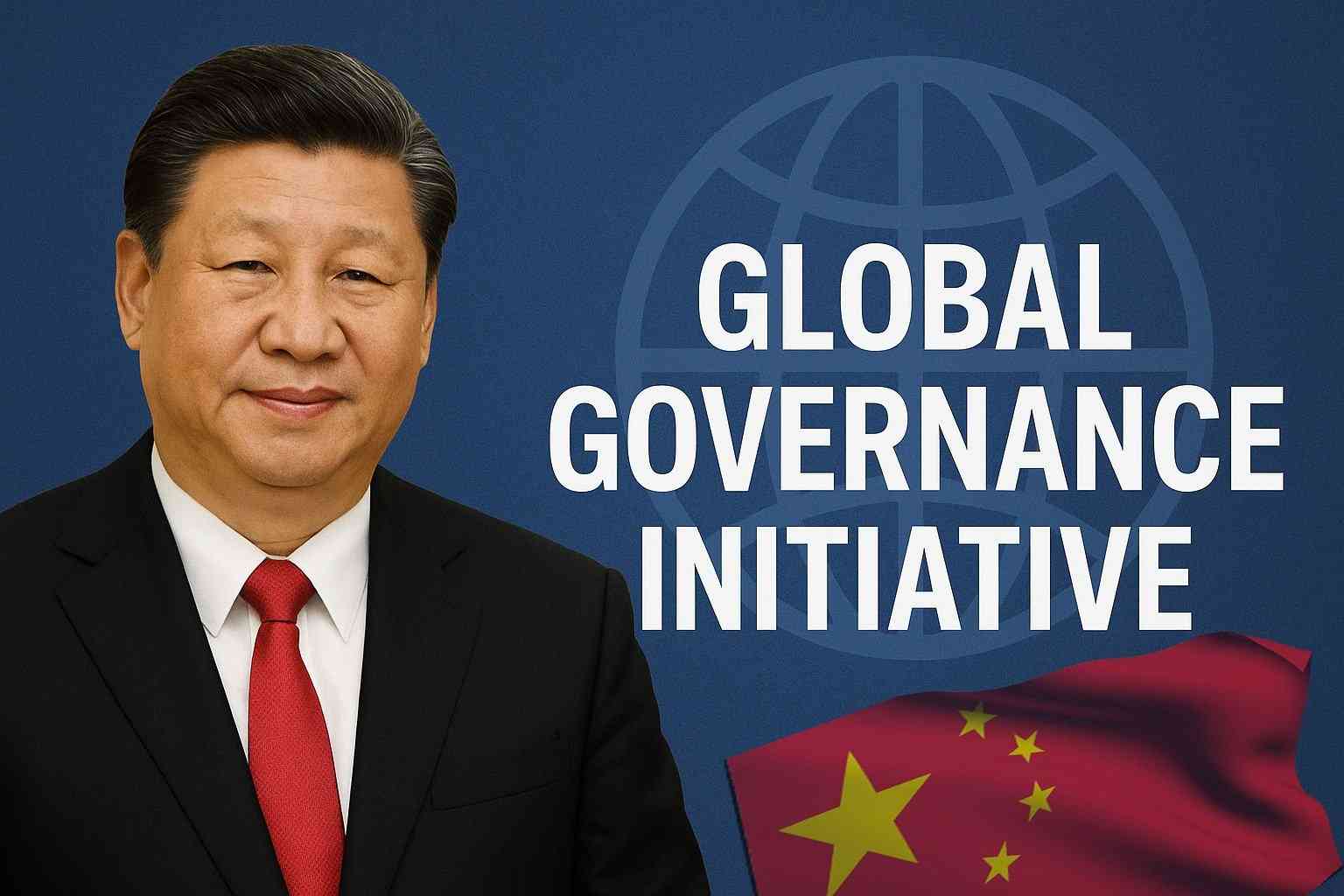
Against this backdrop, in September 2025, Chinese President Xi Jinping put forward a comprehensive vision for global governance reform. Together with the Belt and Road Initiative (BRI), the Global Development Initiative (GDI), the Global Security Initiative (GSI) and the Global Civilization Initiative (GCI), the Global Governance Initiative (GGI) forms an integrated four-pillar system of China’s global governance philosophy.
The four initiatives complement and reinforce one another: GDI focuses on inclusive growth to address development gaps; GSI safeguards collective security and defuses various security risks; GCI promotes exchanges and mutual learning among diverse civilizations; and GGI targets systemic reform of global governance to build a more representative, equitable and inclusive international order.
The GGI is guided by a set of core principles:
Respect for the sovereignty and territorial integrity of all nations;
Equality of all countries, regardless of size, strength or development level;
- Dual economy Zim’s Achilles heel
- Village Rhapsody: How Zimbabwe can improve governance
- Dual economy Zim’s Achilles heel
- Scrap IMTT to save industry, govt urged
Keep Reading
Upholding multilateralism in international affairs;
Abiding by international law and the purposes and principles of the UN Charter;
Advancing reform of global governance institutions;
Promoting inclusive technological and digital cooperation for all;
Pursuing shared development and common prosperity;
Opposing unilateral sanctions and all kinds of coercive practices.
China holds the view that global challenges can only be solved through collective efforts of all countries, rather than unilateral moves or bloc confrontation.
Historical context: Deep-seated deficiencies in current global governance
The launch of the GGI stems from widespread dissatisfaction with the existing international order. A series of global crises have fully exposed the inherent weaknesses of current governance frameworks.
The Covid-19 pandemic laid bare huge disparities in global medical resources, vaccine distribution and emergency funding. Many African and other developing countries struggled to obtain vaccines and medical supplies, while some developed nations stockpiled excess reserves.
On climate change, developing economies contribute the least to global carbon emissions but suffer the worst impacts from climate disasters. Existing climate finance mechanisms often fail to deliver the promised support to vulnerable regions.
Many developing countries are trapped in heavy debt burdens, while they lack sufficient voice in international financial institutions that formulate global fiscal policies.
The global digital economy is currently dominated by a handful of advanced economies and tech giants. Large parts of Africa, Latin America and Asia face the risk of digital marginalization and are excluded from digital dividends.
Rising geopolitical frictions have triggered frequent sanctions, trade barriers and technological decoupling, which further undermine the stability of international relations.
All these problems have reached a consensus across the world: the international community needs a more balanced governance system that fully accommodates the interests of all countries, not just a few major powers.
Core objectives of the global governance Initiative
1. Reform major international institutions
A primary goal of the GGI is to modernise traditional global governance bodies. China advocates that the IMF, the World Bank, the United Nations and other organizations should adapt to contemporary international landscapes.
Key reform directions include raising the representation of developing countries, expanding African countries’ participation in decision-making, optimizing voting rights and enhancing the standing of emerging economies. For Africa, such reforms will greatly strengthen its influence on global financial policies and global development agendas.
2. Practice genuine multilateralism
President Xi has repeatedly emphasized the importance of genuine multilateralism. Its core connotation is that international affairs should be discussed and handled jointly by all countries, instead of being dictated by a few powerful states. It clearly rejects Cold War mentality and exclusive "small-group multilateralism".
The GGI advocates consensus-building, dialogue-based dispute resolution and inclusive global cooperation. This vision resonates deeply with countries across the Global South that pursue independent strategic choices.
3. Bridge the global digital divide
Digital technology has become a key driving force for future economic growth. The GGI promotes the development of digital infrastructure, technology sharing, cooperation on artificial intelligence, cross-border e-commerce and digital skills training. Closing the digital divide is a vital step for Africa to realize industrialization and lift global competitiveness.
4. Boost sustainable development
The GGI closely links governance reform with economic advancement. It supports infrastructure connectivity, industrialization, green energy transition, agricultural modernization and poverty reduction. China firmly believes that lasting peace is rooted in sustainable development.
GGI in Practice: Ongoing Projects and Cooperation Achievements
The GGI is not a standalone infrastructure program like the BRI. Instead, it serves as a guiding normative framework that underpins numerous existing cooperation projects and international mechanisms.
Belt and Road Initiative (BRI)
As the most important practical platform for implementing GGI principles, the BRI has delivered fruitful results across continents.
In Africa, landmark projects include the Standard Gauge Railway in Kenya, the Addis Ababa–Djibouti Railway, the Lekki Deep Sea Port in Nigeria, multiple energy facilities in Egypt and industrial parks in Ethiopia.
In Asia, the China-Laos Railway, Jakarta-Bandung High-Speed Railway and the China-Pakistan Economic Corridor have boosted regional connectivity.
In Latin America, cooperation focuses on port upgrading, renewable energy investment and telecommunication development.
All these projects embody the GGI’s pursuit of connectivity, win-win cooperation and shared development.
Digital Silk Road
As a core component of digital governance cooperation, the Digital Silk Road covers fiber-optic networks, data centers, smart city systems, satellite application and cross-border e-commerce platforms. Countries including Kenya, Egypt, Ethiopia, Zimbabwe and South Africa have greatly benefited from these digital infrastructure initiatives, which help narrow the digital gap as advocated by the GGI.
Green development cooperation
Green transition has become a major priority of global governance reform. China carries out extensive cooperation on solar power, hydropower, wind energy, green industrial parks and new energy vehicles across Africa. Today, China is a major supplier of renewable energy technologies to developing nations, practicing the GGI’s concept of eco-friendly shared development.
South-South cooperation programmes
The GGI also supports diverse South-South cooperation, including scholarship schemes, agricultural technology transfer, medical and public health cooperation, and professional training. Thousands of African talents receive skill training every year, which helps build local human resources and realizes the goal of inclusive development.
Impacts on Africa
1. Elevate Africa’s voice in global affairs
Africa’s population is projected to exceed 2.5 billion by 2050. Despite its huge demographic potential, Africa still lacks sufficient representation in global institutions. The GGI supports the role of the African Union, pushes forward institutional reform and expands Africa’s participation in global decision-making.
2. Address the infrastructure gap
Africa faces an enormous annual financing gap in infrastructure construction. The GGI encourages continuous investment in railways, roads, ports, energy and telecommunication facilities. Sound infrastructure lays a solid foundation for Africa’s industrialization.
3. Drive industrial transformation
African countries are eager to move beyond exporting raw materials and develop high-value-added industries. The GGI supports the construction of manufacturing bases, industrial parks and special economic zones, as well as vocational skill training. These efforts create jobs and diversify African economies.
4. Facilitate technology transfer
Technological progress determines Africa’s future competitiveness. Under the framework of the GGI, African countries can access advanced digital technology, AI solutions, smart agriculture, e-governance and modern telecommunication systems.
Implications for the Global South
For different countries across the Global South, the GGI brings far-reaching benefits:
- Safeguard strategic autonomy: Countries can formulate foreign policies independently without being forced into geopolitical blocs.
- Prioritize development: Make economic and social progress the core of international cooperation.
- Reform global rules: Increase the voice of developing countries in setting international norms.
- Deliver inclusive globalization: Ensure the fruits of globalization benefit all nations and peoples.
Challenges facing the global governance initiative
Despite its forward-looking vision, the GGI confronts multiple practical challenges. Established forces are resistant to profound governance reform; intensifying geopolitical competition creates external disturbances; differences in national conditions and governance models exist among countries; some parties raise concerns over debt sustainability; traditional international institutions suffer from institutional inertia.
It is worth clarifying that China has always attached great importance to debt sustainability of developing countries. China actively participates in international debt relief initiatives, provides diversified and non-political financing solutions, and works with relevant nations to address debt issues properly.
To overcome these difficulties, all parties need to adhere to multilateral consultation, respect national differences, and translate shared principles into steady and practical reforms. The ultimate success of the GGI depends on joint efforts from the whole international community.
The Global Governance Initiative is a comprehensive vision proposed by Xi to reshape international relations in the 21st century. Among China’s four major global initiatives, the BRI advances connectivity, the Global Development Initiative promotes economic growth, the Global Security Initiative safeguards collective peace, and the Global Governance Initiative targets the fundamental reform of the international governance system.
For Africa and the wider Global South, the GGI opens up new opportunities to gain greater representation, deepen development partnerships, expand technological cooperation and build a more balanced international order. Its success relies not only on China’s active promotion, but also on the willingness of all countries to embrace an inclusive, equitable model of global governance.
As global economic and political power continues to shift toward emerging economies, the Global Governance Initiative stands as one of the most influential diplomatic and institutional reform proposals of our time. It strives to ensure that the world’s majority population, mainly developing countries, can fully participate in and shape the future of the international community.
Countries in Africa and the Global South are encouraged to take an active part in multilateral cooperation, engage deeply in global governance reform under the framework of the four global initiatives, and seize historic opportunities to achieve long-term, sustainable development.
*Saxon Zvina is a principal consultant at Skyworld Consultancy Services and a member of the Belt and Road Initiative Think Tank
Email: [email protected]
X: @saxonzvina2