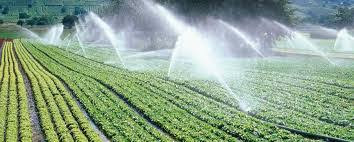
THE government has embarked on a massive rehabilitation project of 426 irrigation schemes across Zimbabwe aimed at improving livelihoods and uplifting communities, particularly in dry areas.
The programme has also reached the Birchenough Bridge irrigation scheme, which spans 316 hectares and is a prime example of government efforts.
The successful rehabilitation programme of the irrigation scheme has benefited about 720 families and is producing crops such as wheat, maize, chillies, groundnuts and tomatoes, with chillies mainly for export.
Speaking during a tour, which included the Devure Irrigation Scheme in Buhera district, last Friday, Lands, Agriculture, Fisheries, Water and Rural Development secretary Obert Jiri emphasised the importance of professional management and market-driven production.
“The irrigation business scheme unit is a key thrust for government. We want all irrigation schemes to be run as businesses and this is why we are ensuring that there is rehabilitation of all the 426 irrigation schemes across the country. Most of the irrigation schemes are dotted around dry areas,” Jiri said.
“We want these irrigation management committees to be capacitated to run these schemes as proper businesses and we also want these IMCs [irrigation management committees] to scout for markets and those markets should drive what they produce in these schemes.”
To support the irrigation schemes, Jiri encouraged irrigation management committees to scout for joint venture partners and adopt the block system.
“To assist in that we also advise these irrigation scheme business units to scout for joint venture partners.
- Massa Caroleen, Mwenje Mathole ‘chemistry’ births hit track
- Covid-19: Vaccination of Zim children yet to start
- Massa Caroleen, Mwenje Mathole ‘chemistry’ births hit track
- Covid-19: Vaccination of Zim children yet to start
Keep Reading
“There are investors out there who want certain produce, but they don’t have land to produce the raw materials they need.
“It is important for irrigation scheme business units and irrigation management committees to scout for these off-takers who are willing to come and invest.”
Jiri said the block system was a major thrust that the government instituted and recommended for irrigation scheme business units, and that must be adhered to by all irrigation scheme business units.
“This will enable them to attract major off-takers who require consistent and sufficient supply,” he said emphasising the need for professionalism, record keeping and access to finance.
These programmes are supported by institutions like the Agricultural Finance Corporation (AFC) and the Agricultural Marketing Authority providing support.
“We want records to be kept, we want professionalism to prevail, we want our bankers, AFC, the Agricultural Marketing Authority on the marketing side to come through and ensure that these irrigation scheme management units are run as proper businesses attracting finance, getting premier markets and of course being able to produce in a way that the market will have consistent supply,” he said.