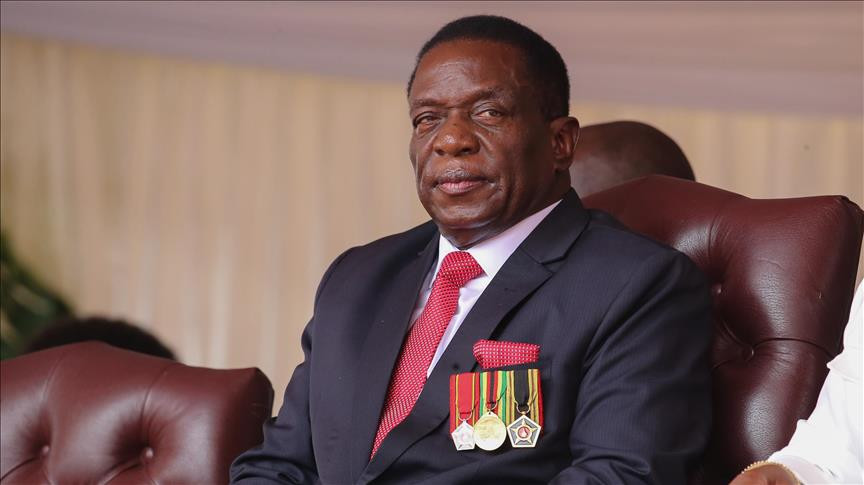
THE High Court has joined President Emmerson Mnangagwa as a respondent in a dispute over the Gokwe Sengwa Colliery Mine, after the Mines minister cancelled the company’s special grant to mine coal and awarded it to another firm.
Sengwa Colliery (Private) Limited approached the court seeking the joinder of the President, arguing that he is the only authority with the power to resolve the dispute.
The company cited the Mines minister, the secretary for mines, the provincial mining director for Midlands, the Mining Affairs Board, George Mining and Kabuyuni Mining Syndicate as respondents.
Sengwa Colliery held Special Grant No 849 over the coal mining location, known as “Sengwa Colliery”, for over four decades, producing 25 000 tonnes of coal annually from 2003 to 2008.
It resumed operations in 2024, producing over 24 000 tonnes with three mining contractors.
On August 15, 2024, the minister issued a notice of intention to cancel the grant, citing a lack of mining activity.
Sengwa Colliery responded on June 20, 2025, providing a status report detailing its operations, investments and plans to establish two thermal power stations.
It noted ongoing discussions with a Chinese investor.
- Fresh land invasions hit Whitecliff
- Pomona cash row escalates
- Border Timbers targets European markets
- SA name strong A side for Zim tour
Keep Reading
Despite these representations, Special Grant No 849 was cancelled on August 15, 2025.
Following the cancellation, George Mining was issued Special Grant No 10417 over the same area on October 17, 2025.
Sengwa Colliery filed an application for a declaratory order, treating the cancellation and the new grant as nullities.
It argued that under section 305 of the Mines and Minerals Act, the power to cancel a special grant belongs exclusively to the President.
The company submitted that the minister and his secretary had usurped presidential powers.
George Mining argued that there were no mining activities taking place on the land, that the cancellation complied with the Act and that the minister had obtained the President’s approval.
It further submitted that its special grant was approved by the President on Cabinet recommendation and gazetted on October 17, 2025.
When the matter was set down for hearing, George Mining raised a point of law that the non-joinder of the President was fatal to the proceedings, pointing to the Government Gazette stating that the minister acted with the President’s authorisation.
High Court judge Justice Regis Dembure ruled that the non-joinder of the President is material, but not fatal.
“This court has inherent authority to order the joinder of any person necessary for the determination of all issues before it in terms of rule 32(12(b). The words ‘any person’ in the said rule are very wide and may include even the President,” the judge ruled.
“In any case, it cannot be argued that the applicant instituted a suit against the President without the leave of the court contrary to rule 12(21); rather, it is a suit that the court itself has sanctioned.
“In any case, Part XX of the Act has, by statutory authority, brought the President directly into the arena as the authority that makes the decision to grant the application for a special grant or cancel it.”
The court ordered that the President be joined as the seventh respondent, that he be served and given the ordinary dies induciae (grace period) to file opposing papers and that the matter be removed from the roll.
Costs were ordered to be in the cause.