For decades, the story of China’s economic ascent has been told as a miracle of production and scale. However, the true lesson of China is not found in its factories, but in its leadership, discipline, radical results-oriented pragmatism, and nation-building.
As African nations grapple with the legacy of colonialism and the challenges of the 21st century, including poverty, de-industrialization, disease, crime, and other social vices, the Chinese model offers a challenging blueprint: development is a choice made by leaders who prioritize national progress over political survival.
This lesson is particularly relevant for Zimbabwe. The country’s long-term aspirations, as articulated in Vision 2030 and operationalized through the recently concluded National Development Strategy 1 (NDS1) and the nascent National Development Strategy 2 (NDS2), emphasize economic transformation, industrialization, and improved livelihoods.
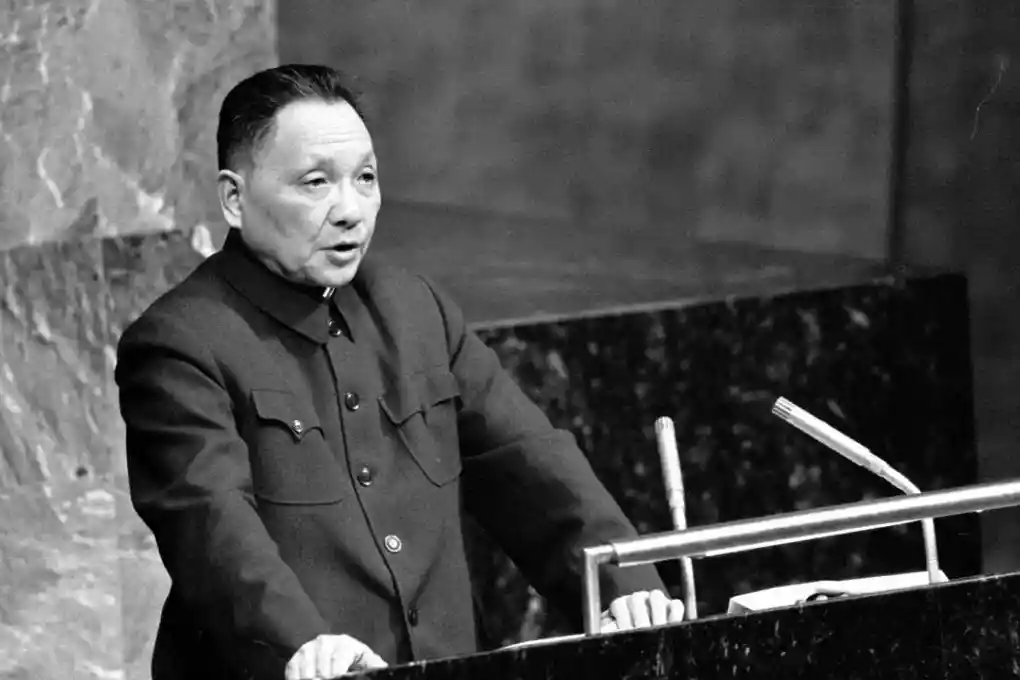
At the heart of China’s transformation was Deng Xiaoping’s famous maxim: “It doesn’t matter whether the cat is black or white, as long as it catches the mice.” This was more than a slogan; it represented a fundamental shift from rigid ideology to developmental pragmatism. Greg Mills and others, in their reading of China, strip away the myths of the “Chinese Miracle” to reveal a blueprint that is as much about mindset as it is about economics. Mills hammers home a singular theme: “leadership, leadership, leadership.” Transformation occurs only when a country’s leadership is developmental. This means leadership whose survival depends on the country’s economic success, rather than extractive leadership, where the goal is to siphon national wealth into private pockets. This emphasis on strong, effective, and accountable institutions and leadership resonates directly with Zimbabwe’s Vision 2030, which seeks to transform the country into an upper-middle-income economy. NDS2 further reinforces this by prioritizing good governance, macroeconomic stability, and structural transformation. However, as the Chinese example shows, having policies on paper is not enough; what matters most is consistent implementation driven by a results-oriented mindset.
In the African context, this pragmatism is often the missing ingredient. While many leaders remain prisoners of history, using the trauma of colonization to rationalize modern-day failures, China’s leadership chose a reset. They acknowledged that, while history is a burden, it cannot serve as an excuse forever. East Asian economies, including Singapore, Indonesia, Cambodia, and the recent success story Vietnam, also suffered through colonization, war, famine, and dictatorship, yet they chose to dismantle old extractive systems to secure the future of their nations. Greg Mills suggests that Africa has the potential to surpass Asia because it possesses far greater natural resources. However, that potential is often squandered by governments influenced more by party loyalty than national discipline.
Zimbabwe’s development frameworks, particularly NDS2, recognize this gap by emphasizing productivity, value addition, and the efficient use of resources. Yet the Chinese experience highlights that resource endowment alone does not drive development. It is the discipline in managing those resources and the willingness to implement difficult, sometimes unpopular, reforms that ultimately determine success. The lesson from China is that leadership, whether authoritarian or democratic, must ultimately deliver development. Historicizing present challenges has become a tired excuse. The new narrative must center on pragmatism, human capital, and the discipline to use the national budget for national development rather than quasi-fiscal activities. This aligns closely with Vision 2030’s focus on human capital development, innovation, and industrial growth. NDS2 also underscores the importance of investing in education, health, and skills development as drivers of economic transformation. China’s rise was not only about policy shifts but also about massive investment in its people, resulting in an effective technocratic bureaucracy that proved to be a key driver of China’s phenomenal rise. China ensured that its workforce could sustain industrialization and compete globally.
The tragedy is that many African nations possess far more natural resources than the Asian “tigers” had at the beginning of their development journeys. Yet, without a shift toward developmental institutions, purposeful and strategic leadership, and a rejection of the shameless culture of corruption, that potential remains untapped. Across the developing world, the question of why some nations leapfrog into prosperity while others remain shackled to poverty remains the defining puzzle of our time. Zimbabwe’s policy frameworks already acknowledge corruption and inefficiency as key barriers to development. NDS2 stresses transparency, accountability, and public-sector reform. However, the Chinese case demonstrates that reform must go beyond acknowledgment; it must translate into visible, measurable outcomes that improve citizens’ lives. Development is ultimately judged not by intentions but by results.
Deng Xiaoping offers a simple answer: development is not a mystery of geography or a debt to history; rather, it is a choice grounded in pragmatism over ideology. China’s message to the world is that a nation’s past does not have to become its prison. By adopting a “black cat” pragmatism and investing in the skills of its people, any nation can engineer its own version of a reset.
- The brains behind Matavire’s immortalisation
- Red Cross work remembered
- All set for inaugural job fair
- Community trailblazers: Dr Guramatunhu: A hard-driving achiever yearning for better Zim
Keep Reading
For Zimbabwe, Vision 2030 and NDS2 provide a clear roadmap, but the success of these strategies depends on whether the country can embrace the same level of pragmatism, discipline, and institutional strength that defined China’s transformation. The policies already point in the right direction; the challenge lies in execution, accountability, and prioritizing national development over political expediency. Ultimately, the mice are waiting to be caught. The only question is whether the leadership is willing to let the “cat” work. For Zimbabwe, the question is not whether the vision exists, because it does, but whether the country is willing to fully commit to the practical, results-driven approach required to turn that vision into reality.
About the authors
- Andromeda Heather Jubane is a fourth-year Development Studies student at Lupane State University. Andromeda writes in her individual capacity.
- Mbongeni Nhliziyo is a PhD student at the University of Fort Hare in East London, South Africa. Mbongeni writes in his individual capacity