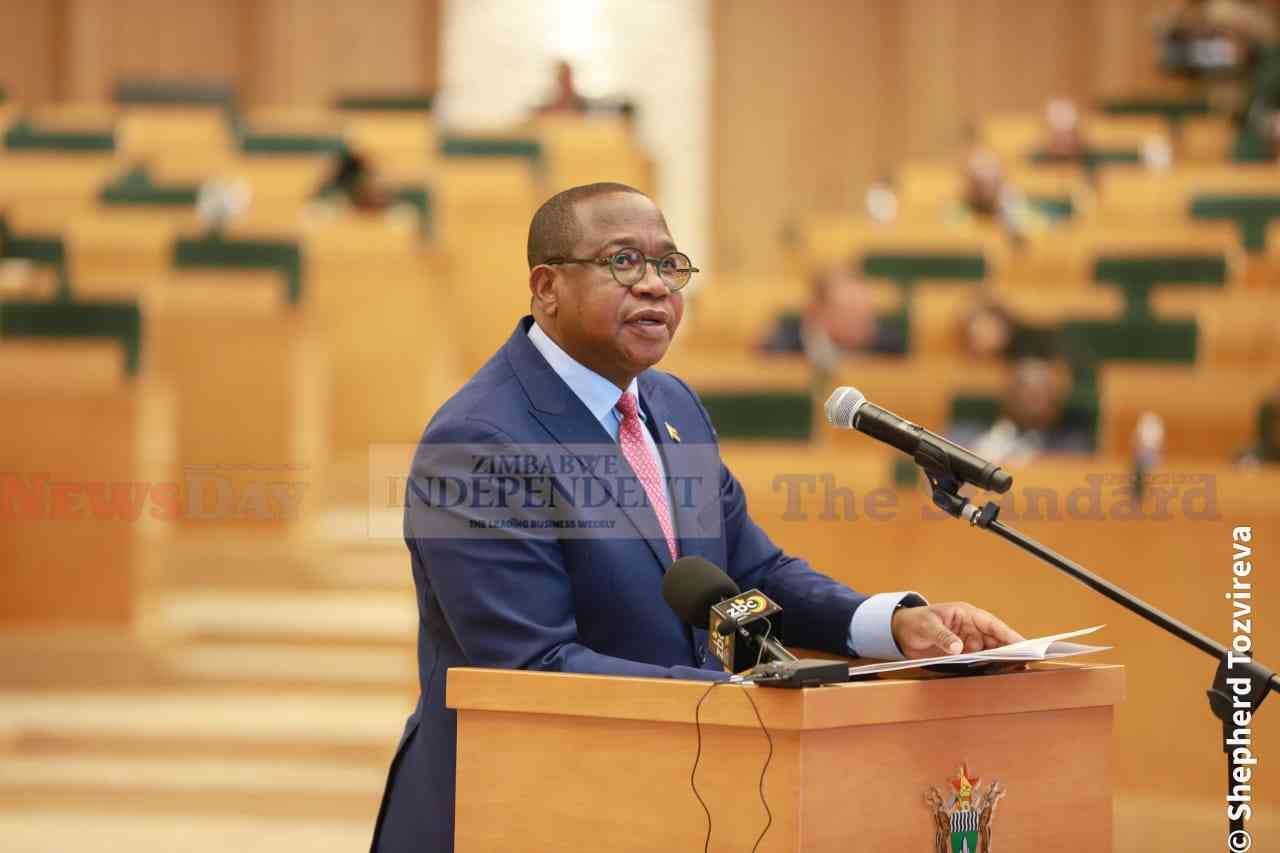
HARARE, Jul. 30 (NewsDay Live) – Zimbabwe will not introduce a supplementary budget this year after stronger-than-expected revenue collections and restrained government spending left Treasury with enough fiscal space to finance planned programmes through year-end, Finance Minister Mthuli Ncube said on Thursday.
Presenting the 2026 Mid-Term Budget and Economic Review in Parliament, Ncube said the economy remained on course despite global headwinds, maintaining the government’s full-year growth forecast of 5% while projecting continued low inflation and currency stability.
“The approved budget remains adequate to cover planned programmes and projects through to the year’s close, without the need for a Supplementary Budget,” Ncube said.
The announcement will reassure investors and businesses that Treasury intends to maintain fiscal discipline after years in which supplementary budgets fuelled concerns over public spending and inflation.
Government collected ZiG137.8 billion in revenue during the first six months of the year against expenditure of ZiG123.6 billion, generating savings that were channelled towards servicing public debt and clearing arrears owed to service providers. VAT remained the largest source of revenue, contributing 28.3% of collections, followed by personal income tax at 16.6% and corporate income tax at 13.8%.
Ncube said Zimbabwe’s economy continued to benefit from macroeconomic stability, with annual inflation averaging 4.2% during the first seven months of 2026 after slowing sharply from nearly 96% a year earlier. GDP growth is forecast at 5% this year following an 8.3% expansion in 2025, supported by strong mineral prices, improved agricultural output and reforms aimed at reducing the cost of doing business.
Mining and agriculture remain the principal drivers of growth.
Gold production is expected to rise to 55.6 tonnes this year from 50 tonnes in 2025, while lithium exports surged nearly 230% in the first half of the year to US$782.2 million. Manufacturing capacity utilisation is also projected to improve to 63.5% this year, supported by investment and funding under the Industrial Development Fund.
- Budget dampens workers’ hopes
- Govt issues $24 billion Covid-19 guarantees
- Letter to my People:They have no answers for Nero’s charisma
- ZMX to enhance farm profitability
Keep Reading
Zimbabwe’s external position also strengthened during the review period.
Foreign currency receipts jumped 47.8% to US$10.7 billion in the first half, while the current account swung to a US$616.3 million surplus from a deficit a year earlier. Merchandise exports rose 41.6%, helping usable foreign exchange reserves increase to US$1.6 billion by the end of June.
Treasury acknowledged, however, that geopolitical tensions continued to pose risks. Ncube said the conflict in the Middle East reduced fuel tax collections, costing government more than US$74 million in lost revenue, while preparations were already under way for a possible El Niño-induced drought during the 2026/27 agricultural season.
To sustain infrastructure investment without putting further pressure on the fiscus, government plans to establish an Infrastructure Development Fund that will leverage financing from domestic and international lenders.
As part of that initiative, Treasury has arranged a US$400 million facility with local financial institutions to complete the remaining section of the Harare-Beitbridge Highway and finance upgrades to the Harare-Chirundu and Bulawayo-Victoria Falls roads. Government has already secured the first US$100 million, with repayments to be ring-fenced from ZINARA revenues.
Despite the positive outlook, public debt remained elevated.
Zimbabwe’s public and publicly guaranteed debt stood at ZiG580.9 billion, equivalent to US$21.7 billion, at the end of June, while government continued servicing legacy obligations under its debt resolution strategy. Ncube said Zimbabwe had met all but one of the quantitative targets under its IMF Staff Monitored Programme, a key step towards restoring access to concessional international financing.
The minister said government would maintain its tight fiscal stance during the second half of the year while expanding social protection and protecting macroeconomic stability as it pursues its Vision 2030 economic agenda.