THE increase in second and third line HIV treatment uptake in Bulawayo is a cause for concern amid revelations there is treatment failure among uptakers.
There were also indications of a need to do more in integrating services for key populations, among them same sex relations.
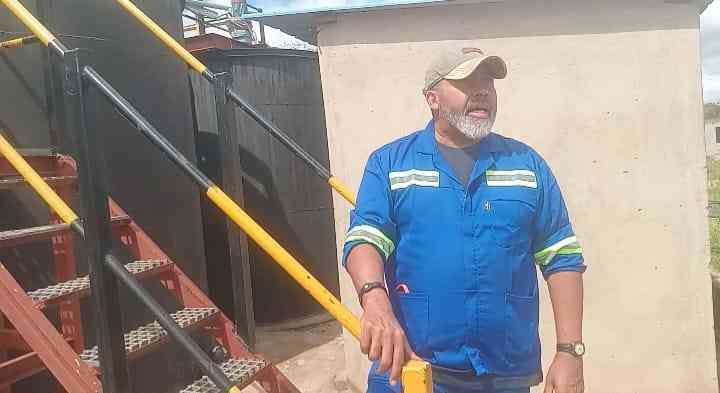
This was revealed by Bulawayo National Aids Council (NAC) programmes officer Douglas Moyo during a media engagement meeting in Esigodini.
Indications are that in all facilities, there is a need to be key population sensitive.
“We still need to do more so that we integrate services for key populations in our local facilities. When a key population comes in, you are seeing two men walking saying ‘this is my boyfriend or my girlfriend’. How do you react as a boy?” Moyo said.
“He comes to you and tells you he has got an STI [sexually transmitted infection]. How do you react? So these are the issues that we need to be sensitive to.”
On coverage, Moyo said 79 315 people were on anti-retroviral treatment as at the end of the third quarter, with 77 532 being adults (population group aged 15 and above) constituting 97,8%.
“For children less than 14 years, we had 1 783, which was 2,2%. For adult females, there were 62,1% and males were 37,9%. First line regimen had 94% of the recipients, second line regimen 5,8% and third line 0,15%,” Moyo said.
- Zim wins bid to host ICASA 2023
- An extraordinary tale of perseverance
- ‘ICASA to focus on other diseases
- Poverty drives Epworth women into sex work
Keep Reading
“We begin to worry when we see the numbers on second line and third line increasing because that shows us that there is treatment failure somewhere. That shows us that there are challenges somewhere.”
Moyo said those that were on the second line showed that they failed in some of the alternative regimen for first line.
He said for those on third line, again it showed that they failed on the second line.
“That shows us that we still need to do a lot on the ART programme,” he said.
Moyo said they regularly came across the question: is HIV still a threat, adding that it could be answered as follows: “Yes, it is still so.”
He said if people were failing on first line, it meant they had developed resistance in the first regimen, which meant they were transmitting a virus that was resistant to first line regimen.
“If they fail on second line, it means we have people who are going to transmit HIV that is resistant to second line. So, therefore, HIV is still a threat. So we need to work on reducing those numbers,” Moyo said.
“We should make sure that we minimise the numbers of people that fail on first line regime. Then we’ll take care of your secondary deadline differentiated service delivery models.
“We’ve got support groups, then we’ve got the modules that I alluded to that are implemented by National Aids Council.
“Then if you look at viral suppression, we are saying 128% suppression rate for males and 116% for females. Figures exceed testing due to delayed results, turnaround times. This is why we have got those figures that are above 100%.”
Added the NAC official: “These are results that come after reporting people growth, hence those figures, but in terms of viral suppression, we seem to be doing well. Moving forward generally at population level as a city, we have attained our 95-95-95 targets.
“We attained them before December. Remember the deadline for the 3-95s is December 2025, but we attained those way back, but in terms of prevention, we need to continue doing more on prevention of mother to child transmission [PMTCT], as you saw leakages were there.”
The UNAids 95-95-95 targets aim to ensure that by 2030, 95% of all people living with HIV know their HIV status, 95% of all people diagnosed with HIV receive sustained antiretroviral therapy and 95% of all people receiving antiretroviral therapy have viral suppression.
Moyo said they still needed to strengthen the coding programming aspect so that they had more people thinking about reducing the chances of transmitting HIV or acquiring HIV during unprotected sexual intercourse and then in terms of support, they need to enhance youth programmes with the key population services.
He said this was because they wanted to protect a large population of young people so that they do not get infected.
He said key populations needed to sustain the gains of a high negativity rate of more than 90.