Stakeholders in Matabeleland have expressed concern over the government’s persistent failure to meet timelines and advance critical infrastructure projects in Matabeleland North.
They said this highlights a long-standing systematic pattern of underdevelopment in the region, which has historically lagged behind others in terms of investment and state-led development initiatives.
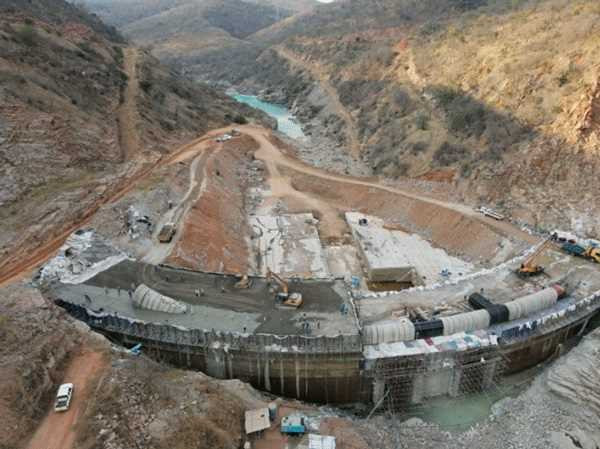
There are concerns over the sluggish work on major projects such as the Gwayi-Shangani Dam, the Bulawayo-Victoria Falls highway, and the rehabilitation of the Bulawayo-Nkayi Road among other stalled projects since their inception, exacerbating frustrations over regional inequality.
Public policy analyst Effie Ncube told Southern Eye that reliable water and road infrastructure is fundamental to economic development.
“While any investment in infrastructure is welcome, Matabeleland North suffers from particularly severe road infrastructure problems and poor access to clean, safe water,” Ncube said.
He indicated that several major roads were nearly impassable, placing a major strain on vehicles and drivers.
This leads to high transport and maintenance costs, delays in moving goods and workers, and ultimately higher prices for consumers.
“The shortage of reliable water constrains irrigation and industrial productivity, directly undermining national goals for food security and household income,” Ncube added.
- Binga villagers dig in over relocations
- Concerns grow over fate of Binga villagers
- Villagers’ relocation to cost US$2m
- Bodies ‘rotting’ at UBH
Keep Reading
He emphasised that the long-delayed Gwayi-Shangani Dam project, once completed, is expected to alleviate water challenges for surrounding communities and Bulawayo, providing a crucial resource for industrial and agricultural use.
“Reliable bulk water supply means year-round irrigation and greater commercial yields. Good roads reduce costs, boost competitiveness, and enhance trade, tourism, and job creation,” Ncube said.
Ncube said further delays in completing this infrastructure should be a serious concern for both the government and affected communities.
“Some delays have been unacceptably long, spanning years,” he said.
“The government must adhere to timelines to boost both regional and national economies.”
He called for greater budgetary priority to be given to historically underserved regions like Matabeleland North, noting that years of neglect now require more resources to rebuild from a deep level of collapse.
Another public policy analyst, Samukele Hadebe, acknowledged the importance of the ongoing projects, but complained about the slow pace in having them completed.
“Firstly, let us appreciate the work on projects like the Victoria Falls road, Nkayi road, and Gwayi-Shangani Dam.
‘These are enabling infrastructures vital for the province and the nation,” Hadebe said.
“However, there is genuine concern regarding timelines.
“Serious administrative inefficiency slows down performance, erodes budgets, and compromises service delivery.”
“What must improve is administrative efficiency and adherence to schedules without compromising quality.
“For instance, the Bulawayo-Victoria Falls road was allowed to deteriorate severely before repairs, making the intervention far more costly and inconvenient for the public.”
Nkayi legislator, Jabulani Hadebe concurred, also highlighting the century-long delay of the Gwayi-Shangani Dam.
“The completion of this dam is set to boost agriculture, tourism, and hydro-electric power generation,” he said.
“However, progress is at a snail’s pace. The project began in 1912—over a century ago—and remains unfinished.”
He said the persistent delays in these flagship projects underscore a broader history of marginalization and underinvestment in Matabeleland.
Analysts said without a dedicated commitment to equitable development and efficient project execution, the region’s potential for economic growth and improved livelihoods will remain unrealised, perpetuating a cycle of regional disparity.