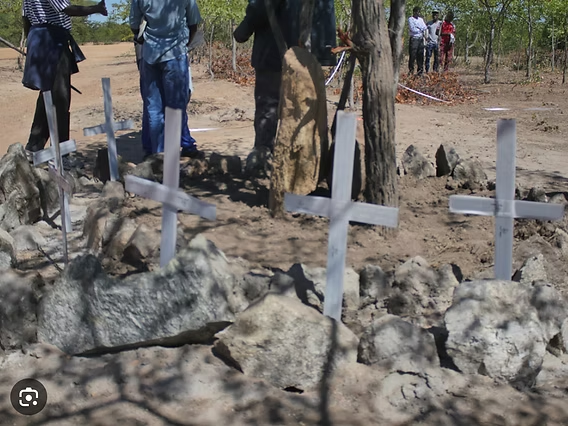
Young people in Matobo district, an area scarred by the Gukurahundi massacres of the 1980s, have voiced deep anguish over the unresolved atrocities and continued marginalisation of Matabeleland.
Young people in Matobo district, an area scarred by the Gukurahundi massacres of the 1980s, have voiced deep anguish over the unresolved atrocities and continued marginalisation of Matabeleland.
The youths accused the government of lacking the political will to address this painful history.
The concerns were raised in a statement dated January 8 from Matobo District Young Revolutionary leader Mphathisi Sibanda, which was addressed to Mthwakazi Republic Party (MRP) leader Mqondisi Moyo.
Sibanda indicated that the shadows of Gukurahundi, which claimed over 20,000 lives in Matabeleland and Midlands, continued to torment the community.
“The shadows of Gukurahundi still loom large over Matabeleland, tormenting the souls of its people,” Sibanda said.
“Decades after the brutal campaign, the wounds remain raw, and the pain is still palpable.
“The government’s silence has only exacerbated the sense of marginalisation.”
- Ziyambi’s Gukurahundi remarks revealing
- Giles Mutsekwa was a tough campaigner
- New law answers exhumations and reburials question in Zim
- Abducted tourists remembered
Keep Reading
Sibanda’s statement came as the government prepares to hold the 2026 national Independence celebrations at Maphisa in Matobo — an area infamous for housing the North Korean-trained Fifth Brigade, which committed widespread atrocities including killings, rape, and forced disappearances against the Ndebele people.
Sibanda condemned what he called the forced assimilation of PF Zapu into Zanu PF in 1987, describing it as a takeover that eroded Ndebele autonomy.
He highlighted ongoing economic neglect, crumbling infrastructure, and a lack of investment as symptoms of systemic marginalisation.
“The people of Matabeleland are not asking for handouts. They are demanding justice, recognition, and equality," Sibanda said while calling for acknowledgment of the genocide, economic investment, promotion of Ndebele language and culture, and equitable political representation.
The choice of Maphisa as the celebration venue has sparked outrage among activists and survivors.
The MRP leader labelled the move “shameful” and “satanic”, questioning how a regime implicated in mass killings could celebrate independence near a site like Bhalagwe, a mass grave.
“To gather at a mass grave and call it 'independence' is not only immoral, it is satanic. It is an insult. It is desecration," Moyo said
Ibhetshu likaZulu secretary-general Mbuso Fuzwayo echoed these sentiments, calling it "unfortunate" to celebrate in "the face of genocide."
He criticised the government for stifling mourning and destroying memorial plaques erected by victims' families.
Nkayi Community Parliament speaker Nkosilathi Ncube urged Mnangagwa to address the legacy of Gukurahundi by allowing exhumations, establishing a genocide museum, and issuing an apology.
“People are joining Zanu PF not out of love, but fear and poverty,” Ncube said.
Gukurahundi survivor Ben Moya emphasised that true independence required the rule of law and accountability.
“The second republic is no different from the first in that regard,” he said, calling for the arrest of those who destroyed memorial plaques.
Zapu leader Sibangilizwe Nkomo noted that while independence should be celebrated, it should not be imposed for political purposes in a region where people are arrested for mourning their dead.
The government has yet to respond to the allegations and criticisms raised.
The concerns were raised in a statement dated January 8 from Matobo District Young Revolutionary leader Mphathisi Sibanda, which was addressed to Mthwakazi Republic Party (MRP) leader Mqondisi Moyo.
Sibanda indicated that the shadows of Gukurahundi, which claimed over 20,000 lives in Matabeleland and Midlands, continued to torment the community.
“The shadows of Gukurahundi still loom large over Matabeleland, tormenting the souls of its people,” Sibanda said.
“Decades after the brutal campaign, the wounds remain raw, and the pain is still palpable.
“The government’s silence has only exacerbated the sense of marginalisation.”
Sibanda’s statement came as the government prepares to hold the 2026 national Independence celebrations at Maphisa in Matobo — an area infamous for housing the North Korean-trained Fifth Brigade, which committed widespread atrocities including killings, rape, and forced disappearances against the Ndebele people.
Sibanda condemned what he called the forced assimilation of PF Zapu into Zanu PF in 1987, describing it as a takeover that eroded Ndebele autonomy.
He highlighted ongoing economic neglect, crumbling infrastructure, and a lack of investment as symptoms of systemic marginalisation.
“The people of Matabeleland are not asking for handouts. They are demanding justice, recognition, and equality," Sibanda said while calling for acknowledgment of the genocide, economic investment, promotion of Ndebele language and culture, and equitable political representation.
The choice of Maphisa as the celebration venue has sparked outrage among activists and survivors.
The MRP leader labelled the move “shameful” and “satanic”, questioning how a regime implicated in mass killings could celebrate independence near a site like Bhalagwe, a mass grave.
“To gather at a mass grave and call it 'independence' is not only immoral, it is satanic. It is an insult. It is desecration," Moyo said
Ibhetshu likaZulu secretary-general Mbuso Fuzwayo echoed these sentiments, calling it "unfortunate" to celebrate in "the face of genocide."
He criticised the government for stifling mourning and destroying memorial plaques erected by victims' families.
Nkayi Community Parliament speaker Nkosilathi Ncube urged Mnangagwa to address the legacy of Gukurahundi by allowing exhumations, establishing a genocide museum, and issuing an apology.
“People are joining Zanu PF not out of love, but fear and poverty,” Ncube said.
Gukurahundi survivor Ben Moya emphasised that true independence required the rule of law and accountability.
“The second republic is no different from the first in that regard,” he said, calling for the arrest of those who destroyed memorial plaques.
Zapu leader Sibangilizwe Nkomo noted that while independence should be celebrated, it should not be imposed for political purposes in a region where people are arrested for mourning their dead.
The government has yet to respond to the allegations and criticisms raised.