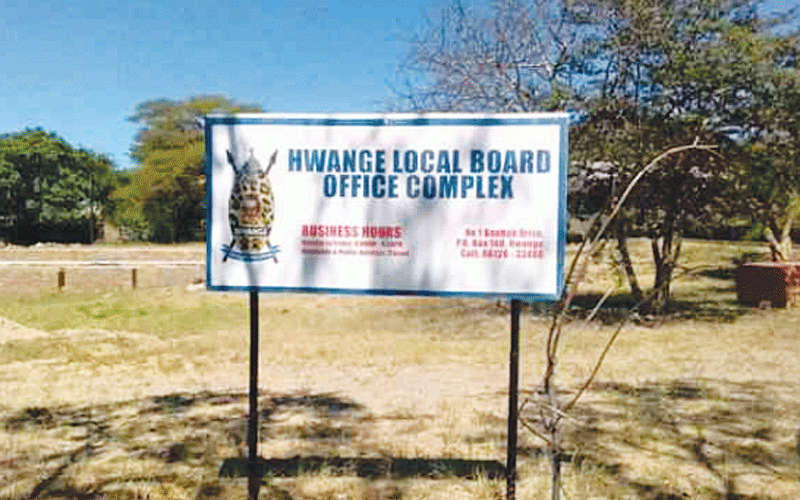
Residents of Hwange in Matabeleland North have expressed mixed feelings the Hwange Local Board (HLB’s) 2026–2030 Strategic Plan which sets out the town’s development priorities over the next five years.
Residents in support of the strategic plan said it is a people-centred roadmap that reflects residents’ needs and anchored on infrastructure development and improved service delivery.
Greater Hwange Residents Association committee member Harriet Nyathi said residents were actively involved in shaping the strategic framework during a four-day consultative process.
“As a residents’ representative, I was honoured to be part of the four-day strategic planning review process that shaped our town’s roadmap,” Nyathi said.
“The engagement provided an inclusive platform for residents to voice their aspirations, priorities and concerns, ensuring that the resulting plan truly reflects the collective vision of the community.”
She added that the participatory process strengthened trust between residents and local authorities while laying the foundation for sustainable development.
“It was encouraging to see stakeholders working together to chart a clear, sustainable and people-centred development path for our town,” she said.
Nyathi noted that the plan prioritises critical infrastructure projects, including the construction of new schools, establishment of flea markets and refurbishment of the town’s stadium, among other developments aimed at improving residents’ quality of life and stimulating local economic growth.
- Travelling & Touring Town: status: Beckoning time for Binga, Hwange
- Hwange eyes town status
- Travelling & Touring Town: status: Beckoning time for Binga, Hwange
- Hwange eyes town status
Keep Reading
Strategic plans are key governance tools for local authorities across Zimbabwe, providing structured, long-term frameworks to guide development, align resources and enhance service delivery.
Hwange Residents Association chairperson, Lucky Daka, cautioned that broader community ownership remains essential to ensure successful implementation.
“I believe there is still room for improvement. One of the key challenges is that we are implementing this initiative mainly because it is a government requirement, rather than out of a strong sense of local ownership,” Daka said.
“This weakens commitment and poses a risk to the successful attainment of the minimum service delivery standards.
“Without genuine community buy-in, the initiative risks failing before it can yield meaningful results.”
Daka stressed on the importance of continuous engagement between council and residents through consultations, feedback mechanisms and awareness campaigns.
He said strengthening communication channels would help align the strategic plan with community priorities while enhancing transparency, accountability and effective service delivery.
Residents said the success of the 2026–2030 strategic plan will ultimately depend on sustained collaboration between the local authority, stakeholders and the community to translate the vision into tangible improvements on the ground.