SMALL-GRAIN farmers in Bulilima and Matobo districts are urging communities to embrace drought-resistant crops as maize harvests this year are expected to be poor due to waterlogging, lack of fertiliser and other challenges.
The warning came during a “look and learn” adaptation farm programme organised by Sisonke Working Together Trust in Tokwana, Bulilima district.
The initiative showcased the benefits of planting early and adopting crops that withstand climate change.
Sisonke Working Together Trust ward 4 coordinator Sipho Malebegwa, with the assistance of community leaders, Meli Tshuma and village head Lenny Tshuma, presided over the occasion.
Malebegwa indicated that attendees at the week-long event thought attending farmer field schools was a waste of time, but discovered that the Sisonke initiative had transformed livelihoods and built resilience against climate change.
“Yes, we love maize as our staple diet, but most of the time conditions are not favourable, hence the need to switch to small grains,” Malebegwa said.
“If look and learn visits were conducted across the country, Zimbabwe would remain food secure in the years to come.”
She is organising communities and captains of industry to collaborate and fundraise for the construction of the Sisonke Climate Change Centre of Excellence in Bulilima.
- COP26 a washout? Don’t lose hope – here’s why
- Out & about: Bright sheds light on Vic Falls Carnival
- COP26 a washout? Don’t lose hope – here’s why
- Out & about: Bright sheds light on Vic Falls Carnival
Keep Reading
Malebegwa said traditional leaders were ready for the idea and were rallying behind the programme.
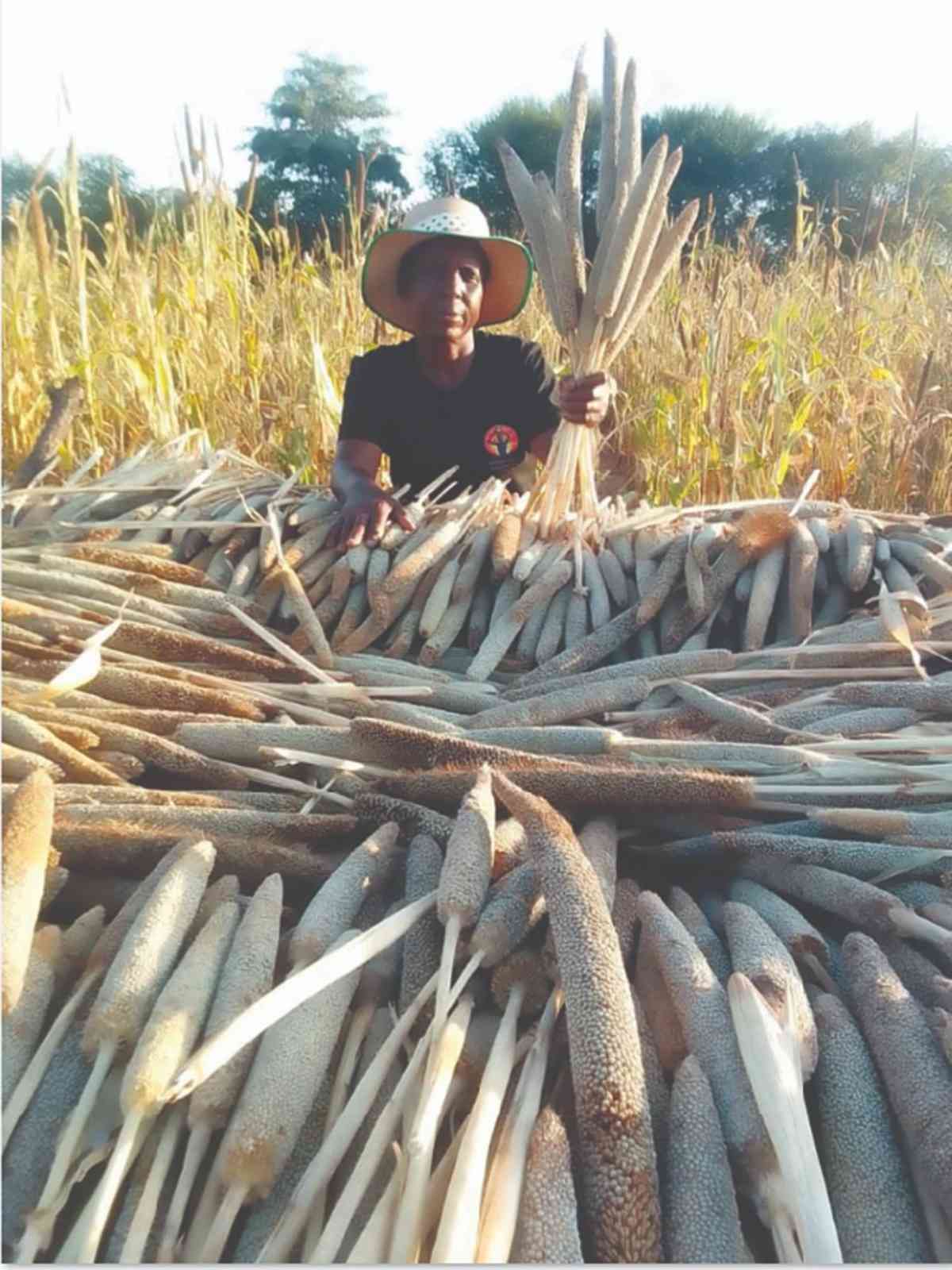
A small-grain farmer, Musa Jiyane (65), is one of the farmers whose fields were used as sites for the look and learn programme because of the good yields of her millet crop.
Jiyane said Matabeleland South was prone to drought, adding that some farmers who planted maize would have poor harvests this year.
“I feel indebted to Matopo and Sisonke Working Together Trust for teaching me how to grow early maturing varieties of millet,” she said.
“I have already started harvesting my millet. To survive droughts in the semi-arid Matabeleland South, the only route is to crop small grains.”
Jiyane said she chose to grow millet because there was very low rainfall in Matabeleland South, which fell under natural region 5.
“The adaptation and mitigation mantra brought by Sisonke, Matopo Research Institution, Department of Agriculture and the Ministry of Environment has brought me to the stage where I am now,” she said.
“Traditional grains are the future of this country. I urge all women my age to choose small grains because of the nutritional benefits that one can accrue from eating the small grains.”
She called on researchers and other scientists to visit them and see what they are doing in the drier region of
Matabeleland South.
According to Sisonke Working Together Trust director Themba Phiri, Jiyane has achieved Sustainable Development Goals 5, 8, 12, 13 and 17.
He said her fields were used for the look and learn programme for small grains because of good yields.