Under the wide, sun-scorched skies of Tokwana in Bulilima District, Matabeleland South, a quiet agricultural transformation is taking root—led not by large-scale commercial players, but by rural women determined to outmanoeuvre the harsh realities of climate change.
On March 19, 2026, Sisonke Working Together Trust convened a Climate Change Farmer Field Day in Ward 4, drawing 109 participants, the majority of them women.
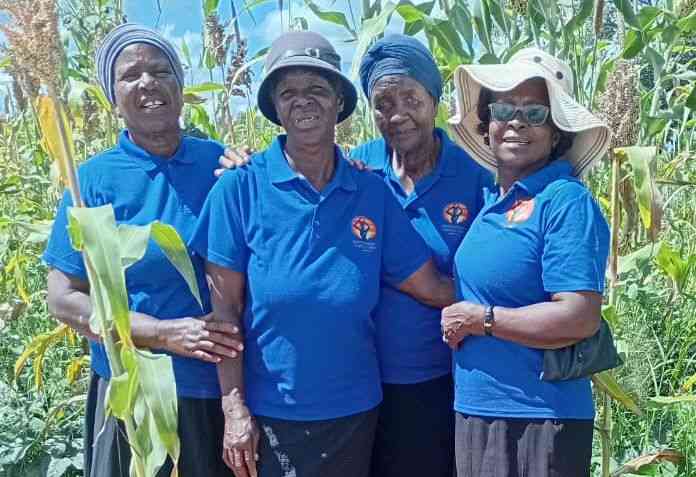
Their presence was not incidental—it was symbolic of a shifting dynamic in rural agriculture, where women are increasingly becoming the drivers of innovation, resilience, and food security at household level.
The gathering was more than just a field day.
It was a living classroom, a meeting of minds, and a platform for exchanging survival strategies in a region where rainfall is erratic and droughts more frequent.
At the heart of the discussions was a simple but powerful message: adapt or struggle.
Farmers were encouraged to embrace small grains—such as sorghum and millet—which are better suited to withstand dry conditions compared to conventional crops like maize.
Alongside this was a strong emphasis on conserving wetlands, described as lifelines for communities navigating water scarcity.
- Khupe campaign vehicle impounded
- 270 farmers benefit from small grains project
- Farmers pin hopes on village banks
- Donor fund gives blind Bulilima girl new hope
Keep Reading
Agritex supervisor Hanyana Ndlovu led practical, hands-on discussions with farmers, stressing the importance of climate-smart practices.
“Climate change is no longer a distant threat—it is already affecting our fields,” Ndlovu said .
“That is why farmers must shift towards small grains and adopt conservation practices that protect both soil and water. Wetlands, in particular, are critical for sustaining agriculture in times of drought.”
From correct crop spacing and minimum tillage to early planting and pest control, particularly against the destructive fall armyworm, farmers were equipped with tools to improve both yields and resilience.
But it was not just technical knowledge that defined the day; it was lived experience.
Host farmer Elizabeth Moyo stood as a testament to what is possible when traditional knowledge meets sustainable practice. .
For more than 30 years, she has carefully managed her wetland, preserving its ecological integrity while using it productively.
In return, the land has rewarded her with consistent harvests, even as weather patterns have grown increasingly unpredictable.
Her message to fellow farmers, especially women, was clear and urgent.
“Women are the backbone of rural agriculture; empowering them means securing the future of our food systems,” she said, her words resonating deeply with the crowd.
“Small grains are our shield against drought. Growing them means our livelihoods are secured.”
Her voice carried the authority of experience—one that many in attendance could relate to.
Throughout the day, farmers engaged actively, sharing insights and learning from one another in a farmer-to-farmer extension model that is gaining recognition for its effectiveness.
Experts from Agritex and Sisonke Working Together Trust did not dominate the conversation; instead, they facilitated, observed, and reinforced local knowledge systems.
The importance of preserving indigenous seeds also took center stage.
Farmers were encouraged to rely on local seed banks and traditional grain varieties—resources that have sustained communities for generations but are often overlooked in modern agricultural systems.
The event also drew the attention of community leadership.
Headman Lenny Khuphe, a retired education specialist, praised the community’s commitment and urged stronger collaboration between farmers and extension services.
“We must work hand in glove with Agritex and development partners if we are to secure our food systems,” he said.
“Our strength lies in combining indigenous knowledge with modern agricultural practices.”
His sentiments were echoed by local councillor Mangani Ndlovu, who highlighted the importance of unity in addressing food security challenges.
“This field day is a clear demonstration that our communities are ready to take charge of their future,” said Ndlovu.
“By embracing sustainable agriculture and protecting our natural resources, we are building resilience not just for today, but for generations to come.”
As the day drew to a close, a shared sense of purpose lingered in the air. Sisonke Working Together Trust director Themba Phiri, alongside Agritex officials and local leadership, described the Tokwana field day as more than just an event.
“Sustainable agriculture is not achieved in isolation,” Phiri said.
“It requires strong collaboration between farmers, extension services, and communities.
“When we protect our wetlands and promote climate-smart practices, we are investing in the long-term survival of our livelihoods.”
The overriding message was that rural communities are not passive victims of climate change, but active agents of adaptation.
And at the centre of this movement are women—planting, learning, teaching, and leading.
With growing demand from farmers, the initiative will continue through upcoming seed fairs aimed at strengthening local seed systems and preserving indigenous knowledge.
These efforts signal a broader shift—one where resilience is built not through external solutions alone, but through empowering communities to harness what they already know.
In Tokwana, the seeds of resilience have been planted.
If the energy and commitment of its women farmers are anything to go by, the harvest will be one of hope, sustainability, and food security for generations to come.