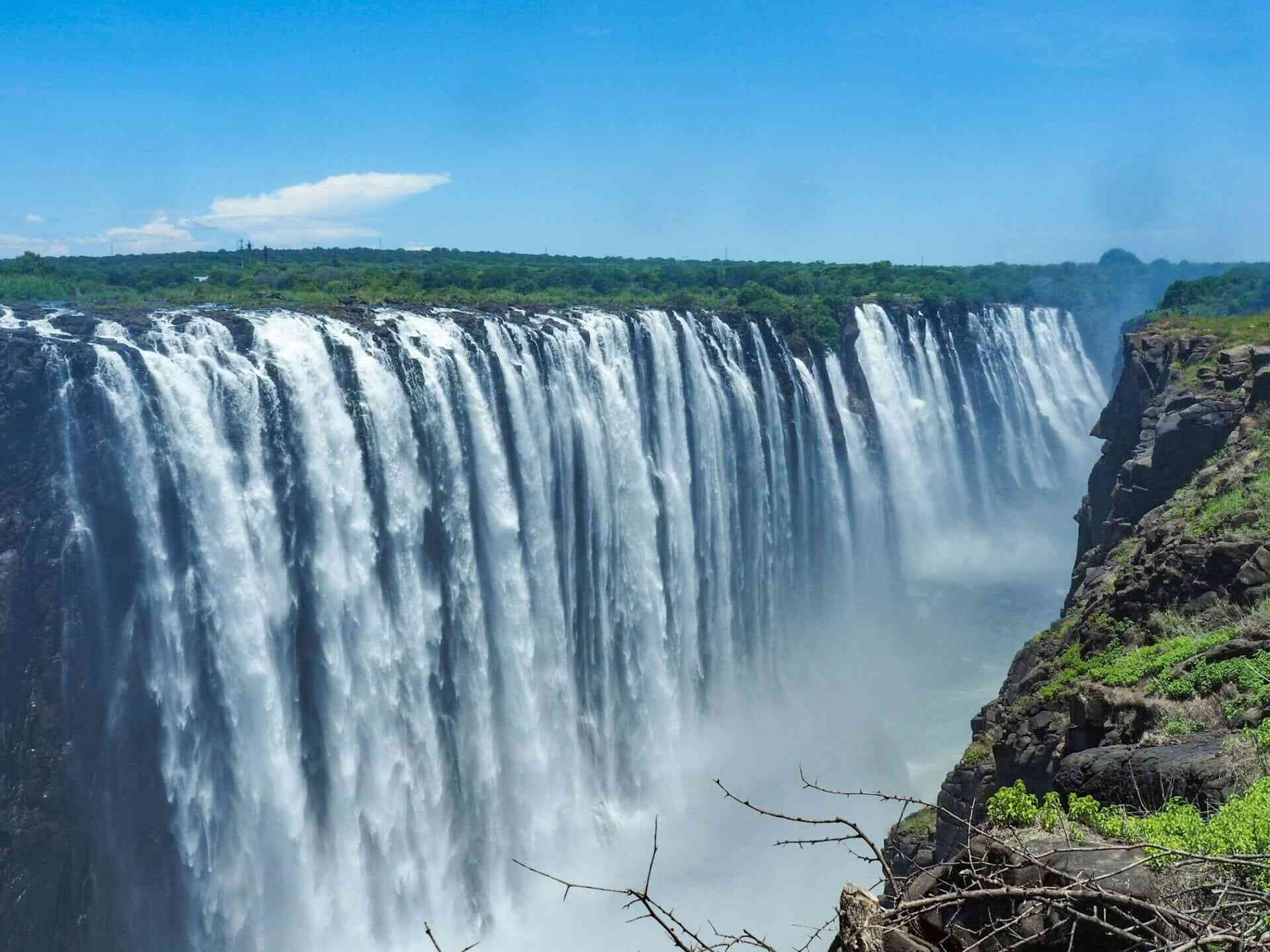
To the local Tonga people, it has always been Mosi-oa-Tunya—the “smoke that thunders”.
Globally, it is recognised as Victoria Falls, the crown jewel of Zimbabwe’s tourism industry and one of the Seven Natural Wonders of the World.
However, a growing chorus of environmental activists and international monitors warns that the thunder is being silenced by unregulated construction, and the iconic smoke is being choked by concrete developments.
The Victoria Falls-Mosi-oa-Tunya World Heritage Site (VF-WHS), which straddles the border between Zimbabwe and Zambia, is now the centre of a high-stakes battle over ecological integrity and management failure.
While the site is meant to be protected by strict Unesco guidelines, a new report by the environmental monitor Keep Victoria Falls Wild (KVFW) paints a grim picture of a heritage site “crumbling” under the weight of illegal tourism infrastructure.
The management of this site is governed by Joint Integrated Management Plans (JIMP), with major reports submitted to Unesco in 2007 and 2016.
These documents are intended to provide Unesco with an accurate account of conservation efforts and developmental pressures.
Yet, KVFW alleges that these reports have been systematically manipulated to hide the true extent of prohibited construction.
- Tarakinyu, Mhandu triumph at Victoria Falls marathon
- New Perspectives: Gold coins alone will not tame Zim’s inflation
- Econet scoops best ZITF stand award
- Andrea The Vocalist, dreams big
Keep Reading
The monitor’s study, titled “Special Report on the Victoria Falls World Heritage Site Management Zonation,” claims that state parties provided “gross inaccuracies” and outright misleading information regarding the boundaries of protected zones.
Maps provided to Unesco were reportedly of such poor scale and detail that they were virtually useless for determining which areas were off-limits for development.
This lack of clarity has created legal and policy loopholes that the tourism industry has ruthlessly exploited to build permanent structures in the most sensitive areas of the park.
Unesco guidelines divide the Victoria Falls site into three zones of ecological sensitivity: high (HESZ), medium (MESZ), and low.
The HESZ, often referred to as the “Red Zone” is supposed to be a no-go area for any new permanent infrastructure.
This zone includes the falls themselves, the rainforest, the river, and the critical riparian vegetation along the southern bank.
Despite these prohibitions, the report identifies several high-profile developments that have been built directly within the HESZ.
These include a recently constructed restaurant and a proposed lodge close to the Elephant Hills Golf Course.
KVFW said since these structures are built with concrete foundations, pillars, and supporting walls, they violate National Parks regulations which prohibit permanent structures.
The monitor is now demanding the immediate closure and demolition of these sites, arguing that allowing them to stand makes a “mockery” of the site’s World Heritage status.
The complicity of park authorities is also under fire. The report accused officials in Zimbabwe of belated and inaccurate reporting, citing a history of missing details that allowed projects like the Victoria Falls River Lodge (2022) and the Old Drift Lodge (2018) to be established before they were officially confirmed to be within the prohibited HESZ.
The environmental cost of this construction boom is staggering.
The riparian forest surrounding the falls is a relic of an ancient age, a remnant of a much wetter era that survived only on the moist islands and riverbanks of the Zambezi.
Today, this forest is being cleared to make way for lodges, golf courses, and even a cricket stadium.
The clearance of land for these developments is loosening soil cover and accelerating erosion along the Zimbabwean bank of the Zambezi River, the report says.
This increased runoff is driving the siltation of pools above the falls and causing a gradual accumulation of mud within the Victoria Falls gorge.
The riverine woodland is also struggling to regenerate naturally. Instead of the lush forest required to sustain local bird and wildlife populations, the land is being reclaimed by mixed bush and shrub.
These man-made pressures are colliding with the devastating impacts of climate change.
A 2024 report by Remarkable Africa Adventures highlighted that the waterfall’s very character is changing due to extreme precipitation variability.
The flow rate of the Zambezi River, which can reach 3 000 cubic meters per second during the rainy season, can now drop to as little as 300 cubic meters per second during dry spells.
In 2019, a severe drought saw water levels plummet by more than 50% of normal capacity.
These extended dry periods dry up large sections of the falls, exposing the rocky gorges and reducing the “smoke that thunders” to a mere trickle.
This decline in water flow has a cascading effect on the ecosystem.
The famous Victoria Falls Rainforest depends on the misty spray generated by the falling water.
As the spray diminishes, the rainforest vegetation is drying out and dying back, threatening the entire community of tree species, birds, and wildlife that have adapted to these unique, moist conditions over millennia.
While the ecological foundation of the site is crumbling, local authorities are pushing for massive expansion.
The Victoria Falls Council Master Plan of 2024 proposes expanding the municipal area from its current 22 square kilometers to a staggering 244 square kilometres.
This plan involves swallowing up vast chunks of protected land, including the Victoria Falls National Park, the Zambezi National Park, and the Fuller Forest areas.
An additional 12 square kilometres inside the Zambezi National Park have been earmarked for residential and commercial developments.
KVFW warns that this expansion threatens the very tourism foundation the city relies on and must be submitted to Unesco for review, as it has significant implications for the 500-metre buffer zone surrounding the World Heritage Site.
The report added that long dry spells have dried up large sections of the Victoria Falls exposing its rocky gorges and diminishing the misty ‘smoke that thunders’ to a mere trickle.
“This not only diminishes the visual splendor of the Falls. It also threatens the delicate balance of the entire ecosystem surrounding the Victoria Falls,” the report said.
The impact of reduced water levels triggers a decline in the production of the misty spray of water that nourishes the rainforest below.
“The reduced moisture has caused the rainforest vegetation to dry out and die back, threatening the entire rainforest community,” the report warned.
“Many of the tree species adapted to the moist and misty rainforest conditions are now struggling to survive.
“Large populations of birds and other wildlife that depend on the rainforest habitat are at also risk of habitat loss.”
The international community is beginning to voice its alarm. In an August 2025 status update, the UNESCO World Heritage Committee noted that both Zambia and Zimbabwe had failed to meet the June 2025 deadline for their third joint management report.
The committee expressed “serious concerns” over the insufficient implementation of strategic plans and the failure of both nations to report on ongoing infrastructure developments in sensitive zones.
Further complicating the site’s future is the proposed Batoka Hydro-Electric dam downstream.
Unesco warned that the tip of the dam will actually be located inside the World Heritage Site, potentially raising water levels in the gorge by 40 metres.
The committee has called for revised environmental impact assessments to determine how this project will affect the site’s outstanding universal value.
“The committee calls on the state parties to finalise the (outstanding) JIMP as soon as possible to ensure it incorporates safeguards and thresholds to mitigate against developmental pressures to protect the property’s outstanding value,” the WHC said
“It also calls for clarity on the zonation of the property to include clearly prescribed usage limits and permissible activities (including infrastructure developments) in line with the objectives of protecting the OUV and comply with past committee decisions.”
The situation at Victoria Falls has reached a critical juncture. The Unesco World Heritage Committee is now urging the state parties to finalise a new management plan that includes clearly prescribed usage limits and permissible activities to safeguard the site’s future.
For activists like those at KVFW, the illegal structures on the riverine fringe must be removed, contracts terminated, and the sites returned to nature.
They argue that the continued misinterpretation of boundaries is not just a technical error, but a betrayal of over 109 years of conservation history.