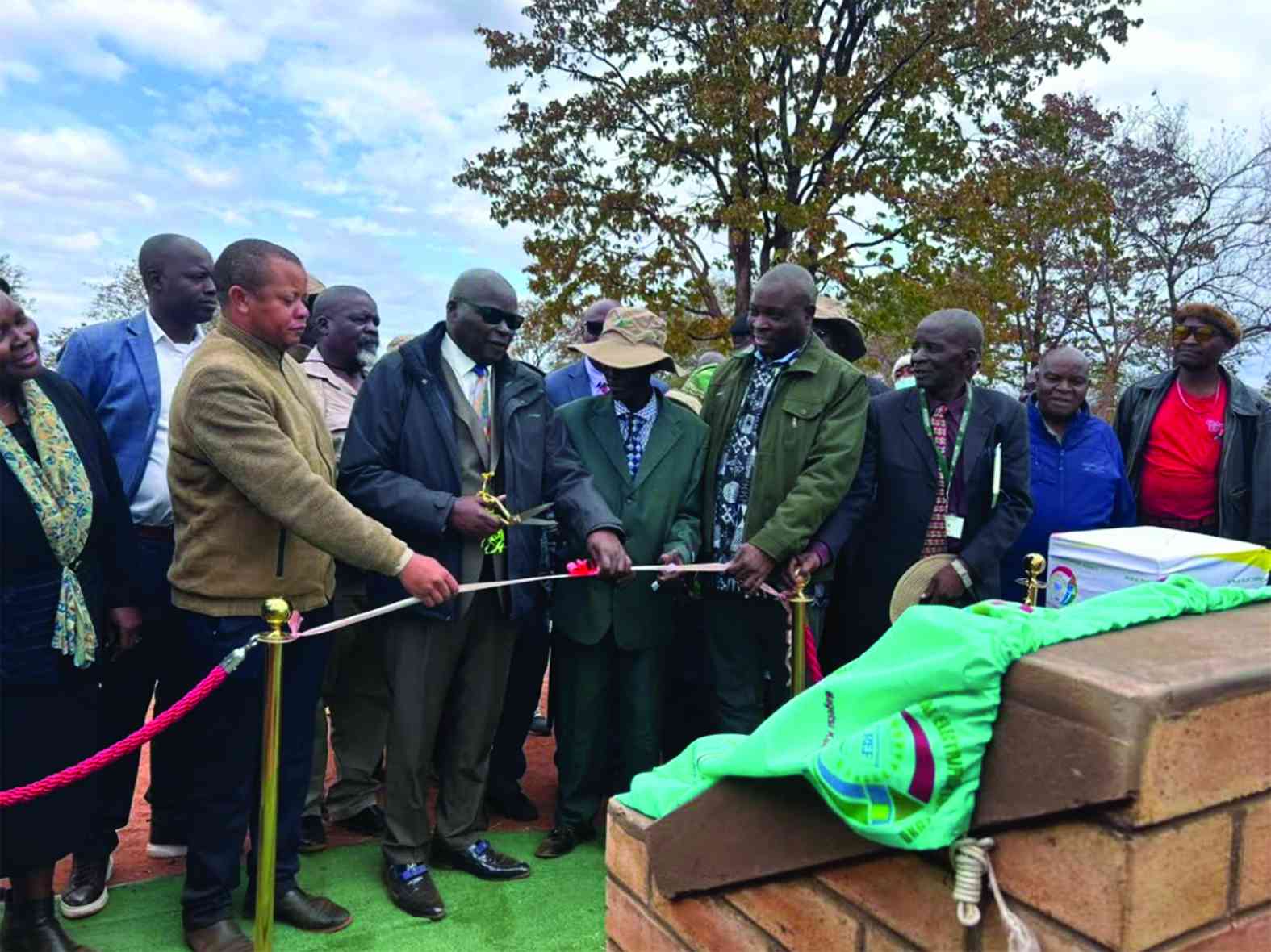
THE commissioning of the ZIG 3 million Majindani Primary School electrification project in Nyamandlovu has been hailed as a major step towards improving education, livelihoods and economic opportunities in uMguza district.
Government has pledged to connect all remaining schools in the district to electricity before the end of the year.
Speaking at the switch-on ceremony over the weekend, Energy and Power Development minister July Moyo said government, through the Rural Electrification Agency, was accelerating rural electrification to ensure no school is left behind.
He said 44 primary schools in the district were electrified, leaving 11 yet to be connected, while only two of the district’s 14 secondary schools were still without electricity.
“Our target, set by the President (Emmerson Mnangagwa), is to ensure that all schools are electrified this year. We promise that they will be electrified this year and we will deliver,” Moyo said.
He said access to electricity was fundamental to improving education, healthcare, agriculture and business development in rural communities.
Moyo called on communities to embrace the new infrastructure by using it to improve livelihoods through productive activities such as irrigation and village business units, while also safeguarding electricity infrastructure from vandalism and theft.
“It is the community borehole that we are more interested in. Let us build more boreholes and irrigate as much as we can so that in times of drought these children will have vegetables. The school and the community should develop school and village business units,” he said.
- NoViolet Bulawayo’s new novel is an instant Zimbabwean classic
- Jah Prayzah, Zanu PF rekindles ‘lost love’
- Bank workers appeal to Ncube for tax relief
- Indosakusa marks 21-year anniversary milestone
Keep Reading
Moyo also encouraged households with sufficient livestock, particularly in Matabeleland North and Matabeleland South, to consider biogas as an alternative energy source, saying it can provide clean cooking energy and generate electricity.
He said electrifying teachers’ houses would also help to improve staff retention and ultimately contribute to better learning outcomes.
“A teacher who stays here wants comfort. They want electricity and water. If teachers are well looked after, the results of what the school is doing can be seen through improved pass rates,” Moyo said.
Majindani Primary School head Edward Tshuma described the electrification of the school as a milestone that will transform teaching and learning.
“The installation of electricity at Majindani Primary School is a great milestone in terms of development. The children will benefit through the introduction of computers and evening lessons. Teaching will become easier,” he said.
Tshuma said the school also planned to use the electricity connection at the community borehole to establish a school garden that would benefit learners.
He added that the school considered introducing after-hours learning programmes for young people in the community, but this was not been possible without electricity.
The school has an enrolment of 105 learners and six teachers, although two teachers are expected to be transferred in line with government staffing policy.
The business community also welcomed the project, saying it would lower operating costs and create opportunities for expansion.
Businesswoman Mercy Mpofu said her enterprise had been relying on gas, which was costly due to purchase and transportation from Bulawayo.
“We are so excited that we now have electricity. We were using gas and it was expensive for us in terms of cost, transportation, and the dangers associated with transporting it from Bulawayo. I look forward to expanding the business. Security around the premises is now enhanced,” she said.
The project involved the construction of 8km of power lines supplying electricity to Majindani Primary School, three business premises and a community borehole.
Government says the Rural Electrification Programme is intended to improve access to electricity in underserved communities to support education, healthcare, agriculture and rural economic development.