Rain may be late this season, but a powerful new art exhibition at the Natural History Museum of Zimbabwe in Bulawayo is reminding communities that the key to healing the land lies in ancient secrets.
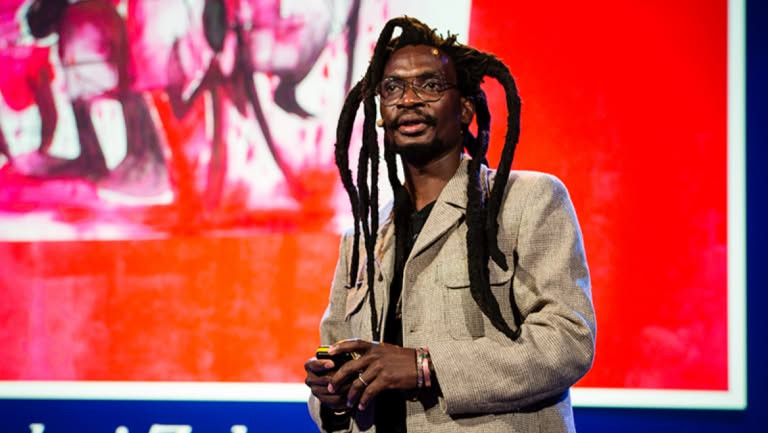
Seasoned visual artist Owen Maseko has turned the gallery space into a sacred conversation with his latest body of work, Ukufihla – ukufihlwa (To hide – being hidden).
His pieces are part of a major group exhibition titled Taboos and Conservation: Back to the Future, which opened on Friday, June 19, and runs until August 19.
Co-curated by Fisani Nkomo and Andrew Mulenga, the showcase brings together top regional artists like Agnes Yombwe, Banji Chona, and Danisile Ncube to tackle modern environmental crises using indigenous knowledge.
Maseko uses his art to show that solving Zimbabwe’s recurring droughts and environmental degradation requires more than modern science it demands a human return to traditional conservation laws and spiritual accountability.
The story behind Maseko’s work begins with the innocent voices of children in drought-prone rural areas singing Zulu Zulu buya sidla’makhomane, a traditional song begging the heavens to open up for subsistence farmers.
“IziNduna laboSabhuku (Chiefs and village headmen) call all villagers to gather under an old, huge mukiwane (fig) tree that has given shelter to all for many years, to start the cleansing ceremony,” Maseko said.
The entire village then moves through the bushes, fields, and homesteads, picking up stray animal bones and modern litter, burying the waste safely out of sight in a massive pit called kuyefihlwa.
For Maseko, this cleanup is deeply human and spiritual.
If human bones are uncovered during the environmental cleanup, proper reburials (kufihlwe lawo’mathambo) are immediately organised.
Families perform imibuyiso rituals to unite the living and the dead, bridging the gap between generations.
“Izinyanga lezangoma (traditional healers) zihaye, zibhodle, zibike kwabaphansi (chant, roar, and report to the ancestors) and iwosana, zigiye zicele emadlozini lomdali wezinto zonke (dance and ask from the ancestors and the creator of all things) as they ask for the rain,” Maseko said.
During these sacred gatherings, snuff is sprinkled and children are anointed with traditional medicines (bagcotshwe iminindonindo lemigcozo) to introduce the new generation to the custodians of the land and protect their futures.
Ultimately, Maseko’s exhibition serves as a sharp reminder that indigenous taboos were Africa’s original environmental legislation.
Long before modern forestry commissions and wildlife policies, communities survived by obeying strict, unwritten laws that preserved biodiversity.
“In these ceremonies, people are reminded on how to preserve nature the knowledge of which trees to cut or not, and the animals, birds, and other creatures to honor,” Maseko notes, emphasising that living in harmony with the environment was a matter of daily survival.
These ancestral decrees are kept alive in the exhibition’s themes, reminding the public of sacred boundaries: Ukoro akabulawa (the secretary bird must never be killed), inyamazana ensikazi ayidluliswa (female animals are spared to protect breeding cycles), umlahlabantu awubaswa (the sacred buffalo-thorn tree cannot be used as common firewood), and akunyelwa emthonjeni (water sources must never be defiled).
Through Ukufihla ukufihlwa, Maseko shows that when humanity finally respects the boundaries of nature, the universe answers. He captures the relief of a community restored to environmental alignment as the rain finally falls, bringing the rich, earthy smell of wet soil and the hopeful promise of lonyaka yinala yodwa, a guarantee of a bumper harvest.