As Zimbabwe seeks to establish itself as a leading sports tourism destination in Africa, infrastructure must keep pace with ambition.
The success of the Econet Victoria Falls Marathon, coupled with the construction of an international-standard cricket stadium in Victoria Falls, shows the country is making significant strides in using sport to attract visitors and stimulate economic growth.
Yet one glaring weakness threatens to undermine that progress — the deplorable state of the Bulawayo-Victoria Falls Road.
Last week, the Ministry of Transport and Infrastructural Development celebrated the opening of another 9,2-kilometre stretch of the highway, bringing the total rehabilitated section opened to traffic to 68,4km.
The ministry said the seven contractors on the project remain on course to meet their contractual obligations.
That progress deserves recognition.
However, after spending 12 gruelling hours travelling by road from Bulawayo to Victoria Falls to cover this year’s Econet Victoria Falls Marathon, it is difficult to conclude that the pace of rehabilitation matches the urgency of the task.
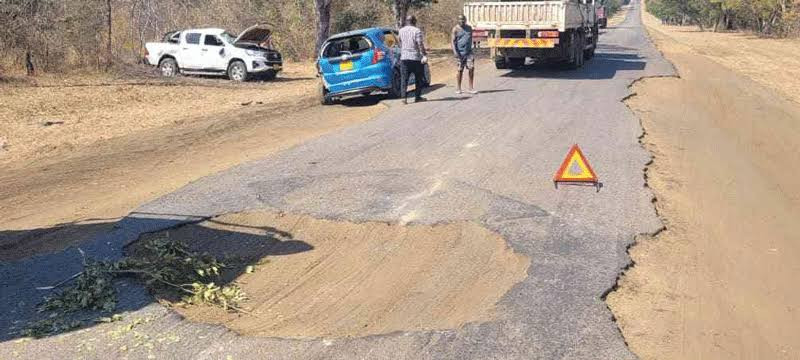
For most of the journey, motorists are forced to weave around deep potholes, slow down on damaged sections and endure long diversions before enjoying brief stretches of newly reconstructed road. The result is a journey that is exhausting, expensive and, in some sections, unsafe.
- Tarakinyu, Mhandu triumph at Victoria Falls marathon
- Andrea The Vocalist, dreams big
- All set for the 2022 Econet Victoria Falls Marathon
- Econet Victoria Falls Marathon return a boon for tourism
Keep Reading
The irony is impossible to ignore.
Victoria Falls is no longer just one of the world’s leading tourist destinations.
It is increasingly becoming Zimbabwe’s sports tourism hub.
The Econet Victoria Falls Marathon has grown into one of Southern Africa’s premier road-running events, attracting elite athletes, amateur runners and tourists from across the world.
Hotels are filled, restaurants are busy and tour operators benefit from the influx of visitors who often extend their stay to experience one of the Seven Natural Wonders of the World.
The city is also preparing for another major milestone.
The construction of a new international cricket stadium is expected to position Victoria Falls as a venue capable of hosting global cricket events, bringing thousands more visitors and further strengthening Zimbabwe’s sports tourism credentials.
These are investments worth celebrating.
But world-class sporting events require world-class infrastructure.
For many visitors travelling from Bulawayo, the road is their first real experience of Zimbabwe.
Unfortunately, it is an experience dominated by frustration rather than excitement.
A marathon runner should not feel as though they have completed one before reaching the starting line.
Sports tourism is about far more than the event itself.
It is about the entire visitor experience — from transport and accommodation to hospitality and safety.
Every delay, every damaged vehicle and every negative travel experience chips away at Zimbabwe’s reputation as a destination capable of hosting international events.
Poor roads also carry an economic cost.
Motorists spend more on fuel and vehicle repairs.
Transport operators incur higher maintenance costs.
Travel times become unpredictable, discouraging domestic tourism and making regional travel less attractive.
The Bulawayo-Victoria Falls Road is not merely a highway linking two cities.
It is a strategic economic corridor connecting tourism, mining, conservation and commerce.
Increasingly, it is also becoming one of Zimbabwe’s most important sporting corridors.
Government deserves credit for continuing with the rehabilitation programme despite economic challenges.
Opening more than 68 kilometres to traffic is tangible progress.
But when viewed against the condition of the remaining sections, the celebrations appear premature.
Zimbabwe’s ambitions in sports tourism are moving faster than the road leading to its flagship destination.
As the country prepares to welcome more international athletes, cricket teams and tourists in the coming years, the urgency to complete this highway becomes even greater.
Infrastructure is often overlooked when discussing sport, yet it is one of the biggest determinants of whether visitors return.
A spectacular marathon, a modern cricket stadium and the breathtaking beauty of Victoria Falls can all be overshadowed by a single unforgettable journey on a badly damaged road.
Zimbabwe has shown that it can organise international sporting events that compete with the best on the continent.
It has also demonstrated its willingness to invest in sporting infrastructure.
The missing piece is ensuring that visitors can get there comfortably, safely and in reasonable time.
The rehabilitation of the Bulawayo-Victoria Falls Road should therefore not be viewed simply as another public works project.
It is an investment in tourism, sport, business and Zimbabwe’s international reputation.
Progress should continue to be acknowledged.
But for the thousands of athletes, tourists and ordinary Zimbabweans who rely on this highway, progress alone is no longer enough.
The road must be completed with the urgency that Zimbabwe’s sports tourism ambitions demand.