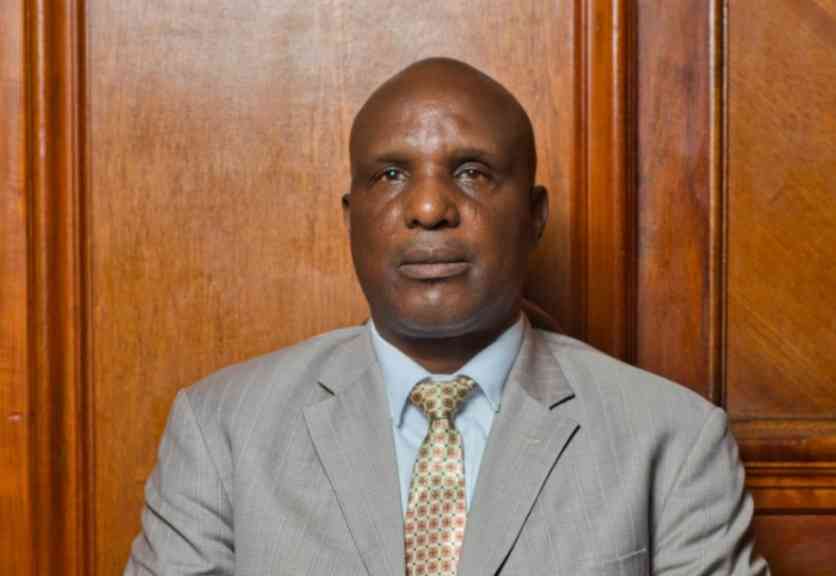
Auditor-General Vimbai Chikwenhere has flagged deep-rooted weaknesses in financial reporting, patient billing, record-keeping, and governance at the United Bulawayo Hospitals (UBH).
In her audit report dated June 26, 2026, for the year ended December 31, 2024, Chikwenhere said the hospital’s financial records failed to meet International Public Sector Accounting Standards (IPSAS), casting serious doubt on their reliability.
The AG also raised alarm over the hospital’s future viability, warning that persistent shortages of medical supplies driven by funding constraints posed a significant risk to its operations.
“This condition indicates the existence of material uncertainty that may cast significant doubt on the Hospital’s ability to continue operating as a going concern,” she said.
The audit revealed that UBH continued recording transactions in the defunct Zimbabwe dollar even after the introduction of the Zimbabwe Gold (ZiG) currency in April 2024, in direct contravention of Statutory Instrument 60 of 2024.
Auditors said this made it impossible to verify the accuracy and completeness of transactions recorded during the transition period.
Further weaknesses were exposed in the hospital’s revenue management system.
The report found that patients were not consistently billed using approved Association of Health Funders of Zimbabwe (AFOZ) tariff rates.
- Auditor-General appointed
- AG flags ‘accounting black hole’ in rural council schools
- Audit bombshell at Ingutsheni Hospital
- AG flags Byo’s water woes, financial reporting
Keep Reading
Some medical services were never billed at all, while others were inaccurately recorded in customer accounts.
Auditors also could not verify the completeness and valuation of trade receivables, as several patient files requested during the audit could not be produced.
The hospital also failed to reconcile supplier statements with creditor ledger accounts, resulting in an unexplained variance of ZWG25 million, according to the report.
In addition, UBH provided no calculations to support expected credit losses amounting to ZiG48.4 million, with the AG noting that the hospital’s accounting system was not configured to generate the reliable data needed for such computations.
Beyond financial reporting, the audit uncovered significant governance deficiencies, particularly in record management.
“For instance, patient files were not filed in a systematic and logical manner and management could not retrieve and avail files requested for audit,” Chikwenhere said.
She warned that poor record management could compromise not only financial reporting but also patients’ medical histories.
Inventory management also came under fire, with the report highlighting inconsistent labelling of medical supplies, inadequate monitoring of near-expiry stock, and critical staffing shortages, particularly among pharmacists and laboratory scientists - all of which could negatively affect healthcare delivery.
While hospital management acknowledged the findings and said it had begun implementing a file movement tracking system, strengthening pharmacy security, introducing document imaging, and appointing an acting chief pharmacist, the AG noted that progress on resolving longstanding issues remained minimal.
Of 24 audit findings tracked from previous reports, only five had been fully addressed.
Three were partially resolved, and 16 remained outstanding.
Unresolved issues include the failure to reconcile creditors, inconsistent patient billing, lack of supporting procurement documents, absence of a Hospital Board of Management, failure to conduct internal audits, inadequate doctors’ accommodation, and continued staff shortages driven by high employee turnover.
The report called for urgent improvements in financial management, governance, and internal controls to strengthen accountability and ensure the hospital can continue delivering quality healthcare services.