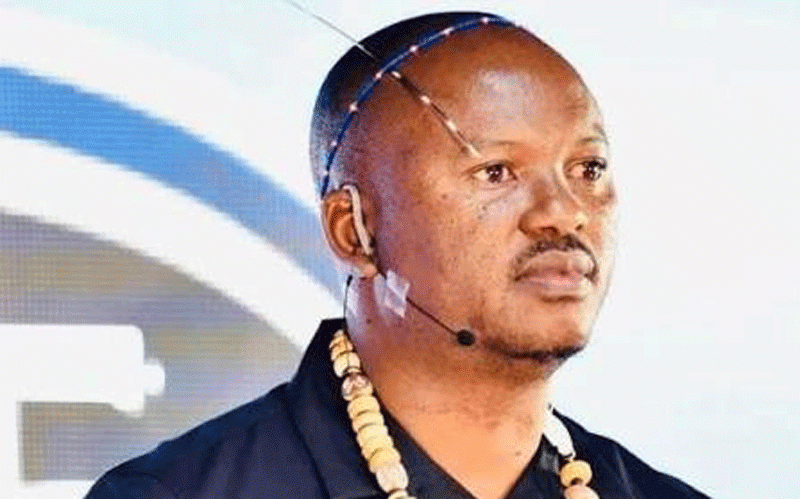
A Xhosa prince has described circumcision as a defining rite of passage into manhood, saying an uncircumcised Xhosa man remains a boy regardless of his age.
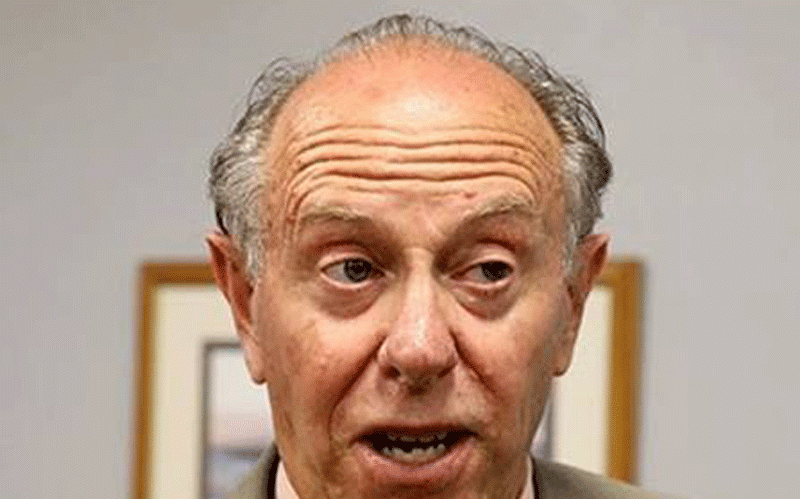
Prince Solengwe Tshawe KaNonxoloba said the practice remained central to Xhosa culture and would not disappear, with initiates taught not only about circumcision but also about their responsibilities as men.
“Even if you are 90 years old, if you have not been circumcised, you are still a boy,” kaNonxoloba said.
He said circumcision marked an important distinction between boys and men within Xhosa tradition.
However, kaNonxoloba said the belief was not imposed on members of other ethnic groups because circumcision was not necessarily part of their traditions.
He said Xhosa initiates underwent a period of seclusion after circumcision, where they were cared for by people with specific traditional roles.
The person performing the circumcision is known as an ingcibi, while a khankhatha looks after the initiates during the healing process.
KaNonxoloba said the boys were taught how to conduct themselves as men, including how they should behave towards their wives.
- Xhosa traditions will not die, says prince
Keep Reading
He stressed that violence against women was not part of the teachings.
“A man does not beat his wife,” he said.
“When it comes to dealing with your wife, a man uses the ‘stick’ that God gave him, not a stick that he has cut from the forest.”
He said initiates were secluded for about three weeks to a month while they recovered, before returning home and receiving further teachings from men and elders.
The prince also contrasted the Xhosa practice in Zimbabwe with reports of deaths during traditional circumcision in South Africa, saying such deaths were unacceptable within their tradition.
“It is not what we see in other countries, especially South Africa, where you hear that a lot of children died during circumcision. That is a taboo here,” he said.
KaNonxoloba argued that circumcision should be performed by people who understand the practice rather than being treated as a business.
He recalled a 2011 visit by King Zwelonke to Mbembesi, where the monarch witnessed boys undergoing circumcision.
According to kaNonxoloba, the king was surprised by the speed at which the local ingcibi performed the procedure on a group of boys.
He said the king asked whether the boys had already been circumcised after seeing the ingcibi complete the procedures in a short period.
Nonxoloba said the community continued to respect those who had the knowledge and experience to perform the rite.
He rejected suggestions that problems associated with circumcision should lead to the abandonment of the tradition.
“Xhosa culture and tradition will not die,” he said.
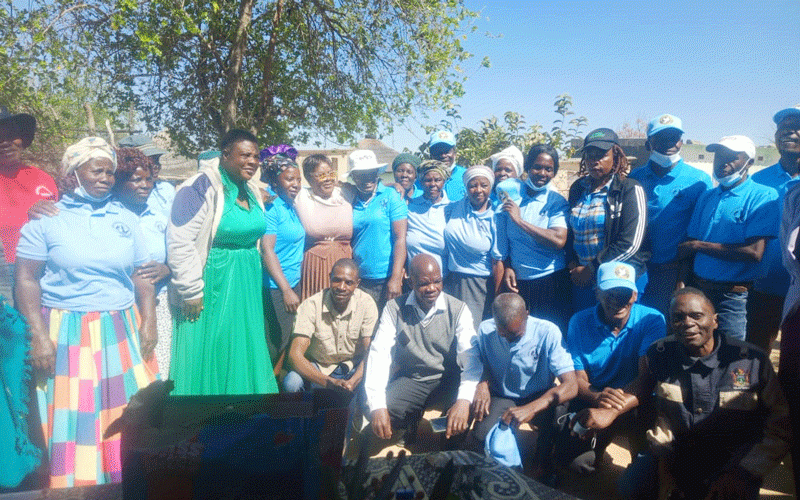
KaNonxoloba said the Xhosa community in Zimbabwe had maintained its culture despite living alongside Ndebele people and members of other communities.
He said the Xhosa people had remained together since settling in areas including Mbembesi, Matobo and Nyamandlovu.
He traced their presence in the country to a period when Xhosa people came to the area as teachers, wagon drivers, builders and other workers, saying land in the areas where they settled had been promised to them by Cecil John Rhodes.