Organisers of the annual King Mzilikazi Day commemorations say preparations are at an advanced stage, but gaps in funding, food, transport and event infrastructure remain a major concern.
The commemorations, scheduled for September 5 at the Mhlahlandlela site outside Bulawayo, are expected to be bigger than last year’s gathering, which organisers estimate attracted between 10 000 and 12 000 people. The organising committee hopes to double the crowd this year.
Mhlahlandlela, located off the Old Gwanda Road about 22 kilometres outside Bulawayo, was King Mzilikazi’s last known capital and headquarters.
He resided there for only five years before his death in September 1868. He was laid to rest in a sacred cave at Entumbane in the Matobo Hills, about 20 kilometres from Bulawayo.
The Mthwakazi kaMzilikazi Cultural Association (MMCA) initiated the commemorations in 2000 to revive the resilient spirit of King Mzilikazi and preserve the fading history of the legendary monarch.
Now marking its 25th anniversary, the event has grown from a regional cultural gathering into an international heritage festival, drawing traditional leaders, cultural groups, government officials, members of the diaspora and international visitors.
Last year’s edition set a new attendance record of over 9,000 people, with participants coming from Zimbabwe, South Africa, Zambia, Tanzania, Botswana, the United Kingdom, the United States, Canada, Russia and several other nations.
The association aims to double last year's attendance while delivering a programme that combines history, traditional culture, royal representation, music and entertainment.
- Khaya Arts presents Ngomdladla ē Dunamis
- King Mzilikazi commemoration preps on
- Edutainment Mix: Khaya Arts’s Bukeka Bulawayo initiative a creative stride in urban beautification
- Preps for King Mzilikazi commemorations begin
Keep Reading
"Preparations are at an advanced stage. We are doing everything in our powers to surpass previous editions," said association spokesperson Prince Ncube, who is popularly known as Dr Gasolo.
"According to the press, last year we had around 10 000 to 12 000 attendees, and this time around we are hoping to double that number."
The ambitious target, however, is placing considerable pressure on the organisers, who indicated that they have historically operated with limited resources.
Their immediate concern is ensuring that the venue can cope with the anticipated numbers, particularly in terms of staging, sound, food and transport.
"Our biggest challenge has always been resources, especially the stage and sound system," Ncube said.
"It's only a handful of us who dedicate our lives and resources to this commemoration; this makes it hard for us to organise."
He noted that the situation was beginning to improve as corporate sponsors and individuals joined efforts to support the event.
Umcilo Construction is currently the lead sponsor, supporting construction work at the Mhlahlandlela site.
With potentially more than 20 000 people expected, organisers are looking for additional cattle and other food donations to ensure the traditional feast does not fall short.
"We also have another challenge in feeding the nation. Unlike in the past during King Mzilikazi's time when they had isibaya senkosi and isiphala senkosi, now we rely on donations," Ncube said.
"At the moment, we have promises of cattle, but we still need more so that we will be able to feed everyone."
He added that the supplies secured so far were inadequate.
"For now, I can't really say how much food and beer we already have, but all I can say is that what we have now is not enough yet," Ncube explained.
The organisers are also preparing for an influx of visitors from outside the country. Bornman Khumalo, spokesperson for Ndebele King Bulelani Khumalo, said representatives of the Zulu royal house and other communities historically connected to King Mzilikazi were expected to attend.
"This year, we have a lot of representatives from the Zulu royal house, as well as other groups that had contact with King Mzilikazi, such as the Afrikaners of RSA," he said.
"The South Africans, in general, are curious to see the event, hence some celebrities will pay us a visit."
Khumalo appealed to locals to welcome the visitors peacefully and respectfully.
Meanwhile, organisers have renewed their call for the event to be declared a national holiday.
They argue that the celebrations have outgrown their regional cultural roots to become an international heritage festival capable of promoting tourism, preserving history and fostering national unity.
The cultural programme will begin with a Children’s Day focused on storytelling, education and activities designed to introduce young people to Northern Ndebele history.
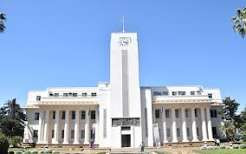
The main commemoration will feature a cultural parade from Matshobana to Bulawayo City Hall, as well as performances and displays by amabutho, izintombi, amatshitshi and various arts groups.
Traditional music, dance and history lessons will form a key part of the programme.
The event will transition into an entertainment phase in the evening, with South African Maskandi star Khuzani expected to headline alongside local performers, including Zwelihle Jele, Gazelimnyama and Khaya Arts.
The two-day format reflects the organisers’ efforts to strengthen the educational component of the commemorations.
Last year’s event also featured a schools programme, which organisers said was successful and would be continued.
Transport, however, remains an area where organisers acknowledge they will not be able to meet demand. The guest of honour is yet to be announced, with arrangements still being finalised.
Bulawayo United Residents Association chairman, Winos Dube, said the expected crowds should not overshadow the importance of the commemoration.
He called for greater unity among communities that commemorate different traditional kings, saying the celebrations should promote peace and cultural solidarity.
"We say, most of all, the discipline and respect during these celebrations must prevail, and we wish that they will progress in peace and love," Dube said.