The City of Bulawayo’s procurement operations are coming under scrutiny after the local authority reported that 28 of its 102 active contracts were behind schedule, including seven described as non-performing, while millions of dollars were paid to contractors during July.
The council awarded 11 new procurements valued at US$458,945.83 during the month, but its contract-monitoring report revealed a wider picture of projects struggling to meet deadlines.
Of the 102 contracts that were active at the beginning of July, only 74 were reported to be progressing within their planned timelines, while 28 were behind schedule. Six contracts had been completed.
“Twenty-eight were behind schedule, of which seven were not performing at all,” the council reported.
The revelation raises questions about the council’s ability to ensure that contracts translate into the timely delivery of infrastructure and services to residents.
Among the projects facing serious difficulties was the rehabilitation of the deep-section tunnel sewer, which was locked in arbitration following longstanding disputes between the contractor and the City of Bulawayo.
Another project, involving the servicing of 390 high-density residential stands in Magwegwe West, had also spent an extended period in arbitration.
The council said it had, however, secured a ruling in its favour in that matter.
- Take Money clinches sponsorship deal
- Proposal to rehabilitate silted Umzingwane Dam
- Proposal to rehabilitate silted Umzingwane Dam
- We’ll serve you better next year: Byo mayor
Keep Reading
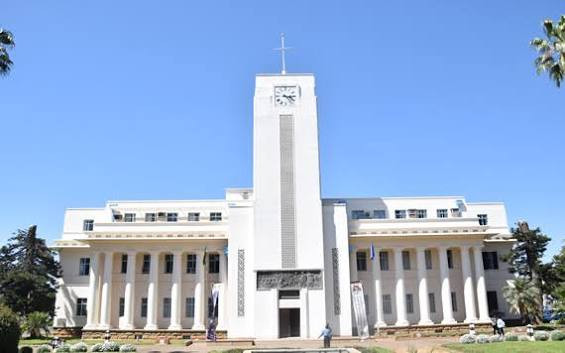
The Beit Hall refurbishment project had suffered another setback after disagreements over price variation claims.
“The contractor had abandoned the site, and the City was working to have the project formally handed over in its current state,” the council said.
The local authority stated that it intended to forfeit retention funds after the formal handover and complete the outstanding works itself.
Some housing projects have also been affected by inadequate funds, with beneficiaries being asked to pay additional amounts to cover servicing costs.
The affected projects include the servicing of stands in Woodville and Paddonhurst, 288 high-density stands in Magwegwe Extension, and 502 medium-density stands in Emhlangeni Phase II.
“Beneficiaries had been asked to pay top-up fees to cover servicing costs,” the council noted.
It said some beneficiaries had responded positively and that the procurement of materials would begin once sufficient funds had been collected.
The development places an additional financial burden on residents who have already been allocated stands and are awaiting basic infrastructure.
The procurement report also recorded substantial payments made to contractors during July.
The report listed total payments of ZWG271 809.49 and US$11 499 464.22 for the month.
Among the payments were US$4.86 million for the supply and delivery of motor vehicle tyres and tubes, US$1.43 million to TIB Insurance Brokers for insurance brokerage services, US$1.04 million to Saltaway Enterprises for the hire of planting equipment, and US$775 070.69 to Tokologo Technical for sewer blockage clearing and maintenance.
Other major payments included US$746 173.72 to Mine Assistant Company for sewer blockage clearing and maintenance, US$723 855.58 to Acrefruits Enterprises for water reticulation materials, and US$510 967 to Engineering Waterproofing for City Hall waterproofing.
The report also listed US$330 470.90 paid to Actual Hardware for water reticulation materials and US$297 092.97 to Luciedie Marketing for motor vehicle spare parts. The scale of the payments contrasts with the number of projects that remain behind schedule, although the report does not indicate that the payments themselves caused the delays.
The council’s procurement figures also expose a significant inclusion gap. Of the 11 contracts awarded in July, four went to male-owned businesses, six to companies jointly owned by men and women, and only one to a female-owned business.
No contract was awarded to a youth-owned business or a business owned by a person with a disability.
Male-owned businesses received contracts worth US$238 422.85, while female-owned businesses received only US$5 358.68. Jointly owned businesses received contracts worth US$215 164.30.
The council reported that youth-owned businesses received zero contracts, as did businesses owned by people with disabilities.