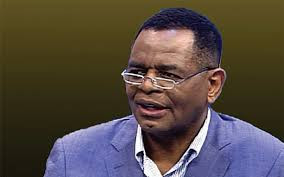
It was sometime in 1997, when I was working as an accountant at an insurance company in Cape Town, South Africa, that I received a call from Mutumwa Mawere. He invited me to Johannesburg to meet with him and see what he was working on. A colleague of mine had recommended me to him.
I enthusiastically flew to Johannesburg and spent a full day with him, during which he explained and demonstrated his vision. He believed that an imminent investment opportunity would emerge from the privatisation of state assets in Zimbabwe. In his view, these assets should be owned by citizens—not foreigners.
There was therefore a need to organise Zimbabweans in the diaspora in order to mobilise capital by establishing a platform through which they could invest. The collective capital raised would then be deployed in Zimbabwe. I was duly offered a position as fund manager, responsible for structuring the vehicle and mobilising diaspora capital.
I must confess that, despite my experience in financial services in South Africa, I had never undertaken such an assignment before. I remember him continually motivating me, insisting that all that mattered was my belief that I could do it.
I returned to Cape Town deeply conflicted. Should I give up a corporate position with strong job security and prospects for promotion to work with a maverick on a new and uncertain venture? Eventually, I joined him because he made me a very generous offer—one I could not refuse. I jumped in headfirst, and it was the biggest risk I ever took. It fundamentally changed my career trajectory and mindset.
Working with him proved to be a reinvention of my thinking and an exposure to how the world of finance and capital raising truly operates. I inadvertently became a student of financial engineering, the international financial architecture, and Zimbabwean politics—a toxic combination of smart thinking, innovation, and political intrigue. Suffice it to say, it was during this time that I first encountered and began using the internet.
The mobilisation of Zimbabweans in the diaspora to invest in privatised state assets back home was, indeed, an idea ahead of its time. The concept involved establishing a unitised fund through which Zimbabweans abroad would purchase units that would be pooled and invested in specific privatised assets in Zimbabwe.
We sought to raise several million dollars from the United Kingdom, Europe, America, Australia, Canada, and Southern Africa. This required me to compile a database of Zimbabweans in the diaspora and actively engage them on the opportunity. Surprisingly, the response was very positive. People were excited, and pledges were enthusiastically made by all and sundry.
- Mawere seeks to bar Ramaphosa from election
- Mutumwa Mawere did not deserve to die in exile
- Mutumwa Mawere: The passing of a genius!
- Clash over control of Mutumwa Mawere funeral contributions
Keep Reading
Unfortunately, most of these pledges were never consummated. A harsh lesson learned: Zimbabweans, in general, are very good at making promises they have no intention of fulfilling. Compounding this was their tendency to copy ideas they do not fully understand. (A local copycat of the concept later emerged in Zimbabwe.)
I worked day and night preparing presentations and the necessary documentation to establish a legal entity that would inspire market confidence and be professionally managed. In retrospect, I naively disregarded the political dynamics surrounding this revolutionary concept. I soon grew suspicious as I observed how Mutumwa appeared deeply embedded with political players who constantly requested information about the fund without any intention to invest.
Mutumwa was an exceptionally busy man, flying in and out of South Africa almost weekly and meeting people from all over the world. He had an impressive global network, particularly in the United States. I recall a meeting at Investec in South Africa, where there was visible excitement at his presence. You could sense the awe he commanded. I was immensely impressed and proud to be associated with him.
With each passing day, my confidence grew that the idea would succeed. However, it seemed that too many people with hidden interests became involved. One of his weaknesses was bringing too many people into the process. I would suddenly learn that someone had been appointed to work on the fund alongside me, without any discussion about necessity or fit. I remember having to work with a gentleman who had absolutely no understanding of what was required.
Another individual—a white Rhodesian—came forward as a major investor, promising to invest nearly US$2 million. However, he had his own ideas on how the fund should be structured and openly opposed my approach. His racial prejudice was evident.
Confusion crept in, and I gradually became disillusioned with the processes and Mutumwa’s management style. As an accountant and economist from a corporate background, I was accustomed to structured environments with clearly defined roles, responsibilities, and outputs. Moreover, I was never fully clear about the political undercurrents surrounding the fund.
I later uncovered information that deeply unsettled me. I strongly disagreed with his management approach and made this known to him. I also became increasingly suspicious that I had not been fully briefed on who was politically involved, who stood to benefit, and what the ultimate endgame was. I realised that I was involved in something whose implications I neither fully understood nor supported. After a short period, I decided to leave.
The fund was eventually launched without my involvement. Unfortunately, it never took off. It was a great idea poorly implemented.
That said, I must acknowledge how much I learned from him in such a short time. Despite our disagreements, we became friends and continued to exchange ideas regularly. As the saying goes, in life, there are those who come to teach you and those who come to test you. Mutumwa did both—true to the meaning of his name.
I am grateful that I met him and for everything I learned from him. He was a legend with a beautiful mind. The lessons I took away include:
- You become what you think and believe
- Think global, act local
- Your networks determine your success
- Focus on your vision
- Never mix business with politics
- Always remain humble; life has twists and turns
- Those closest to you, and those you help, are often the ones who betray you
- People will pretend to like you until they no longer need you
- Not everyone wants you to excel beyond them
- A prophet is never honoured in his own country
May his soul rest in eternal peace.
Vince Musewe is an economist and can be contacted at [email protected]