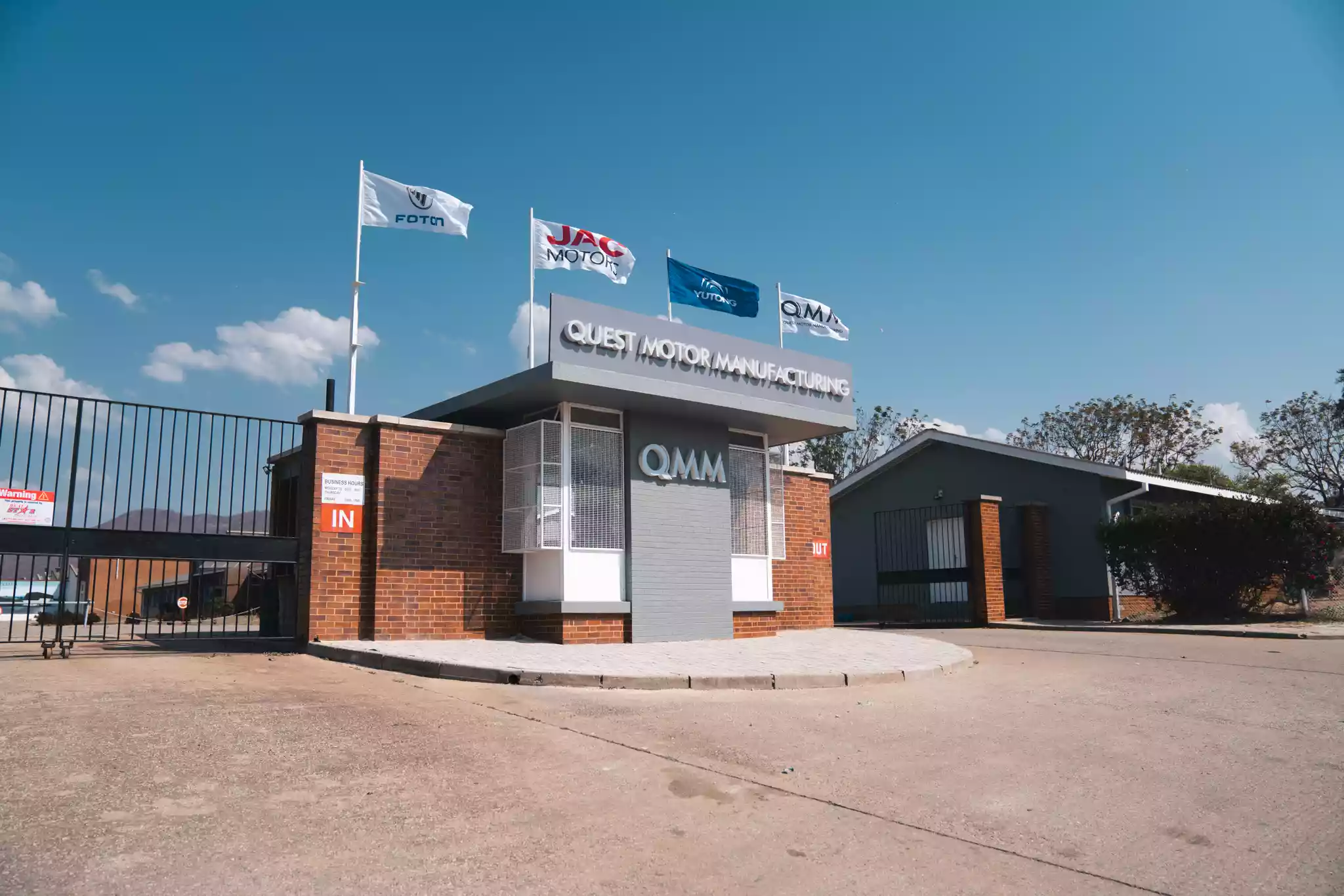
The industrial landscape of Mutare is undergoing a radical transformation as Quest Motor Manufacturing prepares to anchor Zimbabwe’s ambitious transition into the era of electric and new-energy mobility.
This strategic shift is primarily driven by a recent government directive and legislative support, such as Statutory Instrument 194 of 2024, which resuscitates the local motor industry by suspending customs duties to zero percent on Semi-Knocked Down (SKD) kits for approved assemblers.
By localising electric vehicle production, the company aims to help the government reduce its heavy reliance on expensive fossil fuel imports and meet national climate goals, while revitalising a factory that has faced years of subdued activity.
To facilitate this massive technological leap, the company has already injected initial capital. Operations manager Carl Fernandes is overseeing the retooling and construction of a state-of-the-art vehicle showroom and shopping mall, set to open in phases starting in July 2026.
The cornerstone of this initiative is a series of strategic partnerships with major Chinese electric vehicle manufacturers, specifically GAC Aion and Beijing Automobile Works (BAW), formalised through Memoranda of Understanding (MOUs) and strategic cooperation agreements.
These agreements ensure that Quest receives the necessary technical expertise, specialised machinery, and training required to assemble complex new-energy models on Zimbabwean soil.
The assembly lineup will feature a range of vehicles tailored to different market segments, including the BAW Mini Car—a budget-friendly electric city car for urban commuters—and the GAC Aion V, a high-tech electric SUV known for its impressive range and advanced smart-driving features.

- Quest Motors wins vehicle parts duty case
- Zim, Zambia in military pact
- Zifa gets new partners
- Harare residents, council collaborate to preserve wetlands
Keep Reading
Other models destined for the Mutare assembly lines include the Skyworth SUV and various new-energy utility vehicles like the Foton Tunland V9.
A critical question is whether the price of these locally assembled electric vehicles will be affordable for the average Zimbabwean. While official local retail prices are being finalised as assembly commences, the BAW Mini Car is expected to be the most affordable entry point, with international base prices for similar compact EVs starting as low as $8,000 to $12,000. In contrast, more premium models like the GAC Aion V are luxury offerings, with manufacturer’s suggested retail prices (MSRP) in international markets starting around $19,000 to $20,000 (roughly 139,800 Yuan).
Although the initial purchase price of an SUV remains high, the vehicles are marketed as long-term cost-saving solutions because they bypass volatile petrol prices and benefit from reduced maintenance requirements, having fewer moving parts than traditional internal combustion engines.
Furthermore, the government has incentivised ownership by reducing general import duties on electric vehicles from 40% to 25%, while providing zero-duty waivers for the SKD components used by Quest Motor Manufacturing.
The economic impact on the Mutare community is expected to be profound, particularly regarding the claimed 300% to 500% boost in employment. This figure is not merely a projection of direct factory hires but represents the scaling of operations from a minimal maintenance staff of approximately 150 people to a full-capacity, multi-shift production force of 500 to 1,000 workers once steady orders are secured. This employment surge also accounts for the multiplier effect on downstream industries, as localising production creates an immediate need for locally manufactured components such as glass, tyres, upholstery, and leaf springs from nearby companies. By resuscitating these supply chains, the project aims to reverse the outsourcing of jobs that occurred when the government and private sectors previously favoured imported fully-built units over local products.
Addressing the feasibility of full-time electric vehicle use, the project acknowledges the current limitations of the national power grid and is integrating solar-powered charging infrastructure into its strategy. The Zimbabwe Energy Regulatory Authority (ZERA) and organisations like the Central Mechanical and Equipment Department (CMED) are already showcasing fast-charging technology that can power an electric SUV in just 45 minutes, alongside domestic charging options that allow owners to plug into standard outlets at home. These infrastructure developments are critical for the commercial success of the vehicles, which are officially scheduled to begin assembly in August 2026, with the first locally assembled models appearing in the new Mutare showroom shortly thereafter.
Minister of State for Manicaland Provincial Affairs and Devolution, Advocate Misheck Mugadza, has emphasised that the success of this green revolution depends on continued support from state institutions and private players placing local orders to ensure the plant maintains a sustainable production volume.