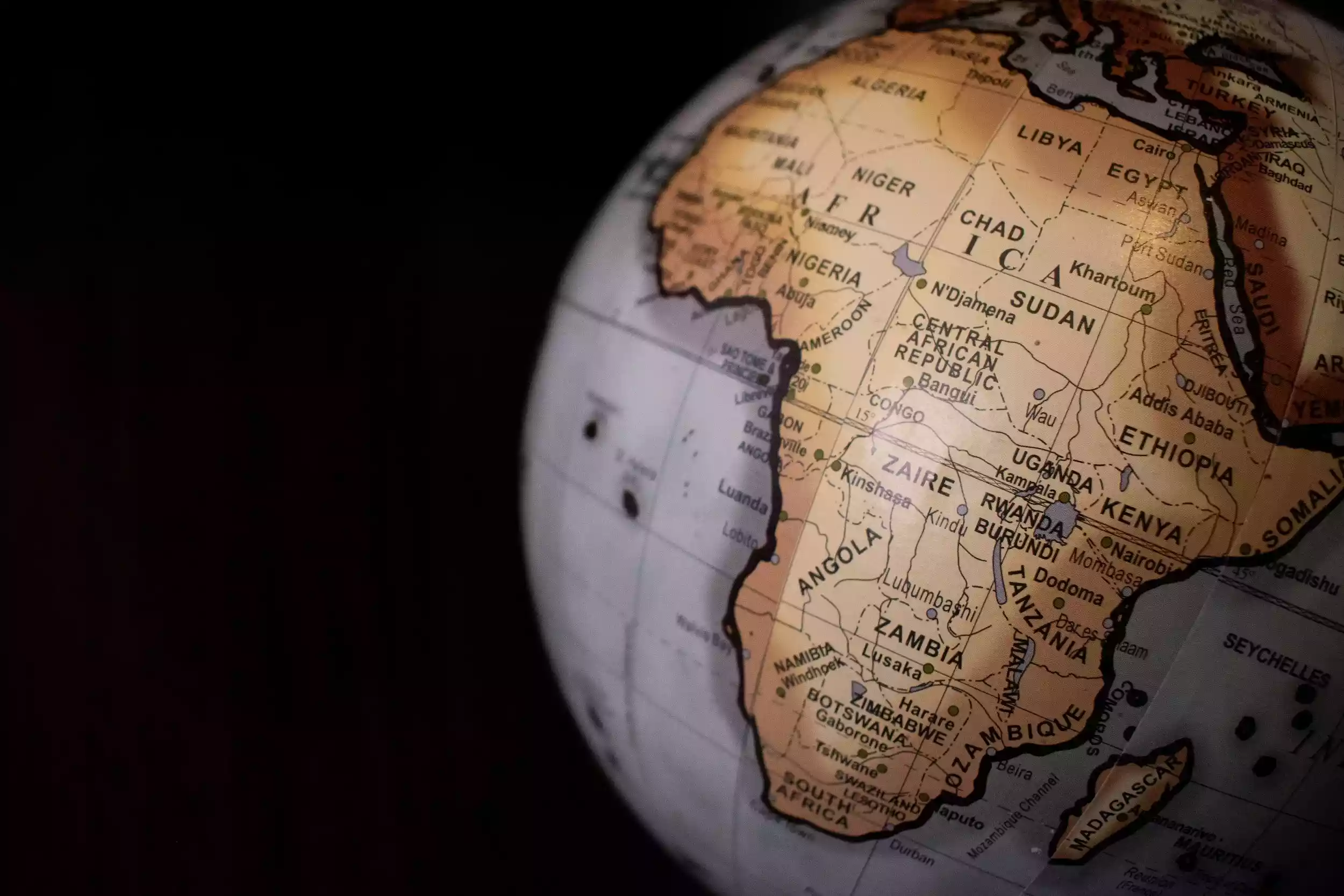
FOOTBALL has a special way of showing us who we really are. It does not lie. It does not hide things behind diplomacy or polite language. When the whistle blows and the cameras roll, the truth about a people, a nation, or even a continent comes out for all to see.
What Africa has been showing the world, through football, in the past year, is troubling. We are a continent that struggles to stand together, even when our own brothers and sisters are on the global stage representing us.
Let us begin with what happened during the last AFCON final between Senegal and Morocco, hosted by the latter. That match will be remembered for a long time, not for the quality of football, but for the confusion that followed it. Poor officiating left fans, players, and even experts unsure of who truly won. Even up to today, there are still arguments about who the real African champions are. But what was even more revealing than the officiating mess was how Africans reacted to it. Many black Africans openly supported Senegal and turned against Morocco, not because of football skill, but because of something deeper. There is a long-standing feeling among many sub-Saharan Africans that Morocco and other north African countries do not fully identify as African, that they see themselves as more Arab or Mediterranean than African. This feeling came out loudly during that match. People were not just supporting a team, they were taking sides in an old argument about identity, race, and belonging on this continent.
Now fast forward to the World Cup currently underway in North America. Before a single ball had even been kicked in anger, we were already given another reminder of how the world treats Africans, and how Africans treat each other. A referee from Somalia, who had earned his place among the very best officials selected for this World Cup, was denied entry into the United States. He was accused, without much explanation given to the public, of having links to a terrorist organisation. This man had trained his whole life, worked his way up through the ranks, and earned the honour of officiating at the biggest football tournament on earth. Yet at the border, none of that mattered. He was sent back home like a criminal. What was painful to watch, but also strangely beautiful, was how his own people received him. He was welcomed home like a hero, with crowds, with flags, with songs. In a small way, that welcome told us something important. When the world rejects one of us, our own people can still choose to embrace us. That spirit, sadly, has not been extended consistently across the continent itself.
This brings us to the opening match of the tournament, between Mexico and South Africa. On paper, this was simply a football match between two nations from completely different continents. But for many Africans, especially those from Zimbabwe and Nigeria, this match became something else entirely. Many openly supported Mexico, not because they have any historical love for Mexican football, but because of their anger towards South Africa. This anger did not come from nowhere. It comes from years of frustration over the way African immigrants, including many Zimbabweans and Nigerians, have been treated in South Africa. We have all seen videos and news reports of xenophobic attacks, of foreign-owned shops being looted and burned, of African migrants being blamed for crime, unemployment, and every social problems in South Africa. So when South Africa took to the field at the World Cup, some Africans found themselves cheering against a fellow African nation, and for a country thousands of kilometres away with no connection to our continent at all. That sense of betrayal cut deep into the Bafana Bafana camp itself. After the defeat, captain Ronwen Williams could not hide his heartbreak as he lamented, "Africans have always supported other African countries in every World Cup tournament but I can't figure out why our own case is different. Many Africans supported Mexico, not us, the South Africans. We almost shed tears but truly this is sad. As Africans let's stand for each other, let's stand together."
This is the picture we are left with. A final Afcon match referee mess that exposed racial divisions. A Somali referee humiliated at the border while his people gathered to honour him at home. And now South Africans being abandoned by fellow Africans on the world's biggest stage, because of how badly some African brothers and sisters have been treated within South Africa's own borders. Three different stories, three different countries, but one common thread running through all of them. Africa is not united. And worse, many Africans no longer feel that they should pretend to be united when the evidence of disunity is so painful and so personal.
South Africa must take a long, hard look at itself because of this. A country that was once seen as the shining light of post-apartheid Africa, a country that received support from across the continent during its long struggle against apartheid, now finds itself being abandoned by some of those same people it once called comrades. Zimbabwe and Nigeria supported South Africa's liberation struggle. Many African nations sacrificed diplomatically, economically, and in some cases through direct support to help South Africa become free. Yet today, the children and grandchildren of those same nations are being attacked on the streets of Johannesburg and Durban simply for being foreign. Is it any wonder then that some of those same people now find it difficult to cheer for the Bafana Bafana? This is not something we should be proud of as Africans, but it is something we must be honest about. South Africa's leaders and its citizens need to ask themselves a serious question. How did we get here? How did a nation that was lifted up by African solidarity become a nation that some Africans now wish to see fail?
But let us be careful here. While South Africa carries a heavy share of responsibility for the resentment it has created, it would be wrong, and even dangerous, for us to simply throw stones and feel satisfied. The same can be said about Morocco and the perception, whether fair or not, that some north African nations have distanced themselves from their African identity. These countries, in their own ways, have contributed to the cracks we now see. But pointing fingers and assigning blame, while necessary, cannot be the end of the conversation. If we only focus on who is at fault, we will spend the next fifty years arguing about history and identity while the rest of the world continues to move forward without us. Blame has its place, but it cannot be our destination.
- In Full: Nineteenth post-cabinet press briefing: July 05, 2022
- Muzarabani eager for Chevrons to qualify for Australia 2022
- WhaWha triumphs in the slugfest of wardens
- R. Kelly sentenced to 30 years in sex trafficking case
Keep Reading
We must remember what brought us joy in years past. When Morocco reached the semi-finals of the World Cup in 2022, the whole continent celebrated as if Morocco was representing our own national teams.
Soccer enthusiasts in most African countries stayed up late at night to watch Morocco play, and they cried tears of joy when Morocco beat Portugal and Spain. The same happened when Ghana reached the quarter-finals of the World Cup in 2010, with players like Asamoah Gyan becoming instant heroes across the entire continent. In those moments, nobody cared about borders, language, or old historical arguments. We were simply Africans, supporting Africa. That spirit is what some people call Ubuntu, the idea that I am because we are, that my success is tied to your success, and that we rise or fall together. That spirit has not disappeared completely, but it has become harder to find or trust.
So what can we do better as a continent? The first thing we must do is have honest conversations about these divisions instead of pretending they do not exist. For too long, African leaders and African media have preferred to talk about unity in official speeches and grand conferences, while ignoring the everyday resentments that ordinary people feel towards each other. We cannot build real unity on top of unresolved anger. South Africa needs to seriously address xenophobia, not just with statements condemning violence after it happens, but with real policies, real community programmes, and real education that helps South Africans understand the history of solidarity that other African nations showed during the liberation struggle. At the same time, countries like Morocco and other north African nations need to engage more openly in conversations about African identity, not to be forced into an identity they do not feel, but to build bridges of understanding with the rest of the continent so that old wounds do not keep reopening every time there is a football match.
Secondly, we need our media houses, football associations, and governments to actively promote pan-African solidarity, especially during major tournaments. Imagine if, before every World Cup or AFCON match involving an African team, broadcasters across the continent reminded viewers of the shared history we have, the support African nations gave each other during independence struggles, and the simple fact that an African team doing well lifts the image of the entire continent in the eyes of the world. Small reminders like this, repeated often enough, can slowly rebuild the sense of shared identity that has been eroded.
Thirdly, ordinary Africans, especially on social media, carry a responsibility too. It is easy to type angry words, to mock another African nation's struggles, or to celebrate when an African team loses simply because of where that team comes from. But every time we do this, we are adding another brick to the wall that divides us. Before posting something that mocks or insults a fellow African nation, we should ask ourselves whether we are helping to build the united Africa we say we want, or whether we are simply venting frustration in a way that makes the divisions worse. Social media has enormous power to either heal or harm, and right now, too much of what we see online is harming our continent's image.
Finally, and perhaps most importantly, we need to remember that the world is watching how we treat each other. When a Somali referee is humiliated at an American border, the world does not see a Somali problem, it sees an African problem, because that is how the world has always categorised us. When African teams fail at World Cups, year after year, with no African nation ever lifting the trophy, the world sees a continent that cannot get its act together, on and off the pitch. If we want the world to take Africa seriously, whether in football, politics, or economics, we must first take ourselves seriously as one people with a shared destiny. The divisions we have seen this past year, from Senegal and Morocco, to the treatment of a Somali referee, to Mexico and South Africa, are symptoms of a deeper sickness. Football has simply given us a mirror. The question now is whether we are brave enough to look into that mirror, admit what we see, and begin the long, difficult, but necessary work of healing. Ubuntu is not just a word for speeches. It must become a way of life, on the terraces, social media, and in the way we treat each other across our borders. Only then can we truly say, with pride, that we are one Africa.
Lawrence Makamanzi is an independent researcher and analyst. He can be reached at [email protected] or on 0784318605