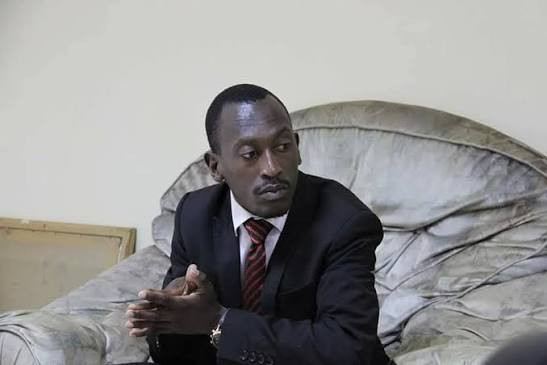
GEORGE Mutsoka woke up in Chishakwe village unable to stand.
Fatigue first, then a headache that felt like something tightening behind his eyes, then the joint pain that told him, before any test did, what was coming.
He is 43, an artisanal gold miner working the pits around Penhalonga, and for years, the pit was simply where the money was.
Now it is also where the mosquitoes breed.
That is not a metaphor.
Artisanal mining in Zimbabwe’s gold-rich east leaves the land pockmarked with shallow pits, dug by hand, abandoned once the seam runs dry or the miner moves on.
Rain fills them. Stagnant water sits in them for weeks.
Anopheles mosquitoes, the ones that carry malaria, do not require much more than that to breed.
- The pit that pays and the pit that kills
Keep Reading
Mutsoka’s colleagues have been falling ill around him in Penhalonga, one after another, in a pattern health workers are now tracing directly back to the pits themselves.
The numbers behind this are not subtle.
Zimbabwe recorded 65 399 malaria cases between January and mid-April this year, against roughly 36 000 in the same period last year and 17 000 the year before that.
Deaths in the same window rose to 174, more than double last year’s 85, five times the 34 recorded in 2024.
This is not a slow drift.
It is a curve bending sharply upward, and gold is one of the hands bending it.
It is not the only hand.
Health officials point to two others.
The rains last season were heavy, and heavy rains mean more breeding water across the whole eastern belt, not only in mining pits.
And funding for malaria control has been cut, sharply, after Washington’s aid reductions early last year ended programmes that used to track and contain outbreaks before they became surges, including entomological surveillance work run out of Africa University.
Three causes, one direction.
Climate, austerity and the gold rush have each removed a different piece of Zimbabwe’s defence against a disease it has spent two decades trying to push back.
There is a particular unfairness in how this lands.
Gold has been good to Zimbabwe this year, output climbing, foreign currency earnings climbing with it, government officials citing the sector as evidence of an economy finding its footing.
The miners digging the pits that generate those earnings are the same miners sleeping beside them at night, unprotected, often without a bed net, because a net is one more expense in a trade that already runs on thin margins.
The wealth moves toward Harare and the export terminals.
The mosquitoes stay in Penhalonga.
Mutsoka survived. He is resting, weak, waiting to be strong enough to return to the pit that nearly killed him, because it is also the pit that pays him.
That is the arrangement most artisanal miners in the east have made with the ground, whether they would put it in those terms or not.
The gold does not ask what it costs. It has never had to.
None of this required a new law or a fresh scandal to produce.
It required an old disease, a familiar shortfall in funding, and a boom that nobody paused to make safe before starting to dig.
Zimbabwe has managed malaria down before. It took sustained investment, the kind nobody wants to keep paying for once the numbers start looking good.
The numbers no longer look good, and the pits keep filling with rain regardless of who is watching the surveillance reports.
Mutsoka will go back to Penhalonga once he can stand.
The gold has not stopped needing him.