ON August 5 and 6, the Justice, Legal and Parliamentary Affairs ministry convened a high-level breakfast meeting in Harare, attended by its minister (Ziyambi Ziyambi), Public Service, Labour and Social Welfare minister (Edgar Moyo) and the Health and Child Care minister (Douglas Mombeshora), together with legal experts, health professionals, development partners and civil society according to AllAfrica (2026) Zimbabwe moves to review intersex laws after landmark court challenge, allAfrica.com, 7 August). The minister explained that the process was triggered by a court challenge that the ministry referred to the Attorney-General, after which it commissioned research.
The case, which was filed in the High Court, sought an order to compel the State to recognise intersex persons in law, to make provision for accurate identity documents, to establish a procedure for amending sex markers and to protect intersex minors from non-consensual, non-essential surgery. Officials at the meeting acknowledged that public misunderstanding of the term is widespread, which is precisely what the now social media backlash demonstrates.
What ‘intersex’ means
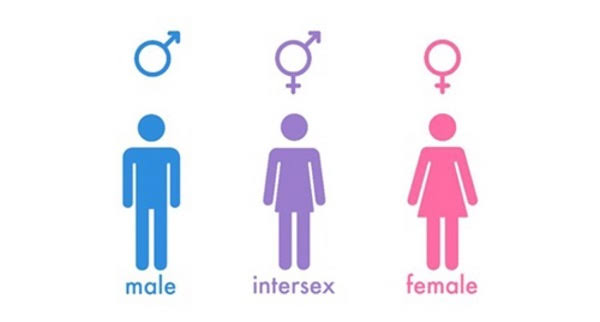
The word “intersex” is an umbrella term for persons born with innate variations in sex characteristics that do not fit binary medical expectations of male or female (OHCHR, 2019, Born Free and Equal: Sexual Orientation, Gender Identity and Sex Characteristics in International Human Rights Law. 2nd edn). Prevalence estimates range from roughly 0,05% to 1,7% of live births, according to Sax, L (2002) How common is intersex? Some variations are apparent at birth, others emerge at puberty, and others are discovered only during infertility investigation or not at all.
It is important to understand that:
˜Being intersex is biological and not behavioural. Nothing is chosen, adopted or imitated.
˜Intersex is not a sexual orientation. Research shows that most intersex people are heterosexual and intersex recognition says nothing about the law on same-sex conduct.
˜Their request for recognition is not a demand that everyone be assigned a third gender: the overwhelming majority of intersex people are raised as and identify as women or men. What they seek is accurate documentation and freedom from surgery to which they never consented. The term is not the same as transgender or any other sexual orientation term that is confusing.
- Little Mr & Miss Zimbabwe crowned
- ‘Nec wages hardly reach PDL’
- Mnangagwa regime on UN radar over abuses
- Stanbic voted best African bank
Keep Reading
Prejudice against intersex children
Children bear the harm most because decisions are taken about them before they can speak for themselves. Most children suffer the following:
˜Intersex births may be interpreted as witchcraft, an ancestral curse, ngozi, or punishment for maternal infidelity, with elders or traditional birth attendants counselling secrecy or disposal, resulting in infanticide, concealment or abandonment according to OHCHR (2025) Discriminatory laws and policies, acts of violence and harmful practices against intersex persons: Report of the Office of the United Nations High Commissioner for Human Rights, A/HRC/60/50.
˜Irreversible physical and psychological harm usually takes place where the assigned sex does not match later identity in “corrective surgeries”. The UN Special Rapporteur on Torture called for a moratorium on such procedures.
˜Registrars unable to enter "M" or "F" delay or refuse birth certificates. Without one, there is no school enrolment, no Zimsec registration, no national identity document, no bank account, no passport.
˜Imagine an intersex child using the toilet at school. Which one does he or she use? This renders intersex learners invisible and unsafe and dropouts follow.
˜They suffer bullying of all sorts due to ignorance, including corrective rituals.
˜Many intersex people may never be told their diagnosis; learning of childhood surgeries only in adulthood.
International framework
In April 2024, the Human Rights Council adopted its first dedicated resolution, Combating discrimination, violence and harmful practices against intersex persons, Resolution 55/14. No binding treaty names intersex persons expressly and protection depends on interpreting "sex" and "other status". There is no treaty-level prohibition of deferrable infant surgery and the "medical necessity" exception is routinely stretched to cover cosmetic intervention. Data collection obligations are absent, so intersex people remain statistically invisible.
Regional framework
Resolution 275 of the African Commission on Protection against Violence and other Human Rights Violations against Persons based on their real or imputed Sexual Orientation or Gender Identity condemns violence based on real or imputed sexual orientation and gender identity. The Maputo Protocol and the Sadc Protocol on Gender and Development are silent on sex characteristics. The African Committee of Experts is yet to issue a general comment on intersex children.
National framework
There is no statutory legal gender recognition process, no regulation of infant sex-assignment surgery and no age-of-consent deferral rule. Section 73 of the Criminal Law (Codification and Reform) Act [Chapter 9:23], which criminalises same-sex male sex relations, fuels the backlash.
Best practice models
Following the case in Baby ‘A’ v Attorney General (2014), in which the High Court ordered registration of an intersex child, Kenya established a task force on intersex persons whose 2018 report drove the reform. Kenya became the first African State to enumerate intersex persons in a national census, recording 1 524 people in 2019 and amended its registration statutes to accommodate an intersex marker through the Children’s Act (Cap 141) and the Births and Deaths Registration Act (Cap 149).
A landmark 2017 ruling by the Federal Constitutional Court in Germany found that forcing a binary gender choice violated intersex people's personality rights, leading to legal updates of the Civil Status Act (Personenstandsgesetz — PStG).
Conclusion
The recommendation is for all child protection players to ensure that their communities understand what "intersex" means and the implications for a baby born today with both sex organs. Our biggest fear is that ignorant negative reactions may fuel hate, rejection and self-hatred for a child affected. Sustained public education is thus an imperative to curb debates from people arguing about a word they have not yet understood.