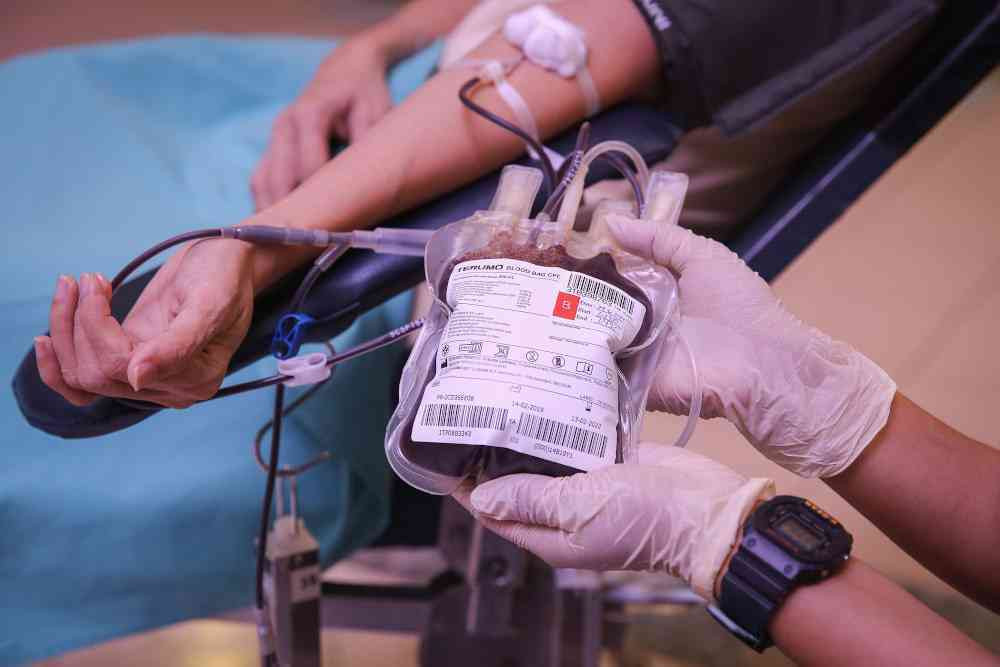
ZIMBABWE’S blood stocks are at a dangerously critical level, and the appeal by the National Blood Service Zimbabwe (NBSZ) for donations should serve as a national wake-up call.
For years, NBSZ has struggled to meet the country’s blood requirements, relying heavily on voluntary donations to keep hospitals functioning.
That long-standing challenge has now reached an alarming point.
Current indications show that the national blood bank is operating at less than one to two days’ supply — far below the recommended minimum of five days needed to ensure stability and emergency preparedness.
This is not a technical inconvenience, it is a life-and-death crisis unfolding quietly in the background of our health system.
Blood is a critical resource for surgeries, road traffic accident victims, women experiencing complications during childbirth, cancer patients undergoing treatment and people living with chronic illnesses such as severe anaemia.
When blood stocks are depleted, hospitals are forced into impossible decisions: postponing operations, rationing supply or watching patients deteriorate — not because medical expertise is lacking, but because blood simply is not available.
NBSZ blood supply executive Menard Mutenherwa has described the situation candidly, noting that the blood supply is a “moving target”.
- ‘Blood, drug shortages hit UBH’
- NBSZ appeals for more blood donations
- ‘Testing delay affecting blood availability’
- Zim runs out of blood stocks
Keep Reading
While donations may be received throughout the day, the reality is that at any given moment, the country remains critically low.
This persistent shortfall is what has compelled the NBSZ to make repeated appeals to the public.
Saving lives, as Mutenherwa rightly points out, is a collective effort that cuts across sectors, regions and generations.
Blood donation cannot be treated as a once-off act of goodwill or a seasonal gesture during emergencies.
Sustainability depends on regular, consistent donations from citizens across all age groups who are medically eligible to give.
Yet Zimbabwe’s blood donation culture remains weak and inconsistent.
Many people donate blood while in school, largely because it is organised and encouraged, but stop once they enter adulthood.
Working adults often cite busy schedules, fear, misinformation or simple apathy as reasons for not donating.
Persistent myths — that donating blood causes illness, weakness or long-term harm — continue to discourage participation despite decades of medical evidence proving otherwise.
Meanwhile, demand continues to rise.
Road accidents remain frequent, non-communicable diseases are increasing, maternal health challenges persist and under-resourced hospitals struggle to cope with emergencies.
Blood usage does not pause simply because donations decline.
Patients do not wait for convenience.
What makes this crisis particularly troubling is that it is largely preventable.
Zimbabwe does not lack potential donors.
It lacks a sense of urgency and shared responsibility.
Every healthy adult who is eligible to donate but chooses not to widens the gap between life and death for someone else.
This is not a problem government policy alone can fix.
No budget allocation, regulation or public statement can substitute a unit of blood freely given by a willing donor.
Institutions must step up.
Corporates, churches, universities, colleges, political parties, trade unions and civil society organisations should move beyond issuing statements of concern and actively organise blood donation drives.
Leaders — political, religious and social — must lead by example by donating publicly and consistently.
Media organisations must keep the issue in the spotlight, not just when crises erupt.
Communities, too, have a role to play.
Blood donation must be normalised as a civic duty, not an act reserved for the extraordinary or the heroic.
Because one day, the crisis will no longer be theoretical.
It will be a loved one in an operating theatre. A child lying in an accident ward. A mother struggling through childbirth. A neighbour battling cancer.
When that moment arrives, the question will be painfully simple: Did we give when we could?
Zimbabwe cannot afford to run low on lifeblood.
The appeal has been made. The need is urgent.
The responsibility belongs to all of us.