IN the dim, cramped room at Checheche Growth Point in Chipinge district, Chipo sits hunched over, her face etched with despair.
Only 16 years old, she is burdened beyond her years — her small frame trembling as her nine-month-old baby cries out in hunger, the sound piercing the silence of her bleak surroundings.
The child’s tiny face is flushed and distressed, yet Chipo feels powerless to provide even the most basic needs like porridge or clothes.
Her shoulders sag under the weight of her circumstances, a stark testament to a life overshadowed by hardship.
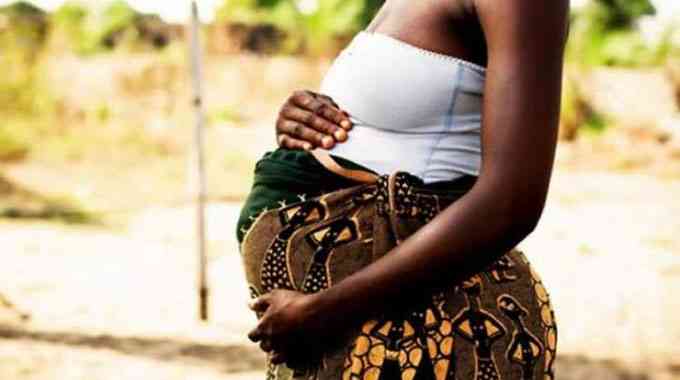
Chipo’s situation is compounded by another pregnancy — she is five months pregnant — and she admits she does not know who the fathers of the first baby and the current five-month pregnancy are.
In fact, she has had four pregnancies so far — two of those terminated, one a child and the other one at five months, halfway to delivering a second child.
The uncertainty adds an additional layer of anguish to her already fragile existence.
She spends her days caring for her sick mother, who struggles with illness that saps what little energy remains in their household.
- LSU students win innovation prize
- Chevrons confident of a good finish
- LSU students win innovation prize
- Sunday word: God’s luni-solar calendar
Keep Reading
With no access to formal employment or social safety nets, survival has become an ongoing battle.
The harsh realities of poverty have pushed Chipo into a desperate corner.
Her options are few and grim, amid the crowded streets and pathways of Checheche Growth Point, she has turned to sex work as her only means of economic salvation.
It is a heartbreaking choice driven by the urgent need to feed her child and ailing mother, among other siblings, and keep her family afloat — a decision that exposes her to risks far beyond immediate hunger or discomfort.
This heartrending tale came out during a recent media tour organised by the National Aids Council (NAC) in Chipinge, Manicaland province.
“But then, something changed. I met someone from the Organisation of African First Ladies on Development (OAFLAD), and they told me about the support and care available to people who are into sex work.
“I was hesitant at first, but they convinced me to join their programme,” Chipo recalled.
“When I started the programme, I was a mess. I was into sex work to cover up my poverty so that I could look after my pregnancy, my nine-month-old baby and my mother, and I didn’t know how to cope.
“But the OAFLAD team, took me under their wing. They gave me hope, they gave me support, and they helped me to see that I was worth fighting for.”
Today, Chipo is a beneficiary of OAFLAD’s programme, which is being led by First Lady Auxillia Mnangagwa in Zimbabwe.
The programme focuses on health, women, youth empowerment, education and sustainable development, and has given Chipo a new lease on life.
“I know I made mistakes, but I am not defined by them. I am defined by my strength, my resilience, and my hope for a brighter future,” she said
Chipo’s story is a testament to the power of redemption and the impact of OAFLAD’s work in Zimbabwe.
With the support of Mnangagwa and NAC, Chipo is rebuilding her life and finding purpose.
In Mwanyisa Village, Privilege (15) is a beneficiary of OAFLAD with a fatherless one-year-old son, and her plight underscores how deep-rooted poverty can push vulnerable youth into risky behaviours, including early sexual activity and sex work, with devastating consequences.
Privilege, a bright and resilient girl, has become the primary breadwinner for her family at just 15 years old.
She stays with her aunt and two younger siblings after their parents passed away several years ago.
With limited access to income-generating opportunities and a lack of basic resources, Privilege found herself increasingly desperate to support her family’s needs.
“To make ends meet, I was coerced into transactional sex — exchanging intimacy for money and goods—to ensure my siblings could attend school and have enough to eat and in the process, I got pregnant,” she said.
“I never wanted to do this. But there was no one else to help us. I had to find ways to survive,” Privilege added.
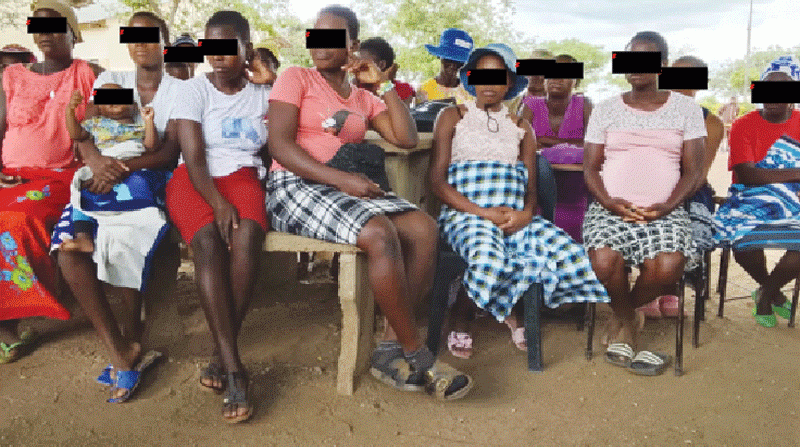
The stories of Chipo and Privilege are not isolated; many other girls across Zimbabwe face similar struggles, often falling prey to exploitative situations due to poverty's crushing weight.
Statistics reveal that young girls are increasingly vulnerable in impoverished regions across Zimbabwe.
According to NAC, adolescent girls in Chipinge are facing extreme poverty and are often forced into transactional sex as a survival strategy, exposing them to health risks such as HIV and Aids, and unwanted pregnancies.
Yolanda Gwizo, the NAC youth officer for Chipinge, said the district is one of the worst affected areas with rising number of young mothers in the country.
“Generally, poverty in this area has pushed girls into early sexual relationships and sex work. This has led to an increase in teenage pregnancies and early marriages,” she said.
“In some cases, it is also due to teenage delinquency.”
Gwizo applauded the OAFLAD programme in partnership with NAC for restoring hope and dignity in young mothers in Chipinge district.
“Checheche is a hotspot. This is where we have recorded high numbers of such cases and this is the reason why we are implementing of the OAFLAD programme in this area.
“We also have other interventions that are running concurrently, all aimed at addressing this issue,” Gwizo said, adding that collaborative effort with traditional leaders, the Health and Child Care ministry, the Primary and Secondary Education ministry, the police and other stakeholders are being put into place to curb the various abuses being faced by young girls.
The young adolescent girls and young women in Chipinge receive US$10 each every month from OFLAD.
They also receive free training during interval meetings aimed at eliminating HIV and Aids, Syphilis and Hepatitis infections.
OFLAD’s initiative is protecting children and women in Nigeria in Chipinge from growing complacency in the response to the spread of HIV and Aids in Zimbabwe.
Traditional leadership in the area has voiced concerns about these trends
Headman Zamuchiya, real name Irikidzai Mutetwa, said: “Primarily poverty and negligence have led to risky sexual behaviours, including unprotected sex, multiple partners and transactional sex.
“The psychoactive effects of poverty compromise judgment, making young people more vulnerable to these dangers.”
He highlighted the urgent need for intervention.
“Young girls in my area are at a much higher risk of contracting HIV and Aids.
“Engaging in unsafe sexual practices can lead to infection or transmission to another person.”
His remarks reflect a growing awareness among local leaders that economic hardship directly correlates with increased health risks among youth.
Experts warn that without targeted social programmes addressing poverty and education, this cycle will persist.
Initiatives such as youth empowerment projects, access to reproductive health services, and economic support could significantly reduce vulnerability among young girls.
As teen mothers navigate this treacherous path with hope dwindling each day, they embody resilience amid despair — a reminder of countless young girls trapped in circumstances across impoverished rural areas.
Their stories call for urgent action from policymakers, community leaders, and humanitarian organisations to break the cycle of poverty and protect those most at risk from falling deeper into hardship.