Maphisa exposes Zim’s two-tier independence…Bicycles for war veterans, helicopters for cronies bicycles — underscoring a widening gulf between liberation fighters and the new political and economic elite.
The stark contrast unfolded on the rain-soaked terrain of Matabeleland South, a province the President described in his keynote address as being “of sacred significance in the history of our country.”
The day began with an unusual spectacle at Joshua Mqabuko Nkomo International Airport in Bulawayo, where rows of private helicopters — including Bell 407s, Airbus H125 Squirrels and at least one AgustaWestland AW139 — turned the general aviation apron into what one ground handler described as a “mini air show.”
Most of the aircraft carried South African civil aviation registrations, indicating a chartered fleet used for the 25-minute flight over the Matobo Hills to Maphisa growth point.
Hours later, at a ceremony held near Maphisa Stadium, it was the veterans’ turn.
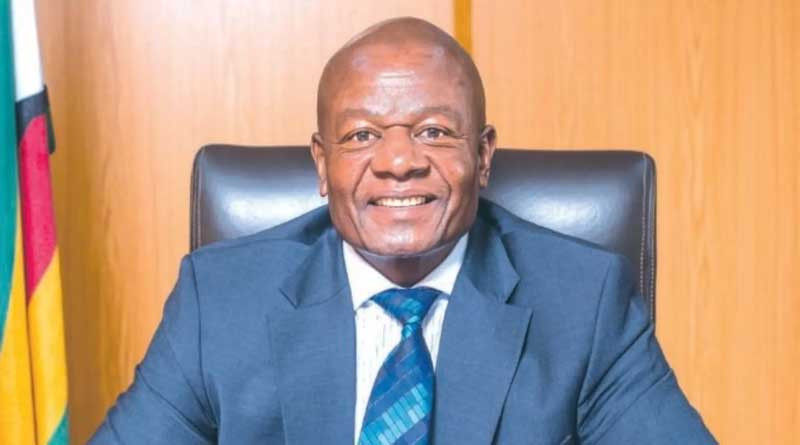
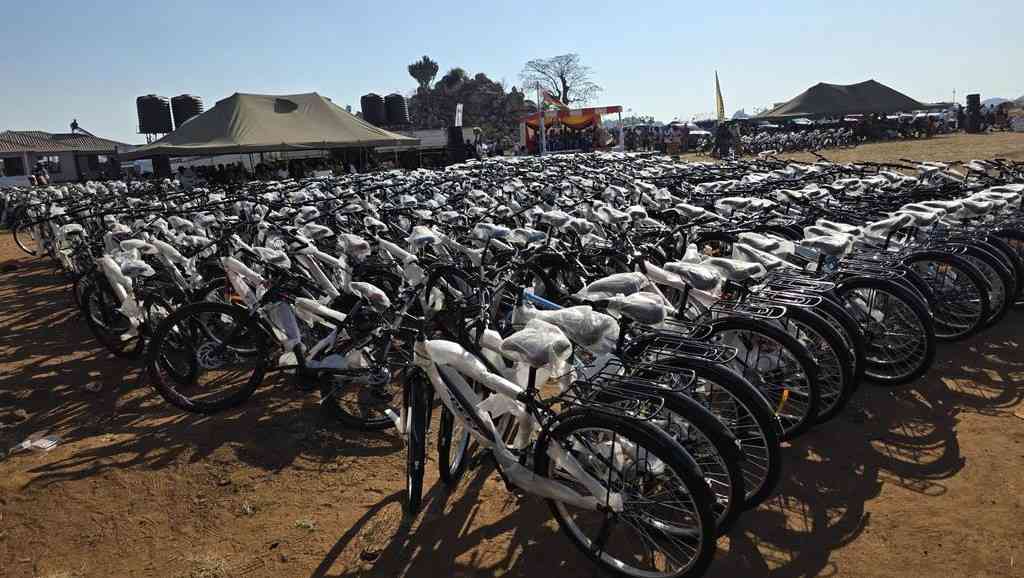
Mnangagwa, accompanied by First Lady Auxillia Mnangagwa, commissioned three houses built under the Presidential War Veterans Housing Scheme and handed over “grocery hampers and bicycles” to liberation war veterans.
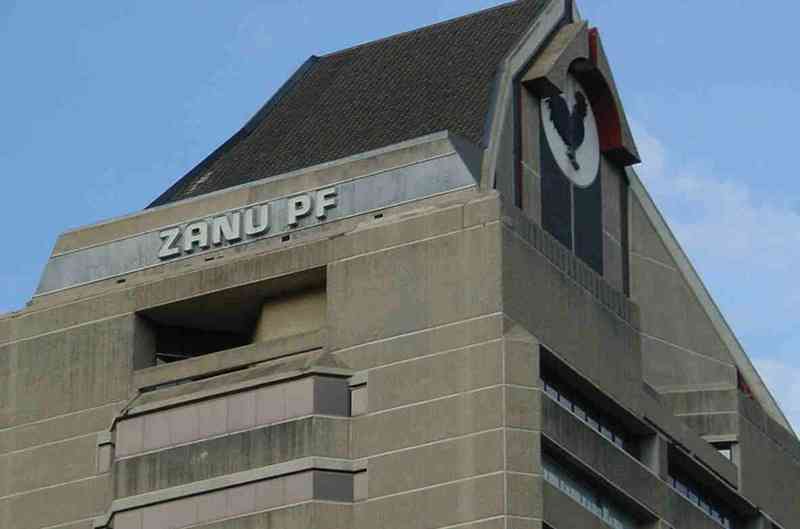
Zanu PF secretary for war veterans Douglas Mahiya praised Mnangagwa as a “listening President who initiates empowerment programmes for war veterans,” adding that such programmes should continue “up to 2030” — a reference linked to the contentious Constitutional Amendment No 3 Bill, which seeks to extend the President’s tenure.
Minister of Veterans of the Liberation Struggle Monica Mavhunga expressed gratitude, saying the house handover was “being done at a time when we are celebrating our hard-won independence”.
- Female politicians complain over sexual harassment
- Zimbabwe’s lobby to lift ivory trade ban stutters
- Involve communities in conservation, says Ndlovu
- Zimbabwe’s lobby to lift ivory trade ban stutters
Keep Reading
But for many observers, the symbolism of gifting bicycles to veterans in their 70s and 80s — survivors of a brutal liberation war that claimed thousands of lives — spoke less of empowerment and more of indignity.
Political analyst Pardon Taodzera noted that during the liberation struggle, bicycles were used by young messengers and scouts supporting guerrilla operations.
“To offer the same implement to decorated veterans four decades later, while the politically connected elite arrive in chartered aircraft, sends an unmistakable message about who truly inherited the fruits of independence,” he said.
Addressing thousands gathered at Maphisa Stadium under the theme Zimbabwe at 46: Unity and Development towards Vision 2030, Mnangagwa paid tribute to liberation icons from the region, including the late Vice-President Joshua Nkomo, Alfred Nikita Mangena, Lookout Masuku and George Silundika.
He also referenced key battlegrounds such as Ratanyana, Zezani, Manama, Minda and Thekwane, where Zipra forces fought Rhodesian troops.
“Their patriotism and selfless sacrifice for our motherland remain a source of inspiration to us all,” he said.
“We thank Matabeleland South province for giving our nation many gallant heroes and heroines who helped to liberate our land from colonial
bondage.”
The President cited economic gains, including foreign currency reserves exceeding US$1,2 billion, inflation declining to 4% and a maize harvest of 2,4 million tonnes — figures that contrast sharply with persistent food insecurity in parts of the host province.
According to international food security monitors, crisis-level food insecurity was projected for Matabeleland South as recently as November 2025.
“The welfare of veterans of the liberation struggle is a key priority,” Mnangagwa said, pointing to housing and borehole drilling programmes.
But for many veterans in Matabeleland South — the region that produced Joshua Nkomo — the ceremony reinforced a bitter perception that the rank-and-file liberation heroes have been relegated to the margins of post-independence reward, pacified with bicycles while the connected elite soar overhead in chartered aircraft.
As the President concluded with the familiar refrain that “no one else will build our country Zimbabwe for us, that duty lies with us all,” the helicopters were already powering up for their return to Bulawayo, their rotors stirring the red dust of a province described moments earlier as sacred.
On the ground, elderly veterans, their legs weakened by age and arthritis, began the long pedal home.