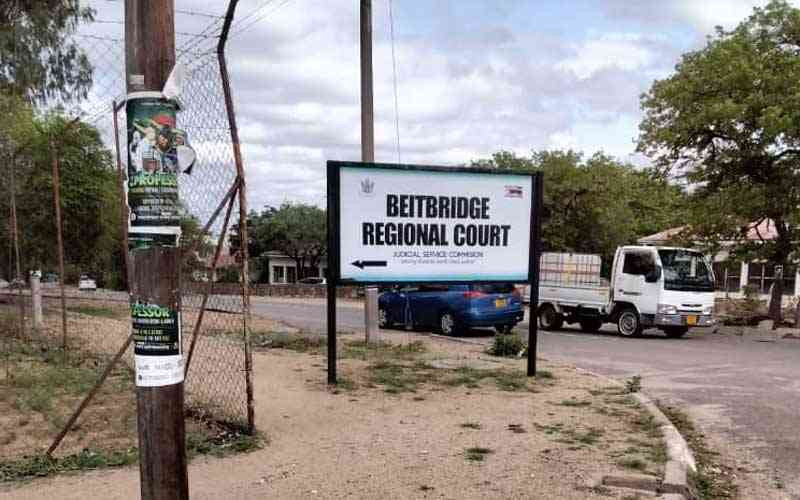
The border between Zimbabwe and South Africa, popularly known as the Beitbridge-Musina border, has been rated a major crime hotspot.
Crimes such as smuggling, corruption, and other illicit activities are prevalent there, as the area serves as the main transit point for migrants travelling along the southern route.
Zimbabwe is regarded as a transit country by migrants, mostly from Zambia, Malawi, Mozambique, and Tanzania.
A recent report titled Mapping Organised Criminal Economies in east and southern Africa, released by the Global Initiative Against Transnational Organised Crime (GI-TOC) in July 2025, states that crime zones are located mostly along borders.
It notes that these zones include multiple crossing points within a wider geographic area characterised by limited border control and official complicity.
“In some cases, seasonal climate patterns — notably the drying up of river beds that run along borders — make increased movement possible. Kenya’s borders with Ethiopia and Somalia, and South Africa’s border with Zimbabwe, are prominent examples of crime hot spots,” reads the report.
The report indicated that considerable numbers of migrants pass through the Zimbabwe-South Africa border.
“It represents the final crossing along the southern route and thus a key choke point where many illicit trades converge.
- Why Beitbridge is rated a crime hotspot
Keep Reading
“Smuggling occurs along a substantial part of the border, although Beitbridge is a major convergence point,” the report read.
“Migrants are smuggled both through the border post, often with official complicity, and along informal points along the Limpopo River, where movement is eased during the dry season.
“Local gangs, known as guma -gumas, ct as brokers in facilitating smuggling along these informal crossings, both of people and various commodities.”
The report says these gangs play both a facilitatory and, at times, predatory role, amid reports that migrants are commonly raped, assaulted, and even murdered.
“The Beitbridge border post and the towns of Beitbridge (Zimbabwe) and Musina (South Africa) are main transit points for many migrants travelling along the southern route.
“These hot spots are located within the broader crime zone of the South Africa–Zimbabwe border,” the report noted.
It said the border between South Africa and Mozambique provides additional entry points, albeit to a lesser degree.
However, this border is also a major crime zone where migrant smuggling is just one of many illicit markets.
“Frustrations among local communities, allegedly arising from foreign criminal operations along the border, have given rise to both vigilantism and opportunistic crime, often violent in nature and directed at Mozambican buses, trucks and other vehicles,” reads the report.
The report explained that capital cities and large towns often act as hubs, allowing migrants to access smuggling routes and enabling brokers to hand over and receive groups of migrants.
Key infrastructure such as airports and highways are major features. Nairobi, Lilongwe, Dar es Salaam and Maputo are cited as examples.
These cities commonly play a dual role as both hotspots and transit points.
“For example, Nairobi functions both as a hotspot and a vital transit point connecting to both the eastern and southern routes and attracting migrants from all over East and Central Africa,” the report noted.
In some transit points, migrant smuggling is vital for the local economy.
The report cites the Ethiopian border town of Moyale, where people smuggling is reported to account for 60% of the town’s economy, facilitated by lax controls and its connection to a major highway.
The town of Isiolo in Kenya is named as a vital consolidation hub for human smuggling networks, where criminal actors maintain infrastructure including lodgings for migrants.
The report also named Kenya’s borders with Ethiopia and Somalia as extended geographic crime hotspots characterised by high volumes of smuggling.
High levels of criminality along the Kenya-Somalia border are exacerbated by weak security and institutional weaknesses, despite a long-standing Kenyan military deployment in the region.
A resilient criminal economy has thrived amid this insecurity, the report notes.
It further reveals that hub and broker convergence occurs at points along smuggling routes.
This includes the intersection of drug and human smuggling using private dhows along the Tanzanian and Mozambican coasts.
“The likelihood is that brokers provide services and vessels to distinct networks, rather than one network overseeing the trafficking of both people and drugs,” the report stated, citing the Kenya-Somalia border as one such convergence node.
The report revealed that in conflict zones, human smuggling corridors are also used to transport illicit arms, fuelling regional instability.
This is notable in Sudan and other parts of the Sahel.
“Smuggling networks in Libya, Sudan and Somalia are directly linked to ransom economies, where migrants are kidnapped and extorted by organised groups,” reads the report.
“This also occurs in southern Africa, where Ethiopian and Bangladeshi migrants have experienced extortion by smugglers, who have refused to release or transport them further without additional payment.”