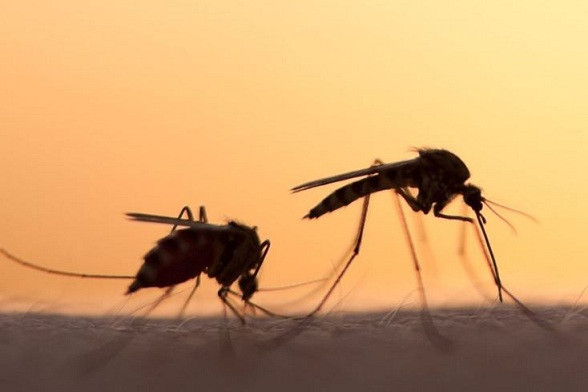
All malaria cases recorded recently in Bulawayo were imported, with most linked to travel from Zambia, raising concerns that the city could be sitting on a health time bomb.
Despite all malaria cases being imported, Bulawayo remains at risk of a local outbreak. Health authorities cite heavy mosquito breeding, delays in chemical supplies, and suspended mapping of breeding sites as key vulnerabilities if preventative measures are not fully applied. According to the latest Bulawayo City Council pest control committee minutes, health services director Edwin Mzingwane Sibanda.
reported last month that investigations into eight malaria cases confirmed that none originated in the city.
Council authorities said mitigatory measures against mosquito breeding included clearing about 8 900 metres of bushes during the reporting period.
Officials noted light to heavy mosquito breeding during the exercise, while two litres of larvicide (Kontakill) were used to treat breeding sites.
“The section received eight malaria cases and investigated them. All were imported cases; patients had visited Binga (1), Harare (1), Mutoko (1), Zambia (4) and South Sudan (1),” the report said.
Council officials said mosquito breeding in streams ranged from moderate to heavy following recent rains, although some sites were washed away.
However, delay in the supply of tendered chemicals poses a serious risk.
- Uproar over census figures
- Byo Arts Festival in turmoil…One year later, festival has yet to pay artists…Organisers play cat and mouse with artists
- Bulawayo struggles to clear housing backlog
- Council acts tough on debts
Keep Reading
“The tendered chemicals had still not been supplied and the city was sitting on
a health time bomb.
One mosquito complaint was received, attended to and remedial action was taken,” the report said. Mapping of mosquito breeding sites was suspended due to a shortage of transport.
On rodent control, council reported that two complaints were received and resolved.
“Three requisitions were received for controlling mosquitoes, rodents and bedbugs.
Two requisitions were attended to and one follow-up was done. Chemicals used included Brodifacoum 7k, Lambdacyhalothrin (five sachets) and six litres of Kontakill,” the minutes read.
The local authority noted that indoor residual spraying was not conducted because no one paid for the service.
Sibanda said authorities implemented enhanced emergency response mechanisms across all health pillars to detect, monitor and manage disease outbreaks.
In January, council recorded nine malaria-positive cases and four deaths, although all infections were traced to sources outside Bulawayo.
On health promotion, officials followed up on suspected infectious diseases to break transmission chains through prevention and control measures.
Risk communication and community engagement campaigns were also conducted to encourage behaviour change and raise awareness of health risks.
Meanwhile, councillor Khalazani Ndlovu called for urgent action to address rising cases of bites inflicted by stray dog.
“A dog control campaign should be done before the tie-up order,” she said.