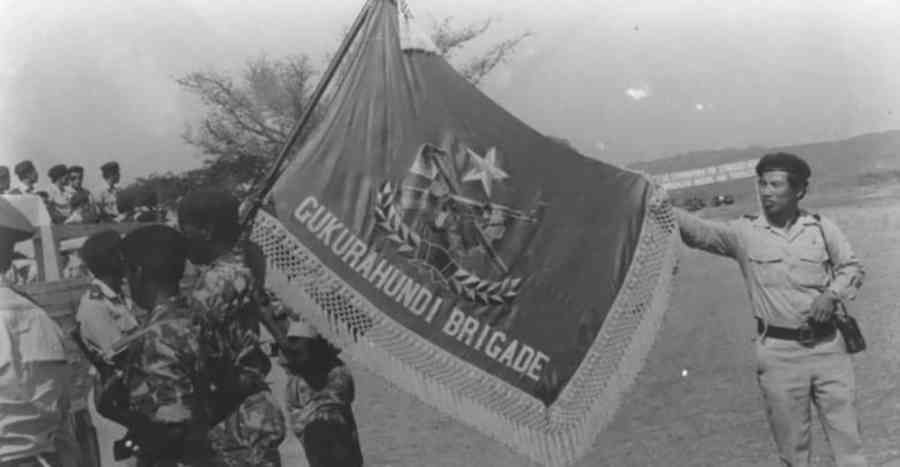
THE communities of Emkhonyeni and Tshiyakwakhiwe in Tsholotsho held a memorial service on Monday for 33 villagers killed by North Korea-trained 5 Brigade soldiers in March 1983 at the height of the Gukurahundi atrocities.
The event marked 43 years since the massacre.
On March 16, 1983, soldiers descended on the two villages.
At the Dlamini homestead in Emkhonyeni, they gathered 21 women and one man, forced them into a grass-thatched hut and set it alight, burning them alive.
Earlier that same day, 11 men were killed at the nearby Mudzimu Dam, where villagers were forced to dig shallow graves for the victims.
Monday’s memorial service, organised by Ibhetshu LikaZulu and church groups, was characterised by emotional scenes as residents gathered at the Dlamini homestead to honour the dead.
A woman whose parents were killed described enduring trauma.
“We are still mourning because our mothers have not yet been decently laid to rest,” she said.
- Ziyambi’s Gukurahundi remarks revealing
- Giles Mutsekwa was a tough campaigner
- New law answers exhumations and reburials question in Zim
- Abducted tourists remembered
Keep Reading
“We are grieving for those lying here after they were killed by men from whom they expected protection.”
The woman appealed to local senator Sethulo Ndebele, who attended the service, to plead with Parliament that March 16 be declared a women’s day holiday.
“March 13 is International Women’s Day, but we are unable to celebrate here because our parents are not decently buried,” she said.
“We sent a letter to Parliament in 2024 and have received no response.
“If they accept our request, we will understand that they acknowledge that this happened.”
Another villager said the atrocities were ethnically targeted.
He added that the killings devastated families, leaving many without education or identity documents.
“There are adults who did not go to school after their parents were killed.
“Some do not even know their fathers because they were killed when they were very young.”
Ibhetshu LikaZulu secretary-general Mbuso Fuzwayo said they were demanding justice, adding that the State should protect women and girls.
“We call upon the government to declare March 16 national women’s day to honour these women and all women in Zimbabwe,” he said.
During the service, a plaque was erected at the mass grave.
Ndebele laid flowers at the Dlamini homestead, now a ruin, and pledged to build toilets at the site as the community works towards constructing a memorial museum for remembrance, healing and education.
Civil society and church organisations launched a gender strategy to address women’s concerns during the event, emphasising the need for recognition.
In 2018, President Emmerson Mnangagwa tasked traditional leaders with leading Gukurahundi hearings.
The programme was launched in 2020 and updated in 2025, but there is growing concern over lack of progress in addressing the emotive issue.