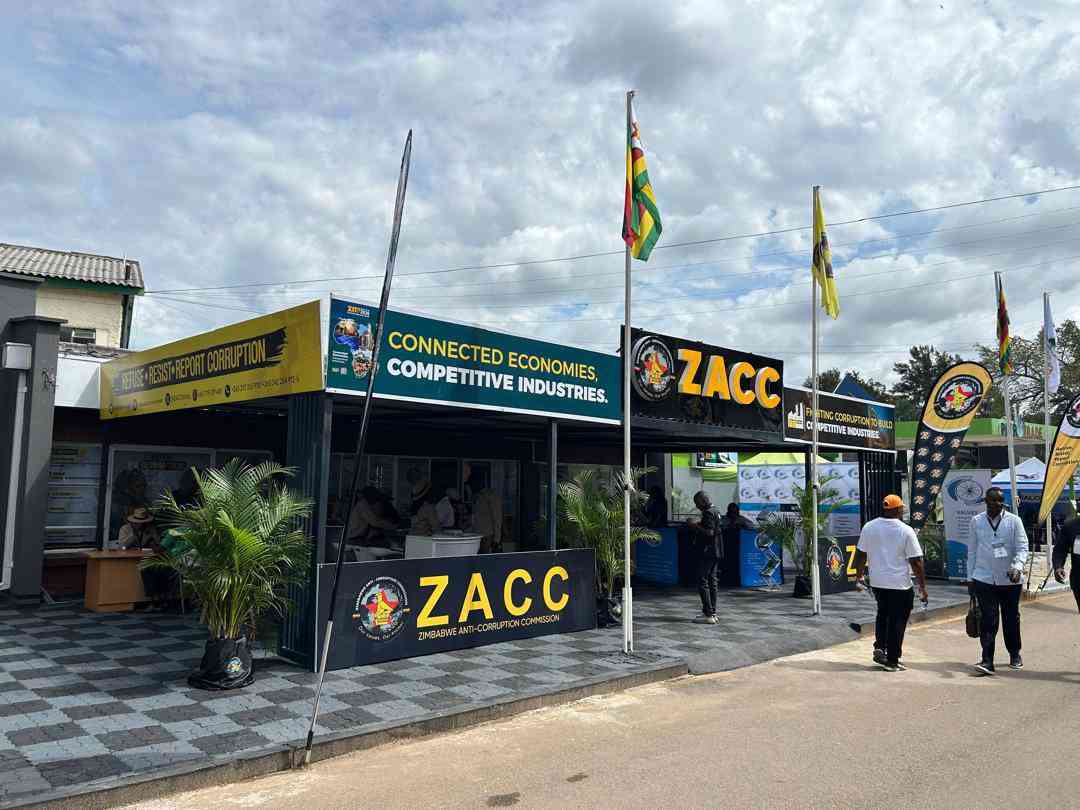
The Zimbabwe Anti-Corruption Commission (Zacc) has moved in on suspected illegal gold mining syndicates operating on Bulawayo City Council farms in Inyankuni, in a probe that could expose corruption behind the destruction of key water catchments.
According to a confidential council report seen by Southern Eye, Zacc formally requested manpower, security and fuel from council to support an operation targeting mining syndicates accused of wreaking havoc on Bulawayo’s critical water sources.
The request, dated April 14, 2026, was addressed to the Bulawayo town clerk and signed by the Zacc provincial head, highlighting the seriousness of the planned operation and the scale of resources required.
“The Zacc is investigating cases of illegal mining activities taking place in part of your farms in Inyankuni area, Umzingwane district,” reads the letter.
Zacc requested that council provide surveyors to identify municipal land boundaries, security personnel to assist during the operation, and fuel, 60 litres per day for three days, subject to extension as well as refreshments for three officers deployed between Umzingwane and Bulawayo.
According to the report, council’s director of town planning Wisdom Siziba warned that the city had been battling “persistent illegal occupation and gold panning activities” on its farms, including catchment areas for Inyankuni and Umzingwane dams.
“As previously reported in some local media houses in the past up to date, the city of Bulawayo had been experiencing persistent illegal occupation and gold panning activities on its farms including the catchment areas of Inyankuni, and Umzingwane Dams,” the report says.
The report painted a grim picture of environmental damage that could be directly contributing to Bulawayo’s worsening water crisis, at a time when taps in many suburbs remain dry for days.
- Uproar over census figures
- Byo Arts Festival in turmoil…One year later, festival has yet to pay artists…Organisers play cat and mouse with artists
- Bulawayo struggles to clear housing backlog
- Council acts tough on debts
Keep Reading
“These activities had resulted in land degradation, siltation of water bodies, destruction of catchment vegetation, and contamination of raw water sources, directly reducing inflows into the city’s supply dams,” the report added.
Council admitted the illegal mining spree had worsened Bulawayo’s chronic water shortages, as the city continues to endure rationing, burst sewage pipes and repeated drought-induced disruptions.
The report also revealed that the city had previously tried to engage authorities to remove illegal miners and occupants, but those efforts yielded little, fueling suspicions that the syndicates may be protected by corruption networks.
“Council had previously engaged relevant authorities, with limited success in permanently removing illegal occupants and miners,” the report said.
It also indicated that council’s own official assessments have already linked unregulated mining in catchment areas to reduced dam yields.
“The impact of these activities had been tabled in several Full Council meetings, and Council’s 2024 Water Crisis Report specifically cited ‘unregulated mining in catchments’ as a key driver of reduced dam yields,” the report noted.
For many residents, this raises uncomfortable questions about how such destruction has continued for years while the city battles a deepening water crisis and ratepayers are forced to survive on boreholes and water bowsers.
Zacc’s intervention is expected to open a fresh chapter in the city’s battle to protect its water sources, but it also raises the possibility that some council officials, law enforcement agents or politically-connected individuals may have facilitated the invasion of council property.
Meanwhile, the report confirmed that Zacc has already commenced investigations under constitutional powers.
“Zacc had commenced investigations in terms of Section 255 of the constitution to establish whether there had been corruption, abuse of office, or collusion facilitating the illegal occupation and mining on council farms,” reads the report.
The investigations, council noted, were intended to “identify responsible parties,” engage them, recommend solutions and propose “systemic remedies” to protect council land from further invasion.
“The unlawful occupation and mining activities on council farms that contain critical water catchments posed a direct threat to both Bulawayo’s water security and Council’s title to the land,” reads the report.
Council argued that assisting Zacc was in line with its obligations to protect public property and catchment areas.
“Providing support for Zacc’s investigation was consistent with council’s constitutional and statutory obligations on catchment protection and aligns with public expectations on safeguarding public property,” the report reads.
Following consultations with the town clerk, the report stated that the request was approved, effectively committing municipal resources to support Zacc’s crackdown.