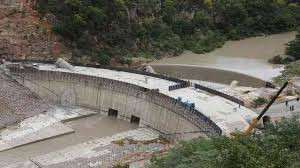
Bulawayo’s long-awaited Glassblock Dam project has entered a decisive phase, with the city’s hopes for lasting water relief now hinging on the signing of a water offtake purchase agreement, a key requirement expected to unlock funding from the African Development Bank (AfDB).
A water offtake purchase agreement is a contract in which government or a local authority commits to buy water from a dam project being developed by a private consortium, guaranteeing a market for the project.
Bulawayo mayor David Coltart told Southern Eye that a draft agreement was produced following a breakthrough meeting facilitated by the Ministry of Local Government.
“Last week’s meeting marked a major step forward because the Ministry of Local Government under the leadership of minister Daniel Garwe has taken a proactive interest in the matter,” Coltart said.
“We had a highly productive meeting which culminated in the production of a draft water offtake purchase agreement between the consortium and BCC.”
He said the draft has since been sent to government for final approval.
“Assuming that government approves the same, and we have no reason to doubt that it will be granted, that document, once signed by both parties, will form the basis of finalising the financial arrangements for the dam through the African Development Bank,” Coltart said.
“It is hard to say how long that process will take but the AfDB is actively involved and keen to make this a reality so I expect the project to go ahead this year,”
- New perspectives: Building capacity of agricultural players in Zim
- New perspectives: Building capacity of agricultural players in Zim
- Xenophobic attacks against Zimbabweans barbaric
- AfDB president Adesina coming to Zimbabwe
Keep Reading
He added that the consortium behind the dam was ready to commence construction as soon as the offtake agreement and financial arrangements are concluded.
Bulawayo residents have endured years of severe water shedding, with some suburbs going for days without running water, forcing communities to rely on boreholes and unsafe water sources.
Coltart said while the agreement could pave the way for construction within months, residents would still have to endure a lengthy wait before major supply improvements are realised.
“The dam will take at least two and half years to construct,” Coltart said.
Despite the timeline, he said the project would significantly ease the city’s crisis and provide a crucial buffer as government works on the long-delayed Gwayi-Shangani pipeline project.
“The dam is a game changer for Bulawayo. It secures Bulawayo’s water supplies until 2040 by which time we expect the Gwayi-Shangani to Bulawayo pipeline to be completed. Bulawayo’s current water need is at least 165 megaliters per day. Glassblock is projected to supply up to 70 megaliters so it will be a massive boost to our water supplies,” he said.
Bulawayo has not built a major dam since 1975, leaving the city dependent on ageing reservoirs that can no longer meet growing demand amid climate change and recurring droughts.
The city’s existing water supply dams were constructed during the colonial era: Lower Ncema (1943), Umzingwane (1956), Inyankuni (1965), Upper Ncema (1974) and Insiza (1975).
Glassblock Dam is expected to provide the city with medium-term relief while government completes the Gwayi-Shangani pipeline, touted as the permanent solution to Bulawayo’s water crisis.