SOUTH African authorities have intercepted a massive drug consignment worth nearly R1 billion at the Beitbridge Border Post in what officials are describing as one of the country’s biggest anti-smuggling breakthroughs in recent years.
The operation, conducted on Wednesday, involved the Border Management Authority (BMA), Hawks, SAPS K9 units and other law enforcement agencies following intelligence gathered ahead of the truck’s arrival at the border.
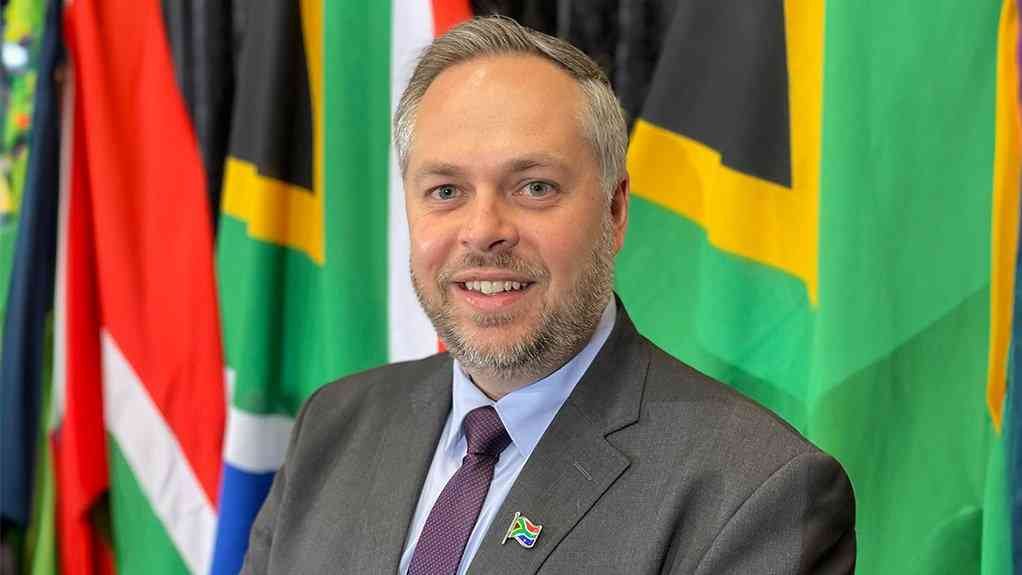
According to South Africa Home Affairs minister Leon Schreiber, the truck, travelling through Zimbabwe to South Africa, was flagged by the BMA’s National Targeting Centre as part of an intelligence-driven operation targeting cross-border smuggling networks.
On arrival at Beitbridge, officials subjected the vehicle to a non-intrusive cargo scan using an advanced truck scanner stationed at the port.
The scan reportedly detected anomalies and pointed to the existence of a concealed compartment inside the truck.
Authorities reportedly launched an extensive physical inspection, dismantling sections of the truck over a period of more than eight hours before uncovering approximately 713 000 grammes of methaqualone, commonly known as ABBA, a substance widely used in the manufacture of mandrax.
The seized drugs have an estimated street value of R998,2 million.
Three Malawian nationals were arrested in connection with the smuggling attempt and are being held at Musina Police Station while investigations continue into the source and intended destination of the consignment.
- Calls for drug laws reform grow louder
- ZCLDN moves in to tackle teen drug use
- Calls for drug laws reform grow louder
- ZCLDN moves in to tackle teen drug use
Keep Reading
Schreiber praised the operation, describing it as a major success in the fight against organised crime and drug trafficking.
“This operation constitutes likely the single biggest success in recent times against the drug trade and cross-border smuggling,” he said.
“It demonstrates beyond a shadow of doubt that our investment in intelligence-driven work as well as digital transformation, is empowering BMA to restore the rule of law at South Africa’s borders.”
He commended BMA officials and supporting law enforcement agencies for their dedication and professionalism during the operation.
“It sends a powerful message to would-be smugglers that South Africa is clamping down on illegality through intelligence and technology.”
The seizure is expected to intensify regional anti-smuggling co-operation as authorities across southern Africa continue efforts to combat organised transnational crime and narcotics trafficking.
Zimbabwe is increasingly emerging as a critical transit and consumption hub within a rapidly evolving global drug trafficking network that spans Africa, Europe, Asia, the Middle East and the United Kingdom, according to a 2025 report by the Global Initiative Against Transnational Organised Crime.
The country is also grappling with the proliferation of drug dealing and abuse.
Authorities are failing to curb this vice amid concerns about rising violence, mental problems and other social ills resulting from drug use.
The report, Mapping Organised Criminal Economies in East and Southern Africa, warns that drug trafficking across east and southern Africa (ESA) “has grown rapidly in recent years”, transforming the region from a transit corridor to “a major transit and consumer destination for heroin, cocaine and synthetic drugs”.
According to the report, within the Southern African Development Community, Zimbabwe is part of a network where “the most widespread illicit economies are human trafficking, wildlife crime, drug trafficking. . . and financial crimes”.
The report underscores that while southern Africa’s criminal markets may be “slightly less diverse”, they remain deeply entrenched.
Heroin, transported from ports in Kenya and Tanzania, is moved inland and “transported by trucks to neighbouring countries such as Uganda, Zambia, Zimbabwe, Botswana and South Africa”.
This positions Zimbabwe not just as a corridor, but increasingly as part of a growing regional consumer base.
The report highlights that ESA, including Zimbabwe, sits at the intersection of multiple global drug supply chains, with cocaine flowing west-to-east from Latin America, particularly Brazil, while heroin flows north-to-south from Afghanistan and the synthetic drug precursors flow east-to-west from China and India.
These overlapping routes have transformed the region to what the report describes as a complex system where drugs are “produced, consumed, distributed, stored and transported”.
The report draws a direct line between African transit routes and high-value global markets, including the United Kingdom, European Union, Middle East and Asia.