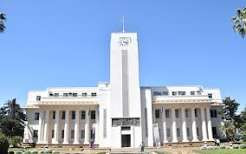
IN a move aimed at improving academic performance in Matabeleland North, Lupane State University (LSU) has opened its laboratories and other learning facilities to schools across the province.
Speaking during the university’s Open Day on Friday, LSU Vice-Chancellor Pardon Kuipa said the institution was committed to supporting communities through education, innovation and knowledge sharing.
The initiative comes as government intensifies efforts to address persistently low pass rates and instances of zero-percent pass rates recorded at some schools in Matabeleland.
Limited access to science laboratories, inadequate infrastructure and shortage of qualified teachers have been identified as key factors behind poor academic performance, particularly in rural areas. Education stakeholders believe partnerships between tertiary institutions and schools can help to bridge resource gaps and improve learning outcomes.
“In line with our motto of building communities through knowledge, Lupane State University is open. Our doors, our laboratories, our faculties and our minds are open. The university is yours,” said Kuipa.
“We are open to schools that want to use our facilities. We are ready to train, innovate and partner industry and communities to solve societal challenges.”
His remarks were met with applause from learners, teachers, parents and industry representatives attending the event.
Kuipa said the university’s state-of-the-art laboratories could play a critical role in enhancing practical learning for pupils from surrounding schools, particularly those with limited access to science facilities.
- LSU defends hefty fee hike
- LSU students threaten exams boycott over 80% fees demand
- LSU runs dry, students resort to open defecation
- Fault at pumping plant, leaves LSU dry
Keep Reading
“We have state-of-the-art laboratories here and would like nearby schools to come and conduct their practical lessons at LSU. We are open for business. When our local children succeed, LSU succeeds, our province succeeds and the country succeeds. Let us grow together,” he said.
To reverse the trend of poor academic performance, government has rolled out several interventions targeting under-resourced and satellite schools. These include infrastructure development, expansion of science, technology, engineering and mathematics (Stem) facilities, strengthening school leadership and improving teacher capacity.
Education authorities believe that improving access to laboratories, reducing long travel distances to schools and upgrading learning infrastructure will significantly improve academic outcomes across the region.
Recently, government partnered companies operating in Matabeleland North to deploy mobile laboratories aimed at enhancing practical science learning in schools. Plans are underway to construct additional laboratories across the country as part of broader efforts to strengthen Stem education.
The initiatives form part of ongoing efforts to bridge the rural-urban education gap and ensure learners in rural communities have access to quality education and modern learning resources.
By opening its facilities to schools, LSU is positioning itself as a strategic partner in advancing education development and improving learning outcomes in Matabeleland North.
Schools that participated in the Open Day included Mabhikwa High School, AMR Sisters Secondary School, Msewele Secondary School, Fatima High School, Mtshibini Secondary School, Gogo High School and Madotshwa Secondary School, among others.