There are moments in the life of every society when silence becomes more dangerous than speech, when remaining neutral in the face of injustice ceases to be an act of caution and instead becomes an act of complicity.
Africa finds itself confronting such a moment.
Across the continent, millions of people continue to grapple with poverty, unemployment, corruption, inequality, political intolerance, violence, social exclusion, and the growing frustration of unfulfilled promises.
While technology has connected people in unprecedented ways and given rise to new opportunities for expression, many of the structural challenges that have burdened African societies for decades remain firmly entrenched.
Yet at a time when courageous voices are needed most, an uncomfortable silence appears to be settling over many sectors of society, including among some members of the creative community who have historically been at the forefront of challenging injustice and inspiring social change.
Throughout Africa’s history, artists have never been mere entertainers.
They have been the conscience of their communities, the custodians of collective memory, and the voices that articulated the hopes, fears, frustrations, and aspirations of ordinary people.
Long before political leaders acknowledged societal failures, poets were documenting them.
- Open letter to President Mnangagwa
- Feature: ‘It’s worse right now than under Mugabe’: Sikhala pays the price of opposition in solitary cell
- Masvingo turns down fire tender deal
- Human-wildlife conflict drive African wild dogs to extinction
Keep Reading
Before academics produced reports and analyses, musicians were already singing about them.
Before history books recorded the struggles of a people, writers and storytellers had already captured those realities through literature, theatre, and oral traditions.
Creativity has always served as one of humanity’s most powerful instruments of resistance, reflection, and transformation.
The continent’s liberation struggles were not won solely on battlefields or negotiating tables; they were also fought through songs, poems, books, and cultural expressions that inspired courage, preserved identity, and mobilised communities against oppression.
The anti-colonial movements that swept across Africa and the resistance against apartheid in South Africa were strengthened by artists who understood that their responsibility extended beyond performance.
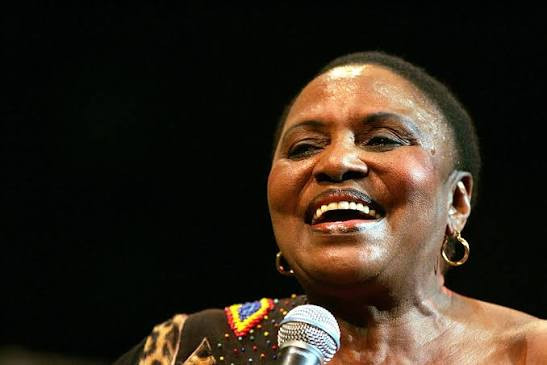
Figures such as Miriam Makeba, Hugh Masekela, Thomas Mapfumo, Oliver Mtukudzi, Chinua Achebe, Ngũgĩ wa Thiong’o, Wole Soyinka, and countless others recognised that art possesses the power to awaken societies and challenge systems of injustice.
They understood that creativity becomes most meaningful when it speaks to the realities of the people.
Their work was not always comfortable, popular, or politically convenient, but it was necessary because it forced societies to confront truths they would otherwise have preferred to ignore.
Their courage reminds us that art is not simply a reflection of society; it is often one of the forces that shapes its direction.
Today, the challenges facing Africa may differ from those of previous generations, but the need for courageous artists remains just as urgent.
Across many countries, young people continue to struggle against unemployment and economic uncertainty despite possessing immense talent, education, and ambition.
Communities remain divided by tribalism, racism, classism, xenophobia, Afrophobia, religious intolerance, and political polarisation.
Social media, while creating opportunities for communication and influence, has also become a breeding ground for misinformation, sensationalism, and division.
In many cases, unverified narratives travel faster than facts, outrage generates more attention than truth, and public discourse increasingly rewards emotional reactions rather than thoughtful engagement.
In such an environment, artists have an important role to play in restoring balance, empathy, and critical thinking.
One of the most concerning developments in recent years has been the growing tendency for creatives to avoid engaging with difficult social issues out of fear of criticism, cancellation, political consequences, or the loss of economic opportunities.
The pressure to remain marketable, brand-friendly, and universally acceptable has created a culture in which many talented voices choose silence rather than risk controversy.
While every artist has the right to define their own path, society must also recognise that some of history’s most transformative cultural figures became influential precisely because they were willing to speak when silence was easier.
Progress has rarely been driven by those who prioritised comfort over conviction.
Every significant social transformation has depended on individuals who were prepared to challenge prevailing narratives, question authority, and advocate for those whose voices were ignored.
The recent rise in xenophobic tensions in parts of South Africa provides a powerful example of why courageous artistic intervention remains necessary.
While legitimate concerns surrounding immigration, unemployment, public services, and law enforcement deserve serious discussion and policy attention, the spread of misinformation, unverified allegations, and inflammatory rhetoric has contributed to an environment where innocent people are often blamed for problems that are far more complex than migration alone.
In such circumstances, artists should not become amplifiers of division and hostility.
Instead, they should become voices of reason capable of reminding communities of their shared humanity, common history, and collective responsibility to resolve disagreements without resorting to violence or prejudice. Creativity should elevate conversations rather than inflame tensions.
The same responsibility applies to every form of social division that continues to undermine African societies.
Whether the issue is tribal hostility, racism, class discrimination, Afrophobia, homophobia, xenophobia, or political intolerance, creatives possess a unique ability to challenge harmful narratives and humanise those who are often reduced to stereotypes.
Art has the power to help people see themselves in others, to foster empathy where there is misunderstanding, and to create dialogue where there is conflict.
When used responsibly, creativity becomes a bridge connecting communities that might otherwise remain divided by fear, ignorance, or prejudice.
This responsibility is particularly important for the current generation of African creatives, who possess tools and platforms that previous generations could scarcely imagine.
A single poem, song, article, film, or social media post now has the potential to reach audiences across continents within hours. Never before have artists possessed such direct access to public consciousness.
However, influence without purpose risks becoming empty visibility.
The true question facing today’s creatives is not whether they have the ability to shape conversations but whether they are willing to use that ability in service of something greater than personal recognition.
Will they merely entertain audiences, or will they also help societies think more deeply about the challenges they face?
Will they contribute to public understanding, or will they simply chase algorithms and trends?
This does not mean every artist must become a political activist or dedicate their work exclusively to social issues.
Art must remain diverse, and creativity should never be reduced to a single purpose.
However, every creative should recognise that their work inevitably influences how people think, feel, and understand the world around them.
Whether intentionally or unintentionally, artists help shape cultural values and social attitudes.
For that reason alone, they carry a responsibility that extends beyond personal expression.
The most enduring artists are often those who combine artistic excellence with social relevance, producing work that not only entertains but also enlightens, challenges, and inspires.
Encouragingly, examples of such courage continue to emerge across Africa.
Writers, filmmakers, musicians, poets, content creators, and cultural activists are increasingly using their platforms to discuss mental health, governance, social justice, youth empowerment, environmental sustainability, cultural preservation, and human rights.
In regions such as Matabeleland, creatives are demonstrating how culture can become a vehicle for rebuilding confidence, strengthening identity, and fostering unity despite economic hardships and historical marginalisation.
Their work serves as a reminder that creativity remains one of society’s most powerful resources for healing wounds, restoring hope, and imagining better futures.
Ultimately, Africa does not suffer from a shortage of talent, intelligence, creativity, or vision.
What it sometimes lacks is the courage to consistently speak when speaking becomes uncomfortable, unpopular, or risky.
History teaches us that silence has never liberated a people, challenged injustice, or transformed a society.
Progress has always depended on those willing to raise their voices when others remained quiet.
Artists have traditionally occupied a central place among those voices, and the continent needs them now as much as it ever has.
Because when fear becomes louder than truth, when propaganda becomes louder than facts, when prejudice becomes louder than compassion, and when power becomes louder than the people it is meant to serve, society needs courageous artists who are prepared to remind humanity of its highest values.
Not merely to entertain the world, but to challenge it, inspire it, and ultimately help change it.
- Mthulisi Ndlovu (KingKG / KhuluGatsheni) is a poet, protest artist, cultural activist, and social commentator.