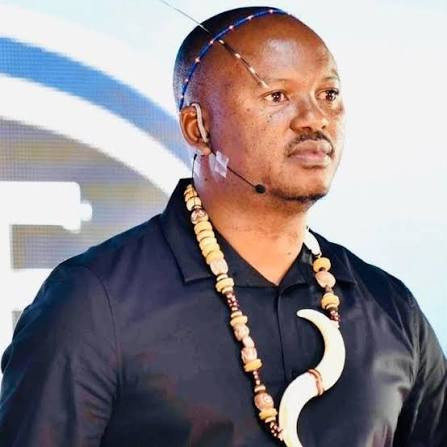
A former ZIPRA combatant and intelligence officer has accused the country’s post-independence leadership of betraying the core ideals of the liberation struggle.
Prince Solengwe Tshawe kaNonxoloba, who is also a prince of the Xhosa people, said the country is currently experiencing exploitation that is “even worse” than what Black people endured under colonial rule. He added that former liberation fighters have been forgotten, despite risking their lives to secure majority rule and political freedoms.
His remarks come as the nation continues to grapple with ongoing questions over the treatment of liberation war veterans, corruption, public service delivery and recent changes to the constitution.
Tshawe explained that former combatants fought because of the discrimination and political oppression they experienced under the Rhodesian government, including severe restrictions on movement and racial segregation.
He recalled how Black people were allegedly forced to walk on tarred roads instead of pavements and were subjected to arbitrary treatment by colonial authorities.
“Those are the things that happened to us. Those are the things that made us fight for this country,” he said .
Tshawe lamented that the sacrifices made during the war have not translated into decent lives for many former combatants.
He claimed that some former fighters receive only about US$150, noting that this amount is entirely inadequate once transport and other basic expenses are taken into account [3].
- Byo waste pickers demand recognition
- Music as vehicle of cultural exchange
- New perspectives: Why Zanu, Zanu PF were successful in the 1970s, 80s and 90s
- Floriculture: Diversification, opportunities for entrepreneurial farmers
Keep Reading
“By the time I leave the bank, that money does not even reach my home,” he said.
“We have to pay for buses from Nkayi, Tsholotsho, Gwanda and other places. We have transport expenses. Then you are given that amount. It is not fair.”
The constitution, adopted in 2013 and amended several times since, expressly recognises veterans of the liberation struggle.
Section 84 provides for their recognition and suitable welfare, including pensions and access to basic healthcare, while the constitution’s national objectives require the state to take measures for their welfare and economic empowerment .
In addition, the War Veterans Act (Chapter 11:16) and subsequent legislation established a War Victims Compensation Fund and a War Veterans Welfare Fund. However, disbursements have frequently been inconsistent, plagued by bureaucratic delays and allegations of corruption.
Tshawe argued that this constitutional recognition has failed to translate into what former combatants truly deserve.
“I am not against the government. What I am against is the suffering I see among former combatants,” he said.
“We fought for this country, yet we are suffering like this. We should be able to live better than this. As far as I am concerned, it is as though the government has completely forgotten about us.”
Tshawe accused politicians of misleading President Emmerson Mnangagwa, using him to protect their own vested interests.
“The young people we elected into Parliament are the same people who are misleading President Emmerson Mnangagwa because they want to continue looting,” he claimed.
“In my view, these young people are misleading him. They are doing it so that they can continue benefiting while using him as a shield.”
Tshawe also criticised recent constitutional amendments, asserting that the changes run contrary to the very principles for which liberation fighters went to war.
“One person cannot sit there and change the Constitution, tearing it apart and making it their own. We do not agree with that,” he said.
“These things should be decided by the people, not by one person sitting there. Let the people decide what they want.”
He urged the president to listen to former commanders and war veterans before allowing political changes that could have long-term consequences.
“He should listen to us, the generals. He should listen to us, the war veterans,” Tshawe said.
“We used to say this could never happen in Zimbabwe. But now exactly the opposite of what we were saying and what we fought for is happening.”
He also criticised growing inequality, pointing to the stark contrast between wealthy political elites and struggling local communities.