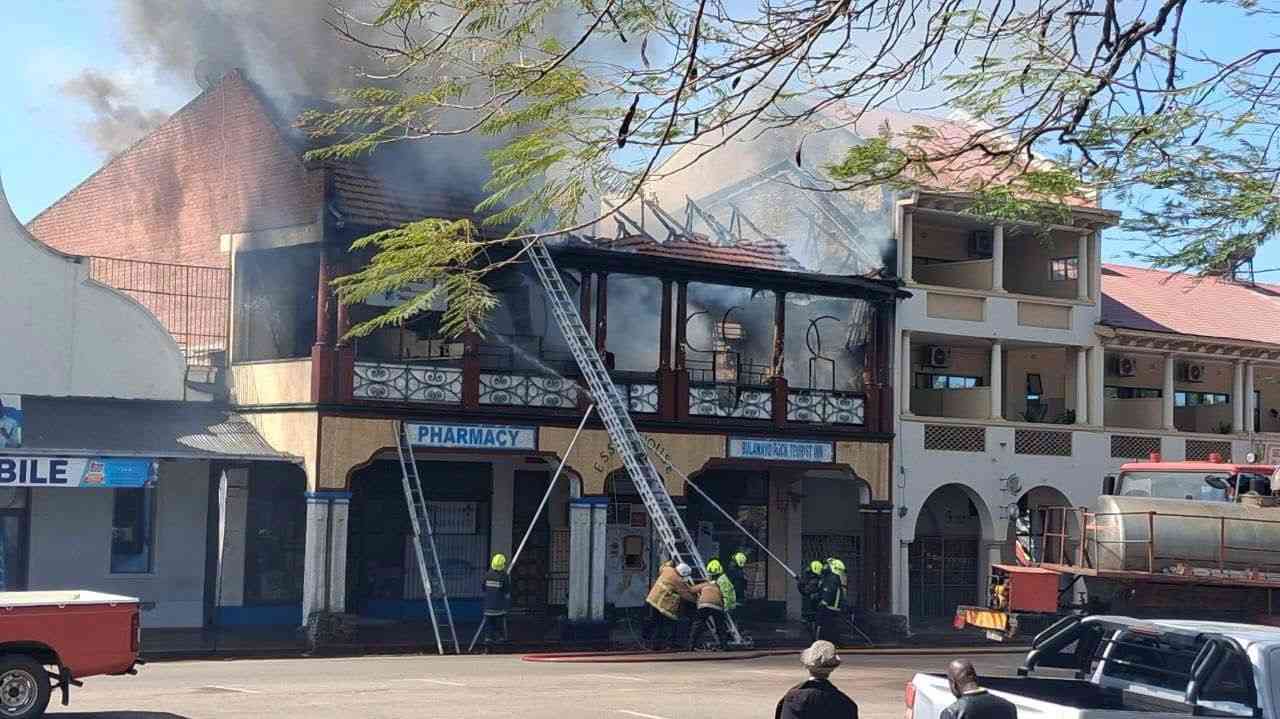
Fire safety experts have warned that the city’s economic growth could be undermined by inadequate fire prevention measures, as Bulawayo records a sharp increase in fires and firefighters come under growing pressure.
Bulawayo recorded 154 fires between January and June this year, up from 96 during the same period in 2025, representing a 60 percent increase, according to chief fire officer Mhlangano Moyo.
Faulty electrical wiring, overloaded sockets, extension cords and poor workmanship were among the leading causes.
The figures come against the backdrop of a series of major fires in the city, including a blaze at Fairy Café in February, a fire that displaced families along Lobengula Street and a blaze that gutted more than 20 rooms at Lalani Hotel and Conference Centre.
Last week, Bulawayo firefighters were stretched after responding to four separate fires in one day, including a major blaze that tore through a two-storey building in the central business district.
Three veld fires were also reported in different parts of the city.
Against this background, Advance Fire Engineers managing director Lovemore Ndebele said businesses need to move away from treating fire protection as a “grudge purchase” and embrace modern early-warning systems.
“It is 2026 and Zimbabwe’s economy is growing, with businesses, manufacturing and mining looking up. So what is the catch? Protecting it all,” Ndebele said.
- Revisiting Majaivana’s last show… ‘We made huge losses’
- Edutainment mix: The nexus of music and cultural identity
- ChiTown acting mayor blocks election
- Promoter Mdu 3D defends foreigners 30 minute set
Keep Reading
With 39 years in the fire safety industry, Ndebele said technology had advanced significantly, allowing fires to be detected before flames became visible.
“Today’s outlook is based on very early warning. We no longer rely on metals to melt, change state and raise an alarm. We use the best and latest technologies,” he said.
Ndebele said systems such as optical smoke detectors, heat detectors, linear heat detection, aspiration detection and beam detectors could provide early warnings, while sprinklers and suppression systems could help control fires.
Ndebele said aspiration detection was particularly effective in high-risk environments.
“It works like your nose. If you can smell your neighbour burning toast but cannot see it, that is how good aspiration is,” he said.
He called for stronger national fire safety regulations and enforcement, arguing that having regulations without effective enforcement was insufficient.
“It is no use having rules without enforcers. We all need to up our game on fire safety and improve national regulations and the enforcement thereof,” Ndebele said.
Bulawayo’s fire brigade by-laws already provide for inspections of premises and require commercial and industrial buildings to have adequate fire protection equipment appropriate to their level of risk.
Ndebele said protecting property was also critical because businesses that survived fires could continue operating and protecting jobs.