For many young people in Bulawayo’s western suburbs, the hunt for formal employment is a demoralising cycle of rejection and dead ends. With few jobs available, many are forced into the informal sector or precarious survival strategies.
But at the Bulawayo Project Centre in Cowdray Park, a different story is unfolding where young people are not waiting for jobs, but building livelihoods of their own.
For more than three decades, the centre has equipped youth with practical skills, entrepreneurship knowledge and financial literacy.
Crucially, it has used skills development as a platform to tackle deeper social challenges, including HIV prevention, transactional sex and economic vulnerability.
The centre’s programmes, partnerships and communications officer, Tishafa Chiramba, said entrepreneurship was deliberately placed at the heart of all training.
“Our training has that strong emphasis on entrepreneurship,” Chiramba said.
The model is designed to give young people practical skills that can immediately be converted into income.
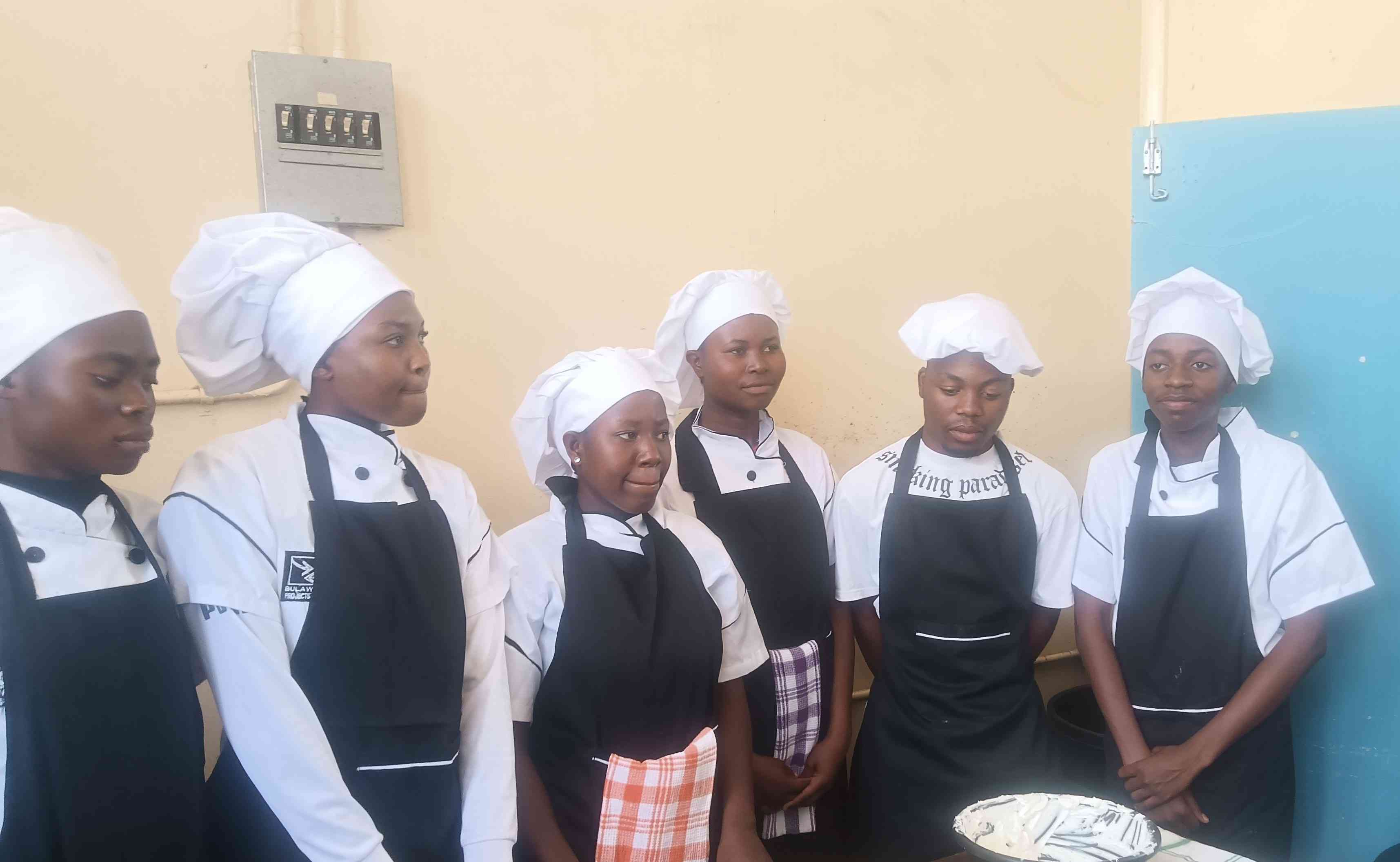
The centre offers four months of classroom-based training followed by practical attachment, with between 250 and 300 students graduating annually across various trades.
- Bulawayo centre turns jobless youth into entrepreneurs
- Poverty and mining drive Umguza HIV surge
Keep Reading
Rather than heavy theoretical instruction, the emphasis is on hands-on learning where trainees acquire skills they can use in industry or to start their own businesses.
“That is because they are gaining practical skills that they can actually use in industry, so we don’t place a lot of emphasis on the theoretical aspects,” he said.
This approach is vital in communities where formal jobs are scarce.
Trainees also learn how to market their products and services, with visitors to the centre becoming part of the practical learning process.
“The people that you see in front of them who are actually getting their nails done are, as I say, we call them ‘clients’,” Chiramba said.
The centre’s origins lie in a drought-relief feeding programme, but organisers soon realised that handouts were not sustainable.
“It was actually realised that there’s no way you can continually feed someone. It’s not sustainable,” Chiramba said.
The response shifted from relief to skills development, training people in trades so they could regain independence and support their families.
That initiative evolved into the Bulawayo Project Centre, which has operated since 1993.
“Over the passage of time, Bulawayo Project Centre has also transformed and changed to move with the times as it were, and respond to the current challenges of employment—or should I say unemployment—that the country is experiencing,” Chiramba said.
The organisation now runs five hubs in Bulawayo and continues to expand.
One of its newest developments is the repurposing of a former beer garden, Nkunzi, through collaboration with the City of Bulawayo.
Chiramba said the facility would serve not only as a training centre but also as a business hub for Ward 5, where young people and community members can operate businesses.
The centre has received furniture-making equipment and is preparing the facility for operations.
One target is to assist retailers and entrepreneurs seeking to enter the mainstream economy.
The centre is also embracing emerging technologies and environmentally friendly enterprises, including the use of recycled materials. Plans are underway to establish training in electronic and information technology equipment repair.
“We have got a particular bias as well to the use of recycled materials, like bottles, to make various products, including brooms and so on, as well as the repair of electronics and IT equipment,” Chiramba said.
“We want to open a mini hub where young people are going to be taught as well to repair cell phones, computers and so on, because these are areas that are high-end for those who know how to actually do their trades there.”
The centre’s work has expanded beyond training to include business incubation, access to finance and formalisation of small enterprises.
Through its Access Project, implemented in partnership with Bread for the World, the organisation is training about 250 young people and providing start-up kits.
But Chiramba said experience had shown that handing over equipment was not enough.
“We have also realised that giving young people start-up kits and ending there might not be adequate,” he said.
The programme includes business training, compliance education and support to help young entrepreneurs navigate the formal economy.
The centre convenes meetings with financial institutions and government agencies such as the Zimbabwe Revenue Authority (Zimra) to help young people understand business registration, compliance and access to markets.
“We bring together these stakeholders to try and get young people to regularise their businesses,” Chiramba said.
The broader objective is to ensure that young people do not merely graduate with certificates, but leave with the capacity to earn a living.
The impact is best illustrated by former trainees who return to share their skills. One such person is Christine Nkomo, a detergent maker and trainer at the centre. Nkomo first became involved through mushroom production in 2021, during the Covid-19 period, before undertaking business management training.
She later returned to empower other women and young people, illustrating the centre’s attempt to create a cycle in which beneficiaries become trainers and entrepreneurs themselves.
For Nkomo, skills development is also linked to reducing young people’s vulnerability to risky behaviour.
The centre’s programmes, supported by partners including the Ministry of Women Affairs, go beyond technical trades to include financial and life-skills education.
Despite the breadth of its programmes, the centre faces the same challenge affecting many community development initiatives elsuch as declining donor funding.
Chiramba said programmes operating in Matabeleland and Masvingo had been affected by cuts in United States funding.
“We have the project in Matabeleland and Masvingo where we have these component projects. It was affected by the donor US funding cut,” he said.
The funding constraints come at a time when demand for livelihood programmes remains high, particularly among young people struggling to find formal employment.
Yet the centre’s model suggests that vocational education can play a role not only in addressing unemployment but also in reducing social vulnerabilities that increase young people’s exposure to HIV.