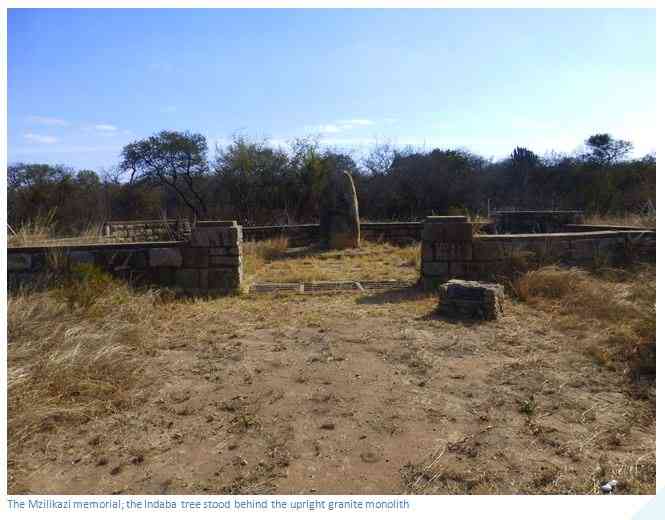
The need to harness the Zimbabwean diaspora to drive investment and tourism took centre stage during the Mzilikazi Day commemorations held at the King Mzilikazi Memorial Site in Mhlahlandlela.
Ronnie Dunn, an American who serves as co-founder and global ambassador for the Africa, United States and United Kingdom Diaspora Alliance (AUUDA), said the diaspora had a critical role to play in Zimbabwe’s economic development.
Dunn told Southern Eye that he had created what he described as a “soft landing” for members of the diaspora seeking investment opportunities in Zimbabwe.
“I’m here to bring investment from the diaspora. I’ve created a soft landing for the diaspora. We need to come together just like what we used to be before we were divided,” Dunn said.
“To bring investment and drive tourism, there are a lot of tourist attraction places here. We will grow the economy as diasporans.”
The remarks came as hundreds of people gathered to commemorate the legacy of King Mzilikazi, the founder of the Ndebele nation, who died in 1870 at Ingama, near present-day Bulawayo.
Mzilikazi, who established the Ndebele kingdom in present-day Zimbabwe after leaving the Zulu kingdom under King Shaka, died on September 9, 1870, aged about 70.
His death marked the end of the reign of one of the most influential figures in the history of southern Africa.
- Open letter to President Mnangagwa
- Feature: ‘It’s worse right now than under Mugabe’: Sikhala pays the price of opposition in solitary cell
- Masvingo turns down fire tender deal
- Human-wildlife conflict drive African wild dogs to extinction
Keep Reading
He was succeeded by his son, Lobengula Khumalo, who later became the last Ndebele king before the kingdom was defeated by the British South Africa Company in the 1890s.
Bulawayo mayor David Coltart said Mzilikazi Day had become an important occasion for celebrating the city’s history, culture and arts.
“This is one of the most significant days in our city’s history and our calendar, celebrating our culture and arts,” Coltart said.
“We need to use this day in the future to grow our economy and our nation. It’s wonderful to see people getting together. It is very attractive to the international community.”
Coltart said authorities and stakeholders should go beyond annual commemorations and invest in the preservation and development of historical sites associated with the Ndebele kingdom.
“We need to go beyond this and upgrade Mzilikazi’s grave and many of these sites because these attract tourists,” he said.
Mthwakazi kaMzilikazi Cultural Association (MMCA) chairman Jabulani Mlilo said the organisation would continue to commemorate the life and legacy of Mzilikazi while working to transform the memorial site into a major tourism destination.
“We always remember this day and celebrate it. Mzilikazi was the founder of the Ndebele nation who brought together different people from all tribes,” Mlilo said.
He said efforts were already under way to improve facilities at the site, including accommodation for visitors.
“We want to change this place to be a tourist attraction centre. We have started constructing houses for accommodation for those who might want to come and visit this place,” Mlilo said.
He said the opening of Mzilikazi’s resting place to the public represented an important development in preserving and promoting Ndebele heritage.
“Of late it was a taboo for people to come and visit the place, but the authorities from the family have finally agreed to have the place open for visits for everyone,” he said.
Mlilo said the international recognition of Mzilikazi’s legacy could be leveraged to attract visitors from Zimbabwe and abroad.
“Mzilikazi was known to many people even in America and the UK. Next, this place would not be the same,” he said.
The commemorations brought together traditional leaders, local authorities, cultural activists, members of the public and visitors from the diaspora, amid calls for Mzilikazi’s legacy to be transformed into an economic opportunity through heritage tourism.
Stakeholders said developing the memorial site, improving infrastructure and marketing the area internationally could help preserve the history of the Ndebele nation while creating employment and investment opportunities for surrounding communities