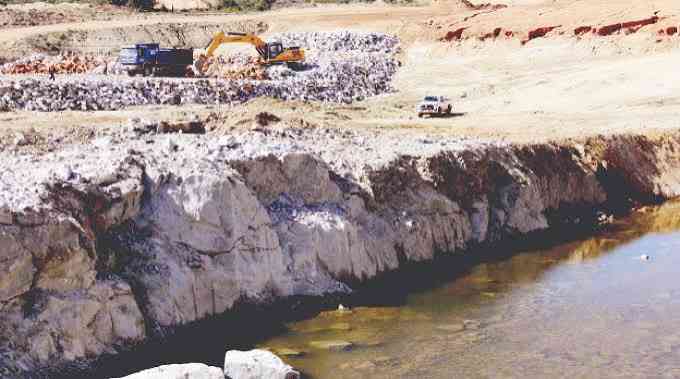
VILLAGERS living around Jena Mine in Silobela, Midlands province, have raised concerns over the expansion of mining claims, saying the development has deprived them of land they previously relied on for small-scale mining and grazing.
The villagers told Southern Eye that a vast tract of land has been annexed by the mine since 2022, leaving communities with limited access to natural resources that had sustained their livelihoods.
Ward 20 councillor Maqhawe Moyo said between 2022 and 2026, Jena Mine offered mining claims to interested individuals, resulting in large tracts of land around the mine being occupied by mining operations.
Moyo said the expansion had also seen some areas being occupied by Chinese miners, while sections of their grazing land had been fenced off.
“From 2022 to 2026, Jena Mine offered mining claims to interested individuals. All the space around the mine, which the villagers were also using to mine so that they could fend for their children, has been taken over by the mine, resulting in villagers failing to gain access,” Moyo said.
“Some of the place is now being occupied by the Chinese. They have taken over our pastures. The area has been fenced and those benefiting are those who are well established, even though locals must also benefit from their resources.”
Moyo said villagers had previously relied on slag heaps at the mine to supplement their incomes, but access was restricted following the developments.
“What was happening of late is that the villagers used to benefit from the slag heap, but when this development took place, the villagers were no longer given any access to that,” he said.
- 'Gukurahundi survivors denied food aid'
- Minister Nyoni grilled for ‘sponsoring’ political violence
- Villagers up for US$54K mine vandalism, theft
- Armed robbers pounce in Silobela
Keep Reading
He also questioned the revenue-sharing arrangements between miners and claim owners, saying the current 30:70 ratio was skewed in favour of claim owners.
He said miners received 30% of the proceeds while claim owners took 70%, arguing that the arrangement disadvantaged villagers who depended on artisanal and small-scale mining for their livelihoods.
“Villagers used to earn a living through this small-scale mining, but the ratio is unfair as the owner benefits from a big chunk of the money,” Moyo said.
The villagers also raised concerns over the conduct of security guards employed at the mine, accusing them of treating people found trespassing on mining claims harshly.
Moyo alleged that security guards subjected a group of women caught entering the mine premises to degrading treatment, including being ordered to roll on the ground and smear mud on their faces.
Apart from Jena Mine, Moyo said Mwana Africa was also operating in the surrounding area, but villagers lacked the financial resources required to establish their own mining companies and benefit directly from the mineral resources.
Chief Malisa said traditional leaders were engaging the mine over concerns raised by communities and were seeking tangible development benefits from the mining operations.
“We are still in talks with the mine operated by Mutapa Gold Resources. They promised to drill boreholes, dams and rehabilitate roads. They also promised to solarise the boreholes,” Malisa said.
“There are some claims which we also hope should be offered to the chiefs and villagers so that people can be allowed to mine for themselves.”
The traditional leader said fencing mining claims had also affected grazing land, further pressuring villagers who depend on livestock.
The mine's human resources officer, Taurai Mavengano, declined to comment, saying he is not authorised to speak to the Press.
“I do not have a mandate. I have not been cleared,” Mavengano said.