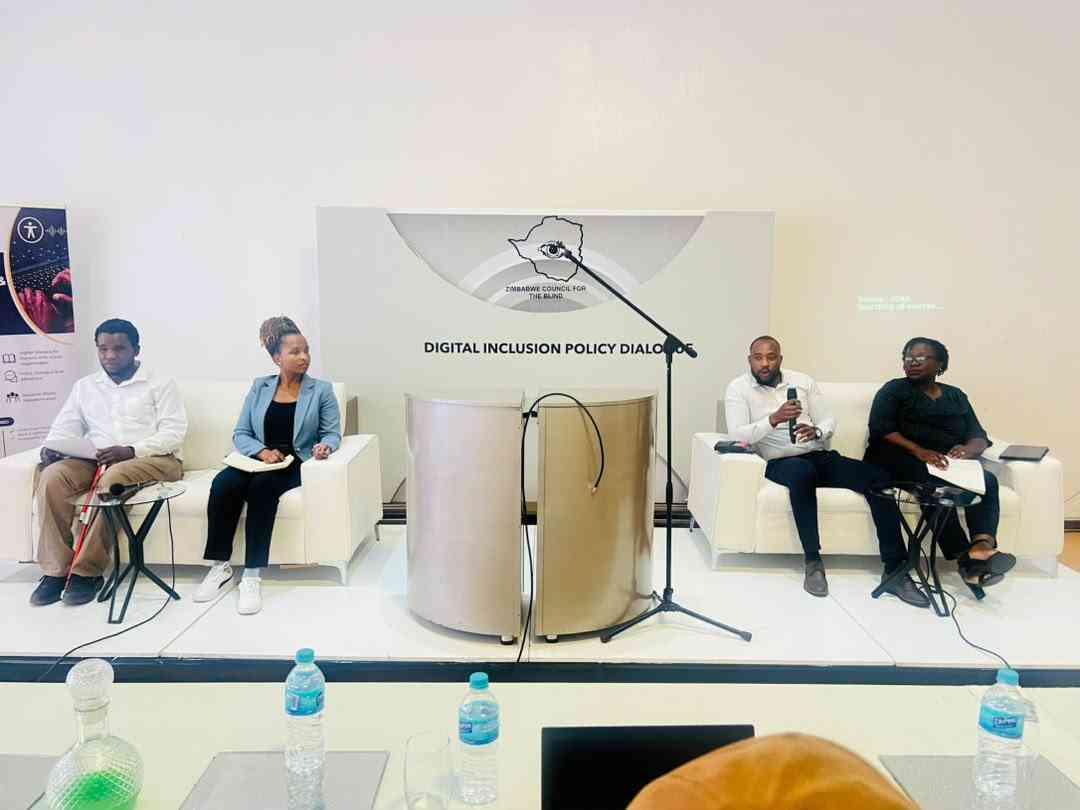
BULAWAYO, SEPT 17, (SOUTHERN EYE LIVE): The Ministry of Information Communication Technology, Postal and Courier Services has called for a shift from designing systems for persons with visual impairment to designing systems with them, saying digital inclusion must start at the design stage.
Speaking at the digital inclusion policy dialogue in Bulawayo this Thursday, the ministry's administrative coordinator for Bulawayo province, Stanley Mubvumbi, said society needs to show genuine respect for colleagues living with visual impairment.
"Let's not just end the topic or the discussion, but we should also pledge respect for people who live with visual impairments. You may not know the extent to which these people or colleagues are going through, what challenges they are going through," Mubvumbi said.
"You cannot choose to be blind. You cannot choose to be disabled. But those are things that just come by nature. By God's word."
Mubvumbi said more needs to be done to include visually impaired people in the development of digital systems.
"Take them on board at the design stages of all our systems. Let's embrace our colleagues at the initial stages of designing any application or system as a nation. When we focus on designing something for them, it means we are considering two different scenarios: one where we can see, and one where they cannot. How to understand what they are going through if you have never experienced."
He said the call for inclusive ICT is in line with national development aspirations.
"While we are talking about the President of our nation comrade ED Mnangagwa launched the Vision 2030 programme where ICT has been placed at the centre of national development with the key objective of making, of ensuring that most of the infrastructures grow with the digital channel," Mubvumbi said.
- Ex-Zapu youth gets liberation hero status
- ED worries over state of business as elections loom
- Govt falling short on infrastructure funding
- Revoke licences of gold smugglers: TIZ
Keep Reading
"By the time we reach maybe 2030 we would want addressed some of them addressed. It may not be 100 percent. But we are saying the use of ICT is also looking at that as a priority area."
Mubvumbi challenged participants to reflect on whether visually impaired persons are enjoying the same digital privileges as others.
"We are saying yes, we are connected as a nation. Most of us have been attached to the fact that even wherever you are, you are connected online. Whatever device that you are using to connect to the internet," he said.
"But are the visually impaired persons in our society also connected? Are they enjoying the same privileges that we are enjoying as individuals? Are you bold enough to answer that question? While we are enjoying YouTube videos or even Twitter, whatever, so many platforms online. Have you ever taken some moments to say: What if my colleagues also have access to such improvement?"
Council for the Blind to revive empowerment projects for visually impaired: Nyathi
Meanwhile, the Zimbabwe Council for the Blind says it is planning to revive empowerment projects for persons with visual impairment after its previous initiatives collapsed due to tough economic conditions.
The organisation’s executive director, Aplos Nyathi, said they had implemented successful livestock projects at various campsites across the country before the economy took a plunge.
Nyathi said the council now had mobilised resources to restart some of the initiatives.
“We were very lucky; was it last year or this year, we got some resources for us to sort of restart some of these activities involving some of our campers who would have lost their sight completely,” he said.