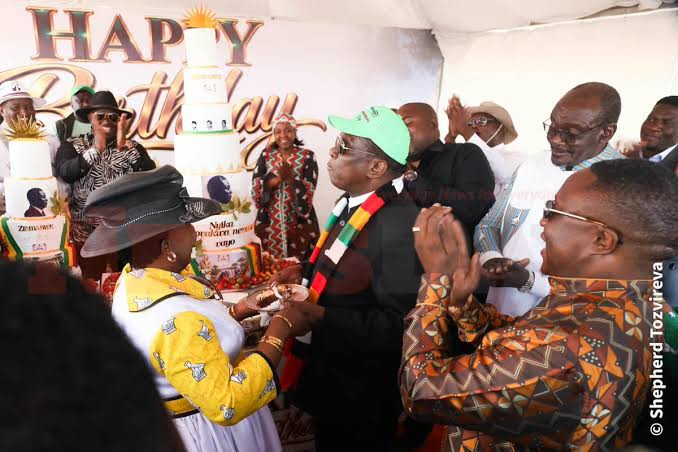
From the difficult years of colonial Rhodesia to the corridors of State House, President Emmerson Dambudzo Mnangagwa’s political journey has been closely intertwined with the history of independent Zimbabwe.
His rise to the presidency in November 2017 marked a new chapter in the country’s political history, which his administration subsequently described as the Second Republic. At the centre of the development philosophy associated with this era are two interconnected ideas: “leaving no one and no place behind” and “Nyika inovakwa nevene vayo” — the country is built by its own people.
Born on September 15, 1942, Mnangagwa spent his early years in colonial Rhodesia before his family relocated to Zambia in the 1950s.
His education included Mumbwa Boarding School, Kafue Trade School and Hodgson Technical College. He subsequently became involved in nationalist politics and the liberation struggle.
His political activism brought him into conflict with the Rhodesian authorities. He was arrested in 1965 and imprisoned.
During his years in detention, he pursued his legal studies, eventually qualifying as a lawyer and being admitted to the Zambian Bar in 1976. His official biography describes his legal education as having continued for much of the period he was imprisoned.
The liberation struggle became a defining chapter in Mnangagwa’s political life. Following independence in 1980, he moved into senior positions in the new Zimbabwean government and Zanu PF, serving in a succession of ministerial and parliamentary roles.
Over the following decades, he held portfolios including State Security, Justice and Legal Affairs, Housing and Social Amenities, Rural Housing and Economic Planning, among others.
- Corruption Watch: Get scared, 2023 is coming
- Corruption Watch: Get scared, 2023 is coming
- Letters: Ensuring Africa’s food security through availability of quality seeds
- Is military's involvement in politics compatible with democracy?
Keep Reading
He eventually became Vice-President of Zimbabwe.
That long political career placed him among the senior figures who shaped the country’s post-independence political landscape.
The decisive moment in Mnangagwa’s political journey came in November 2017.
After being dismissed as vice-president earlier that month, Mnangagwa left Zimbabwe and later returned following the dramatic political developments that culminated in President Robert Mugabe’s resignation on November 21, 2017.
Zanu PF nominated Mnangagwa as its successor on November 19, and he was sworn in as President of Zimbabwe on November 24, 2017.
His assumption of office was subsequently framed by his administration as the beginning of the Second Republic, with an emphasis on economic transformation, investment, engagement with the international community and a development-oriented approach to governance.
One of the most recognisable philosophies associated with Mnangagwa’s presidency is “Nyika inovakwa nevene vayo”.
The phrase is generally translated as “a country is built by its own people.” The fuller formulation used by the administration is:
The philosophy places responsibility for Zimbabwe’s development on Zimbabweans themselves, while allowing external partners to complement national objectives.
In explaining the concept, the Presidential Communications office describes it as a philosophy of self-determination, with the responsibility for developing Zimbabwe resting primarily with its citizens.
It is a philosophy that links independence with responsibility: political independence, in this formulation, must be accompanied by economic participation, production, innovation and ownership of the country’s development agenda.
The second major pillar is the mantra of “leaving no one and no place behind.”
Mnangagwa has repeatedly linked the principle to inclusive development, arguing that national progress should reach communities across the country rather than remain concentrated in major urban centres.
In his 2022 Independence Day address, for example, he spoke of Zimbabwe moving towards an empowered upper-middle-income economy while stressing that “no one and no place shall be left behind.”
He linked the approach to agriculture, mining, manufacturing, tourism, infrastructure, healthcare, education, science and ICT.
The philosophy has subsequently been incorporated into national development planning. In the launch of the National Development Strategy 2, Mnangagwa described the strategy as being guided by inclusivity and the mantra of leaving no one and no place behind.
The United Nations in Zimbabwe also reported that the NDS2 formulation was based on broad-based consultations involving government, the private sector, civil society, development partners and other stakeholders.
The philosophy has also been used to frame the government’s devolution and decentralisation agenda.
Under this approach, development is presented as something that should reach all provinces, districts and communities.
The rotation of national events and programmes to different parts of the country has similarly been presented as an attempt to spread economic opportunities geographically.
At the 2026 Sanganai/Hlanganani World Tourism Expo in Masvingo, Mnangagwa specifically linked the rotation of the tourism expo among provinces to the principle of leaving no one and no place behind, arguing that tourism opportunities should be spread across the country.
The same philosophy has been extended to areas such as infrastructure, education, healthcare, agriculture, technology and local economic development.