The Mthwakazi Republic Party (MRP) has moved to establish community parliaments across the districts following a landmark gathering in Tsholotsho that brought together traditional leaders, cultural groups and residents in a renewed push for grassroots governance.
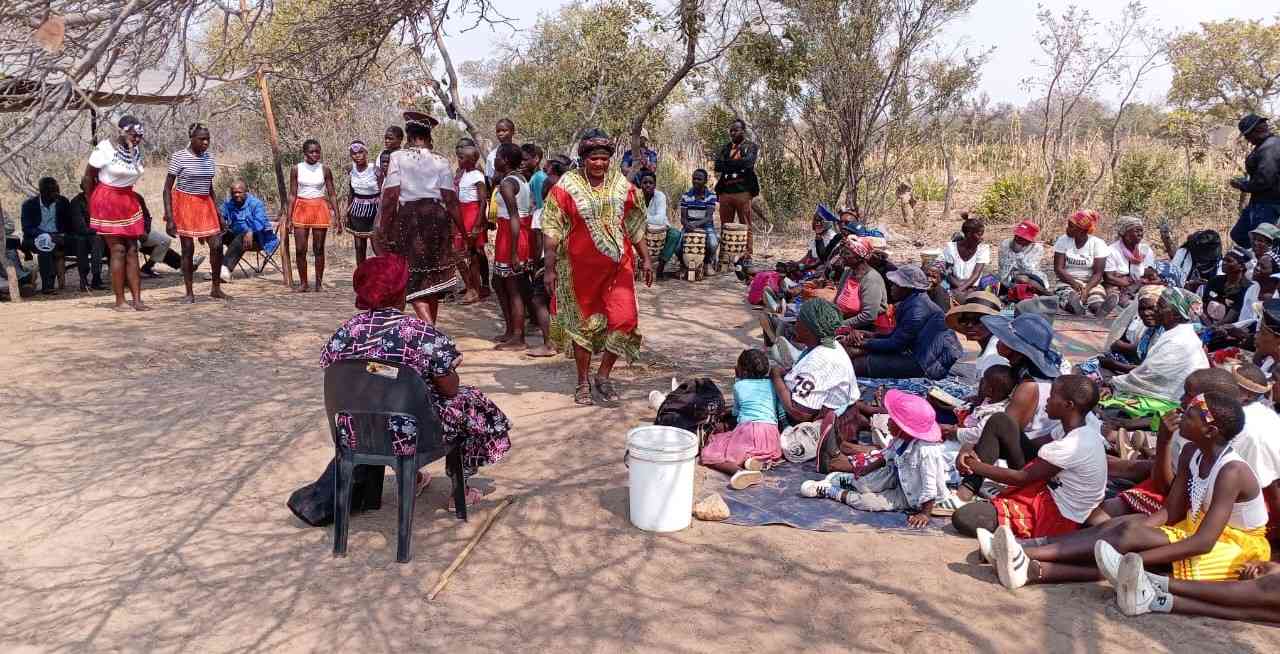
The Tsholotsho Imbizo Yesizwe, held on September 19 under the theme Building the Mthwakazi Nation and the Path to Freedom, culminated in the declaration of the venue as an Idale Lomphakathi, a community council rooted in Ndebele tradition.
A central message of the event was captured in the principle Isizwe sakhiwa ngesiko — a nation is built through its culture.
The Imbizo featured performances by AmaTshitshi, young women from Wards 12 and 17, who presented traditional dances and songs in a display of the revitalisation of indigenous customs.
The gathering brought together traditional leaders and elders, traditional healers, church leaders, cultural groups and young people — a cross-section of society that organisers said reflected the broad participation needed for community development.
The Idale holds historical significance in Ndebele society, traditionally serving as a space where elders and community representatives deliberated on matters of security, agriculture, social relations and collective welfare.
Its revival seeks to connect traditional forms of community consultation with contemporary grassroots governance.
Under the MRP’s approach, the Imbizo Yesizwe would provide a district-level platform for broad community engagement, while the Idale Lomphakathi would offer a continuous community-level mechanism for discussion, planning and problem-solving.
- MRP petitions prison services over jailed members
- Fear grips Mat'land political activists
- Peers fundraise for jailed MRP activists
- MRP official, wife survive mob attack
Keep Reading
Addressing the gathering, MRP secretary general Victor Moyo said meaningful liberation must include the ability of communities to identify and address their own challenges rather than waiting for distant authorities.
The Imbizo also linked the proposed community structures to the socio-economic blueprint adopted at the MRP 2025 conference.
The framework focuses on cooperative initiatives, resource stewardship and skills retention, with the aim of ensuring local natural resources contribute directly to surrounding communities and that opportunities are created locally to reduce migration.
Organisers said nation-building was presented not simply as a political aspiration, but as a practical programme affecting daily life from improving dip tanks and supporting farmers and artisans to developing local enterprises and strengthening markets.
“The Imbizo programme has six core objectives: institutionalising grassroots democracy, driving local economic development, promoting localised problem-solving, developing future leaders, revitalising cultural heritage and maximising public participation,” the MRP said.
According to the organisers, Tsholotsho Imbizo demonstrated the potential of grassroots platforms to bring together culture, community leadership, economic development and public participation.
The organisers added: “The experience of Tsholotsho provides a foundation from which further community structures and development initiatives can be explored.”