The proposed engagement of Geo Pomona Waste Management has thrust Bulawayo’s refuse crisis into the spotlight, raising hard questions about collection failures, the company’s exact role, and why a procurement process with three compliant bidders was overtaken by a government directive.
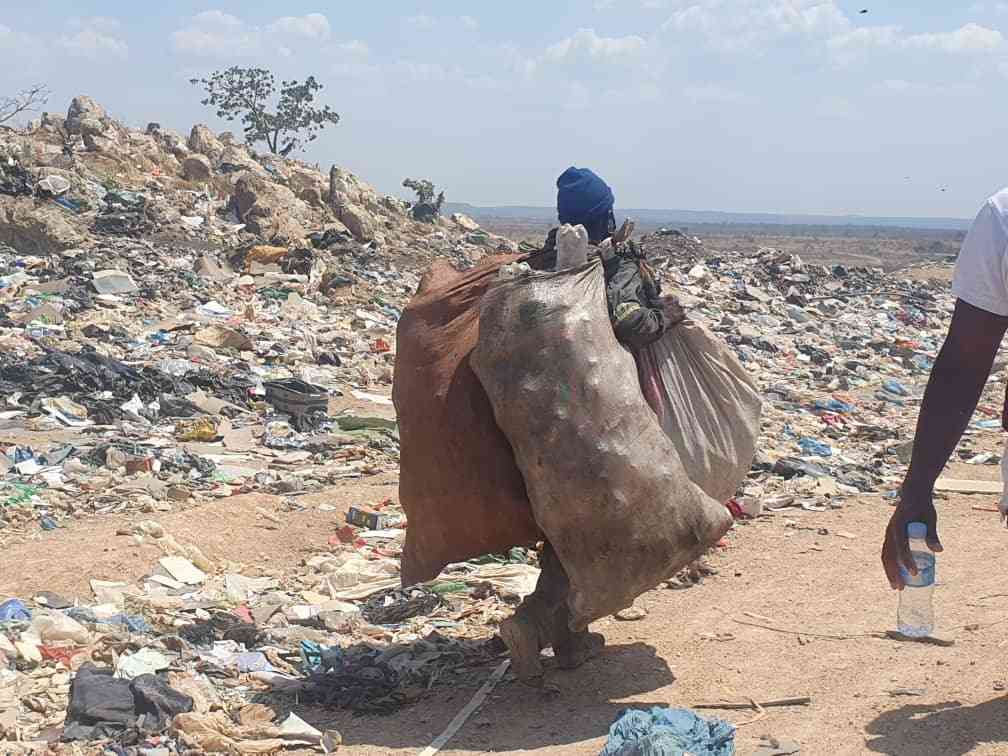
At the centre of the dispute is Richmond Landfill, commonly known as Ngozi Mine, where recurring fires, smoke and fumes have intensified pressure for an urgent solution.
But council records show Bulawayo’s waste problem starts much earlier in the chain with collection.
The city has its own cleansing department and municipal refuse compactors, but its fleet has been severely constrained by breakdowns and a shortage of serviceable vehicles.
In June 2026, council reported disposing of more than 7.3 million kilogrammes of solid waste during the month: 3 214 651kg of residential waste, 3 730 500kg of industrial waste and 383 700kg generated by council departments.
Collection in the central business district (CBD) was affected by a shortage of vehicles.
The wider refuse fleet was also operating below capacity.
Of 18 refuse trucks, only 14 were operational, while four were in the workshop.
- Female squatters plead for GBV lessons
- Harare mayor embraces Pomona project
- Ngozi miner bear brunt of breakdown of social fabric
- Geo Pomona soccer pitch gets Fifa certification
Keep Reading
Healthcare waste collection was also affected after its dedicated vehicle broke down, forcing the department to use a supervisor’s van.
In October 2025, council reported that an average of only four refuse compactors were operational each day against an estimated requirement of 35.
The city has consequently supplemented its fleet with private operators and hired compactors.
In November 2025, the Local Government and Public Works ministry made eight 20-tonne refuse compactors available to local authorities at US$400 per vehicle per eight-hour day.
Council calculated that an operational compactor could collect about 20 tonnes a day — approximately US$20 per tonne before labour and other overheads, with total costs estimated below US$50 per tonne.
This compares with a US$65 per tonne market rate quoted during an earlier tender process.
The figures show the council has not stopped collecting waste; rather, it has been trying to keep the existing system operating despite a shortage of functional equipment.
Bulawayo mayor David Coltart said the council’s waste collection is one of the best in the country and described the cleansing department as, in his opinion, the best-run department in the whole of BCC.
“The bottom line is that unlike Harare we do not need an external company to get involved in waste collection. Our need relates to processing waste at Ngozi Mine,” he said.
The government was also expected to procure 21 refuse compactors from Belarus using devolution funds, although that government-to-government arrangement was delayed.
The wider municipal fleet crisis is reflected in other departments.
A July 2026 Works Department report showed that the Mzilikazi building and maintenance workshops had only three vehicles, one grounded and another constantly breaking down.
“The plumbing section ideally requires four one-tonne trucks, but currently needs at least two and has only one vehicle available, which is shared with other functions,” the report stated.
The carpentry section faced a similar problem, while painting had no dedicated vehicle and bricklaying had only one seven-tonne truck against a requirement for more.
The water and sanitation department was also operating with only 37 of 58 vehicles available in June, constraining its ability to respond to sewer chokes and leaks.
This is where the dispute becomes more complicated.
The proposed Geo Pomona intervention is not simply about supplying additional refuse trucks.
It comes as the city faces problems at both ends of the waste-management chain — collection and disposal.
The council’s collection system is struggling because of inadequate and unreliable vehicles, while Richmond Landfill has become the focus of environmental concerns over waste disposal, smoke and pollution.
On September 10, Local Government and Public Works minister Daniel Garwe directed the council to engage Geo Pomona to address the city’s waste-management challenges.
According to town clerk Christopher Dube’s September 14 report, the directive came while council was awaiting feedback on a separate process involving private waste-management operators.
This raises the central question: what can Geo Pomona do that council cannot do itself?
Council can collect waste, but its own records demonstrate that its fleet is inadequate.
Geo Pomona, however, is being positioned as more than a source of extra trucks.
The proposed intervention potentially involves waste collection, transportation, disposal, landfill management, waste processing and the transformation of Richmond Landfill.
The government has also linked the intervention to the environmental crisis at Ngozi Mine, where recurring fires have generated smoke affecting surrounding communities.
The precise scope of the proposed Bulawayo arrangement, however, remains unclear.
The council report does not publicly disclose the proposed contract value, duration, tonnage rate, payment mechanism or exactly which responsibilities would be transferred to Geo Pomona.
That distinction matters.
If Geo Pomona is merely supplementing the council’s collection fleet, the key issue would be the cost of collecting and transporting each tonne of waste.
If it is taking responsibility for a broader system involving landfill rehabilitation, waste processing, recycling, energy generation and environmental management, the financial and contractual implications would be considerably different.
Council’s own records show that a procurement process for private waste-management services existed before the Geo Pomona directive.
In June 2025, the Ministry issued a circular advising local authorities to engage private players in solid waste management.
A special council meeting subsequently resolved that management should initiate procurement processes to engage private players and deal with unsolicited bids in terms of the Zida Act.
The bids were subsequently forwarded to Zida for consideration and guidance following advice from the Procurement Regulatory Authority of Zimbabwe.
The council then submitted a prefeasibility study to Zida on June 23, 2026, for onward submission to the Public-Private Partnership committee.
The committee was scheduled to deliberate on the proposal on September 8.
But before council received the outcome of that process, the ministerial directive to engage Geo Pomona was issued.
This means the procurement controversy is not simply about whether the council advertised a tender.
The documented sequence is that three compliant bids had already been received and were being processed when council was directed to engage Geo Pomona.
The cost remains one of the biggest unanswered questions.
The publicly available council report does not disclose how much Geo Pomona intends to charge the city.
However, existing figures can be used to examine any future proposal.
Council’s previous experience showed that hired 20-tonne compactors were available at US$400 per vehicle per eight-hour day.
With an average collection capacity of 20 tonnes per day, this translated to about US$20 per tonne, excluding labour and other overheads.
Council estimated the total cost could remain below US$50 per tonne.
The earlier tender process produced a quoted market rate of US$65 per tonne.
These figures cannot automatically be compared with Geo Pomona because the scope of the proposed agreement has not been made public.
If Geo Pomona is contracted only to collect refuse, a per-tonne comparison would be relevant.
But if the agreement includes landfill rehabilitation, waste processing, recycling, energy generation, environmental management and other infrastructure, the economics would be considerably different.
The debate has also attracted calls for the Geo Pomona model to go beyond simply collecting waste and producing energy.