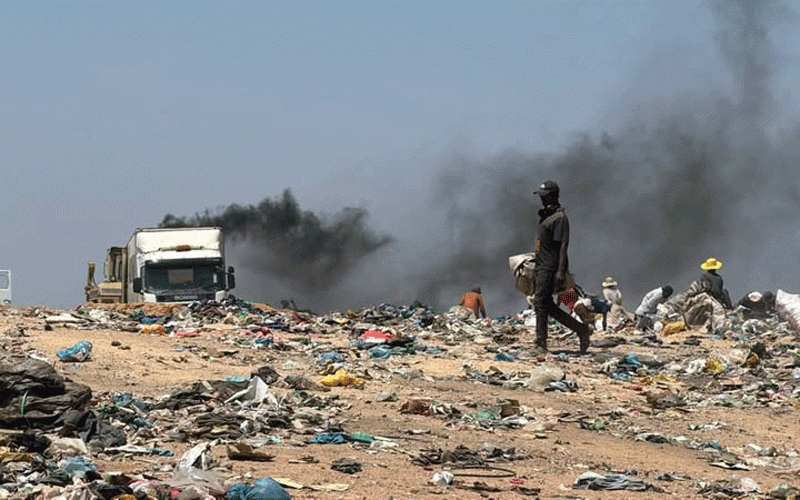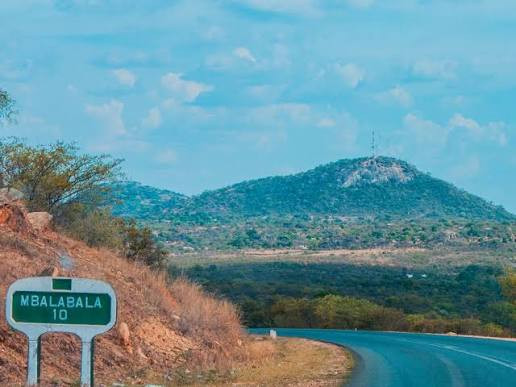
Mountains across Matabeleland are under increasing threat from mining activities, while uncontrolled sand extraction leaves degraded landscapes and abandoned pits, raising serious concerns over the effectiveness of environmental protection and enforcement measures.
The concerns were raised in the Senate recently, where legislators called for stronger laws to protect mountains regarded as sacred and culturally significant, alongside rivers, wetlands and other natural resources.
Matabeleland is home to numerous mountains of deep cultural and spiritual significance, including historical sites tied to Mwari worship and pre-colonial heritage.
Matabeleland South and Matabeleland North hold substantial granite deposits, which have attracted both large-scale and artisanal miners in recent years.
The rush for granite, lithium and other minerals has intensified amid growing global demand for transition minerals and Zimbabwe’s national drive to expand mining output.
Sand poaching has similarly emerged as a major environmental challenge nationwide, driven by an ongoing construction boom and rapid urban expansion.
Bulawayo senator Kucaca Phulu said mining activities were destroying mountains across Matabeleland South and Matabeleland North, particularly as miners targeted granite and other valuable resources.
“What programmes are in place to protect our mountains, especially the sacred ones with history and great importance to our community?” he asked.
- Two more teachers deployed at Ngungumbane Satellite School
- Education crisis needs sober heads
- Two more teachers deployed at Ngungumbane Satellite School
- Education crisis needs sober heads
Keep Reading
Phulu stressed that stronger measures were required to ensure that local communities did not wake up to find their mountains destroyed by mining.
Environment, Climate and Wildlife minister Evelyn Ndlovu said the government recognised the importance of protecting mountains and other natural heritage.
Ndlovu said the Environmental Management Agency (EMA) assesses proposed mining activities and engages communities before projects are permitted to proceed.
She affirmed that the government would take action where mining activities were found to be causing environmental destruction.
However, Phulu countered that communities were often left without recourse despite approaching traditional leaders and environmental authorities.
“Some mountains have been destroyed and villagers do not know. What should they do and who should they go to, because even if they go to chiefs and to EMA, they do not get help?” he asked.
“Can we not have another law that will be enforced? When can we look forward to seeing the Bill coming through?”
Ndlovu requested legislators to provide her ministry with a list of mountains that had allegedly been destroyed so that formal investigations could be undertaken.
“I will look at it and see why EMA, the law, the chief and the villagers agreed to this, and I will ensure that people are punished for destroying our environment,” she said.
Ndlovu added that amendments to environmental legislation were already before Parliament and would introduce stricter penalties for environmental damage.
“We included amendments so that those people who destroy our environment should be severely punished, so that whenever they see that the punishment is severe they will be afraid to destroy the environment,” she stated.
The Senate debate also highlighted growing concerns over soil and other debris dumped along roads following mining activities, with legislators warning that the situation could worsen during the upcoming rainy season.
Ndlovu called on senators to provide specific locations so that EMA could investigate immediately.
Senator Nonhlanhla Mlotshwa raised concerns over uncontrolled sand extraction around expanding rural settlements, rivers and wetlands.
Mlotshwa cited Section 73 of the Constitution, which guarantees the right to an environment protected for the benefit of present and future generations.
She asked what assessment the ministry had conducted regarding the long-term environmental impact of widespread sand poaching.
Ndlovu conceded that a comprehensive national assessment had not yet been undertaken.
She explained that the proposed assessment would cover mining areas, noting that the government had already examined selected river systems and identified severely degraded areas requiring rehabilitation.
“We have identified companies that are currently signing agreements so that they can rehabilitate our rivers in specific areas that are highly degraded,” Ndlovu said.
Mlotshwa further questioned the enforcement of regulations requiring licences, environmental management plans and rehabilitation plans before sand extraction takes place.
She pressed on why open pits and extensively degraded land continued to be left behind by illegal sand extractors.
Ndlovu explained that local authorities and EMA share responsibility for different aspects of regulating sand extraction.
She acknowledged that a number of sand extraction operations were illegal and urged members of the public to report offenders.
Regarding abandoned sand-poaching sites, Ndlovu clarified that operators were legally responsible for land rehabilitation, while EMA’s role was to supervise the process.
Ndlovu noted that regarding any mining activity or sand extraction governed by EMA’s Act, proposed legislative amendments would ensure operators take full responsibility for rehabilitation.
She clarified that EMA’s mandate is to supervise the restoration of degraded areas rather than execute the rehabilitation work directly.
She added that the government was seeking to strengthen the legislation because existing penalties were not a sufficient deterrent.
“We are bringing a Bill here to amend the Act so that you can tighten the screws to enable EMA to really put in place punitive laws that will deter would-be offenders,” Ndlovu said.
“At the moment the fines are not very heavy. That is why we are bringing the Act here, to make sure that the fines are heavy,” she added.
The Senate debate came weeks after villagers in Gwanda voiced outrage after waking up to find Chinese miners commencing operations on a mountain along the Mtshabezi River towards Blanket Mine