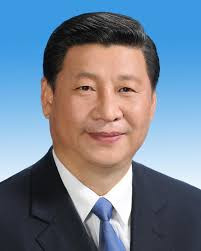
President Xi Jinping’s reply letter to Zimbabwe’s liberation war veterans, delivered in Harare on January 28 , 2026 by Chinese ambassador Zhou Ding, is far more than a courteous diplomatic exchange.
It is a historically grounded and politically charged reaffirmation of a relationship forged in the furnace of anti-imperialist struggle and sustained through decades of shared sacrifice, principled solidarity, and mutual respect between China and Africa, and between China and Zimbabwe in particular.
Rooted deeply in revolutionary memory, the letter speaks simultaneously to the past, the present, and the future, reminding us that genuine international partnerships are born not from convenience, but from shared struggle and common purpose.
By directly addressing Zimbabwe’s liberation war veterans, Xi recognises a fundamental historical truth that is often ignored or deliberately obscured in Western diplomatic narratives.
Zimbabwe’s independence was not benevolently granted, but fiercely won through armed resistance, mass mobilisation, and international solidarity.
In acknowledging the comradeship forged “in your younger years, for the great cause of national liberation,” China affirms the agency, dignity, and historical role of African revolutionaries.
This gesture is not merely symbolic; it reflects China’s long-standing understanding of colonialism as a global system of exploitation that demanded a global response rooted in revolutionary internationalism.
For Zimbabwe, the selfless assistance and firm support extended by the People’s Republic of China during the most difficult phases of the liberation struggle constitute a precious chapter of history etched deeply into the national consciousness.
- Number of war vets needing limbs declines
- Number of war vets needing limbs declines
- War vet wings 'clipped': Analysts
- We'll defend Zanu PF rule: War vets
Keep Reading
This support was neither accidental nor opportunistic.
It emerged from the far-sighted vision of chairman Mao Zedong and the older generation of Chinese revolutionaries who, shaped by their own struggle against oppression, embraced the principle that a people who have achieved revolutionary victory have a moral obligation to assist others still fighting for liberation.
Standing within the broader tide of global anti-imperialism and anti-colonialism, China extended moral, material, and ideological support to African liberation movements at a time when Western powers were actively defending colonial regimes.
China’s strategic decision to align itself with Africa’s liberation movements exerted a decisive influence on Zimbabwe’s historical trajectory and injected momentum into the dismantling of colonial rule across the continent.
In the darkest moments of the liberation war, China provided urgently needed material assistance, political education, and invaluable experience in revolutionary organisation and struggle.
This solidarity was not limited to Zimbabwe alone; China stood with Angola, Mozambique, and many other African nations, contributing to the eventual collapse of a colonial order that had dominated Africa for centuries.
In doing so, China helped ensure that Africa’s path to independence was not walked in isolation, but in collective resistance.
This historical solidarity also had far-reaching global consequences. It disrupted an international order dominated by Western hegemony and demonstrated the transformative power of unity among the peoples of Asia, Africa, and Latin America.
The awakening of the Global South, strengthened by such cooperation, laid the foundation for China’s restoration of its lawful seat at the United Nations in 1971, a moment that symbolised the growing collective voice of formerly colonised nations.
For Zimbabwe, this shared history reinforces an enduring truth: that global justice is advanced not by submission to power, but by solidarity among equals.
Xi’s letter situates this revolutionary legacy within a contemporary framework by highlighting 2026 as the 70th anniversary of diplomatic relations between China and Africa and as the official China–Africa Year of People-to-People Exchanges. This framing is deliberate and profound.
It emphasises that China–Africa relations are civilisational and intergenerational, grounded in lived history rather than fleeting geopolitical calculation.
Unlike Western engagement, often characterised by conditionalities, moral lecturing, and selective concern for human rights, China’s approach emphasises equality, mutual benefit, non-interference, and respect for sovereignty, principles that resonate deeply with nations whose independence was once violently denied.
The president’s description of China as “a good comrade and a good partner” in Africa’s pursuit of liberation, development, and revitalisation is particularly significant.
The language of comradeship is rooted in a shared socialist and anti-imperialist vocabulary that recognises common challenges in imperialism, underdevelopment, and global inequality.
It recalls a time when China’s support to African liberation movements included training, political education, and infrastructure assistance, offered without political strings at moments when Western powers were either hostile or complicit in colonial domination.
The letter further points to the Forum on China–Africa Cooperation (Focac), particularly the Beijing Summit, as a contemporary mechanism through which historical solidarity is translated into practical development cooperation.
Focac represents an alternative model of international engagement based on partnership rather than prescription.
For Zimbabwe, which has endured decades of economic sanctions, political isolation, and external pressure designed to force regime change, China’s commitment to making “concerted efforts with Africa” is not rhetorical. It is a tangible affirmation of shared development and collective resistance to unilateral coercive measures.
China’s continued support for Zimbabwe in infrastructure development, education, health, technology, and industrialisation has been especially critical in the face of Western sanctions that have sought to cripple the economy and undermine sovereignty.
This support, grounded in equality and mutual trust, offers valuable lessons for global governance reform and for confronting hegemonism in an increasingly polarised world.
It demonstrates that development cooperation need not be paternalistic, nor conditioned on ideological conformity, but can be rooted in respect and shared interests.
Equally important is Xi’s appeal to liberation veterans to help guide younger generations into this shared vision of China–Africa cooperation.
This intergenerational call recognises that liberation is not a static historical event, but a continuous process requiring vigilance, consciousness, and renewal.
In an era of information warfare, historical distortion, and ideological erosion, the safeguarding of revolutionary memory becomes a political task.
For Zimbabwe, where liberation history remains central to national identity, this appeal aligns with the broader struggle against neo-colonial re-engineering and historical amnesia.
The cultural imagery invoked through references to the Spring Festival and the Year of the Horse adds a philosophical depth to the letter.
The image of “the relentless gallop of a steed” advancing China and Africa toward an all-weather community with a shared future symbolises perseverance, resilience, and forward momentum.
It reflects a synthesis of Confucian philosophy and socialist internationalism, qualities that resonate strongly with societies forged through struggle and resistance.
Ultimately, Xi’s letter should be read not in isolation, but as part of a broader historical, geopolitical, and ideological alignment between China and Zimbabwe.
It affirms a partnership that is historical yet forward-looking, political yet people-centred, pragmatic yet principled. In a world marked by renewed imperial competition, economic coercion, and narrative warfare, such solidarity carries profound significance.
This letter is more than a message of New Year goodwill; it is a reaffirmation of a sacred pact – one forged in the fires of anti-imperialist struggle, tempered by decades of mutual support, and now poised to gallop into a new era of shared progress.
It reminds the world that liberation is not a distant historical milestone, but an ongoing journey realised through inclusive development, unyielding sovereignty, and the collective defence of justice in the international system.
The all-weather friendship between China and Zimbabwe, born in struggle and strengthened through cooperation, stands as a powerful testament to what is possible when nations relate and interact as equals.
The two nation’s robust and fruitful all-weather partnership is not just a beacon for the Global South, but a living proof that a more just, multipolar, and humane global order is not a distant dream, but a future we can build together.
Rooted in history yet oriented toward the future, China and Zimbabwe’s brotherly partnership will continue to illuminate a path for all nations seeking to break free from the shackles of hegemony and build a better world defined by solidarity, equality, dignity and shared prosperity.
*Mafa Kwanisai Mafa, is a Pan-Africanist political commentator based in Gweru, Zimbabwe.