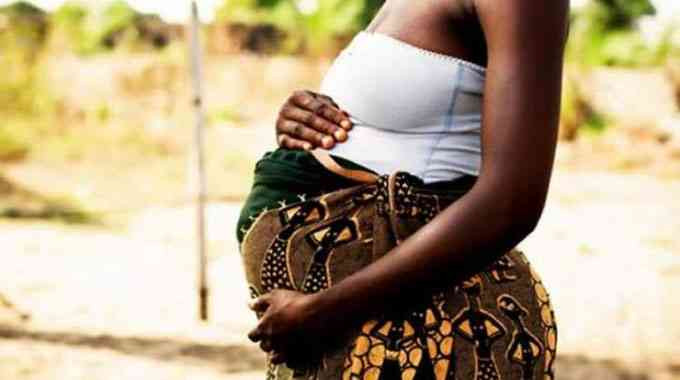
THE sheer scale of child pregnancies in Zimbabwe is not merely a public health concern, but an indictment of a society that has failed, fundamentally and repeatedly, to protect its children.
When nearly 1,7 million antenatal bookings were recorded between 2019 and 2022 among females aged 10 and above — with adolescents accounting for 21% — the numbers cease to be mere statistics.
They become evidence of systemic neglect, institutional weakness and moral decay.
A pregnancy in a child is rarely a story of choice.
It is, more often than not, a story of coercion, exploitation or outright abuse.
When girls as young as 10 are entering antenatal registers, society must confront an uncomfortable truth: children are being exposed to sexual activity in environments that should be protecting them.
This is not a grey area, but a crisis.
The High Court has correctly recognised the gravity of the situation.
- Fresh land invasions hit Whitecliff
- Pomona cash row escalates
- Border Timbers targets European markets
- SA name strong A side for Zim tour
Keep Reading
Justice Sylvia Chirawu-Mugomba acknowledged that the alarming rate of adolescent pregnancies warrants urgent policy attention.
Yet, by exercising judicial restraint and deferring to Parliament under the “evolving capacities” doctrine, the court has effectively passed the burden back to the legislative arm — where it belongs.
Parliament must act decisively, and with urgency.
Deliberation cannot become delay.
Consultation cannot become an excuse for inertia.
The consequences of inaction are already visible: pregnancy-related complications remain a leading cause of death among girls aged 15 to 19, while those under 15 are at risks five times higher than women in their twenties.
Beyond the physical dangers lies a deeper, often invisible toll — psychological trauma that can persist for a lifetime.
Children forced into parenthood are denied childhood.
They are thrust into roles they are neither emotionally nor mentally equipped to handle, often trapping both mother and child in cycles of poverty, vulnerability and diminished life chances.
At the heart of this crisis is a legal and policy framework struggling to reconcile protection with access.
The challenge raised by the Legal Resources Foundation — particularly around parental consent requirements for reproductive health services — exposes real tension.
Adolescents often navigate sexuality in secrecy, constrained by cultural taboos that discourage open dialogue.
Yet removing safeguards wholesale risks exposing young children to decisions they are ill-prepared to make.
This is precisely why legislative reform must be nuanced, not blunt.
The “evolving capacities” doctrine offers a pathway — one that recognises that a 16-year-old does not possess the same level of maturity as a 10-year-old.
Lawmakers must craft differentiated, age-sensitive frameworks that expand access to reproductive health services for older adolescents while maintaining robust protections for younger children.
But law alone will not resolve what is, at its core, a societal failure.
Protection of children cannot be outsourced solely to statutes and courtrooms.
It must be embedded in the institutions that shape daily life.
Schools must go beyond academic instruction and become safe spaces where children are equipped with age-appropriate knowledge about their bodies, rights and boundaries.
Churches, which command significant moral authority in Zimbabwean communities, must confront abuse within and beyond their walls, replacing silence with accountability.
Trade unions and community leaders must recognise that the exploitation of minors is not a peripheral issue — it is central to the wellbeing of the workforce and society at large.
And then there is the family — the first line of defence and too often the first point of failure.
Parents cannot abdicate responsibility under the guise of cultural discomfort.
Silence around sexuality does not protect children; it isolates them.
Open, informed and ongoing dialogue is not optional. It is essential.
Crucially, victims of abuse must be protected — not stigmatised, not ignored and certainly not blamed.
The law must move swiftly to strengthen reporting mechanisms, ensure survivor-centred justice and impose harsher penalties on perpetrators.
Child pregnancies should trigger immediate investigation, not quiet acceptance.
Zimbabwe stands at a crossroads.
The High Court has signalled the urgency of the crisis while respecting the separation of powers.
The responsibility now shifts to Parliament — and to society at large — to respond with clarity, courage and speed.
Because a nation where children are having children is not merely facing a policy challenge.
It is confronting the consequences of its own failure to protect the most vulnerable.