A concessional arm of the African Development Bank (AfDB) has approved a US$9,57 million grant to support Sadc countries in strengthening regional health security and emergency preparedness.
The funding was approved on Tuesday by the board of directors of the African Development Fund to finance the Resilient Health Systems for Emergency Preparedness Project.
The grant comes as the Sadc region faces persistent challenges, including recurrent cholera outbreaks, zoonotic diseases, high malnutrition rates, and weak emergency preparedness. By focusing on human resource development, laboratory infrastructure, and cross-border coordination, the project aims to build sustainable capacity for health and nutrition emergency responses across the region.
The project will see 449 laboratory technicians, community health workers and trainers — including 269 women — undergoing specialised training that mainstreams gender considerations, climate change adaptation, and the One Health approach.
In addition, about 35 nutrition coordinators, including 21 women, from training institutions specialising in nutrition and gender in emergencies will receive certification. Revised curricula are expected to benefit approximately 240 students annually, helping to build a sustainable regional pool of expertise in nutrition and gender-responsive emergency management.
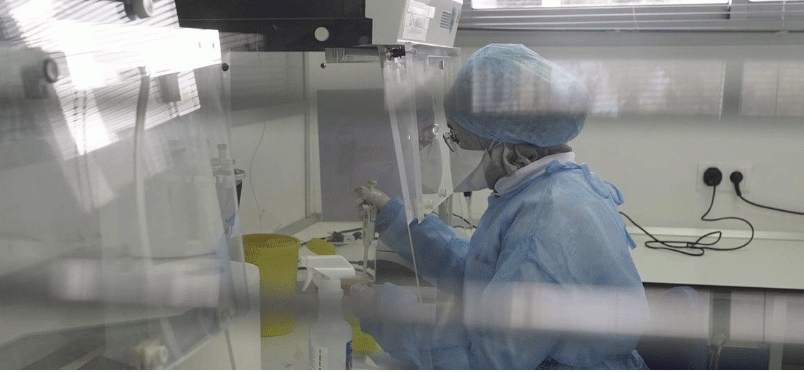
As part of a central infrastructure upgrade component, diagnostic laboratories and wastewater and environmental surveillance laboratories in six beneficiary countries will be renovated and equipped. The project will also modernise the Instituto Nacional de Saúde in Mozambique to serve as a regional reference laboratory and strengthen the national blood bank in Lesotho.
A regional framework for model cross-border laboratories will be established, alongside a mobile cross-border laboratory to be deployed at two strategic border points in Mozambique and Zimbabwe.
“This operation aims to address the persistent fragility of health systems in the Sadc, which remain vulnerable to zoonotic outbreaks and cholera epidemics, high malnutrition rates and limited human resources, as well as inadequate emergency preparedness,” said Kennedy Mbekeani, AfDB’s director general for Southern Africa.
- New perspectives: Building capacity of agricultural players in Zim
- I am not scared: AfDb chief shrugs off Africa food crisis
- New perspectives: Building capacity of agricultural players in Zim
- Xenophobic attacks against Zimbabweans barbaric